NASA Moves Artemis 2 Fueling Test Up to Jan. 31 as Moon Mission Nears Launch Readiness
NASA has moved up a crucial fueling test for its Artemis 2 moon rocket, signaling steady progress toward the agency’s first crewed lunar mission in more than five decades.
The U.S. space agency now expects to complete the Space Launch System’s (SLS) “wet dress rehearsal” as early as Saturday, Jan. 31, several days ahead of its previous target date of Feb. 2. The test represents the final major hurdle before launch and could clear the way for an Artemis 2 liftoff as early as Feb. 6, pending weather and final technical reviews.
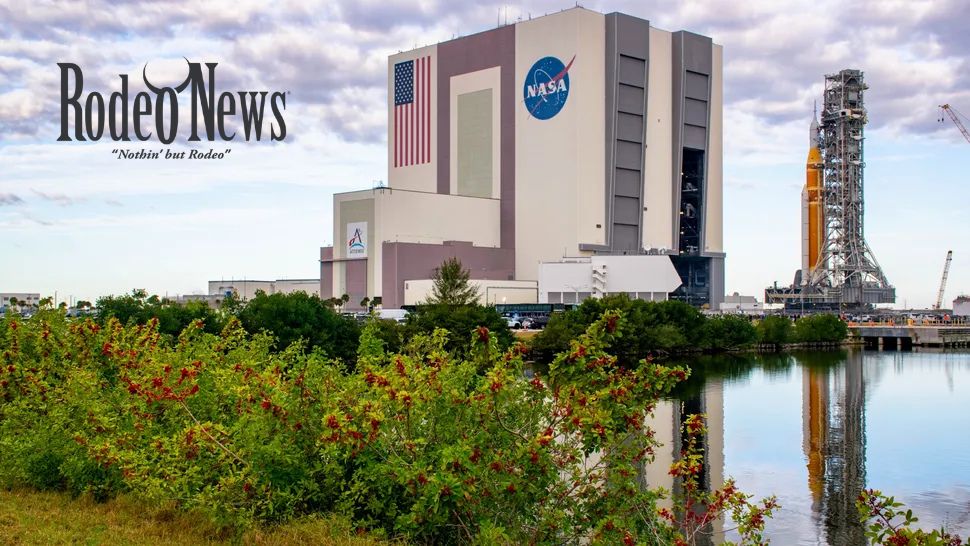
“Engineers have remained on track or ahead of schedule as they work through planned activities at the launch pad and are getting ready to conduct a wet dress rehearsal, leading up to a simulated launch,” NASA said in a status update issued Monday.
Rocket and Crew Ready at the Pad
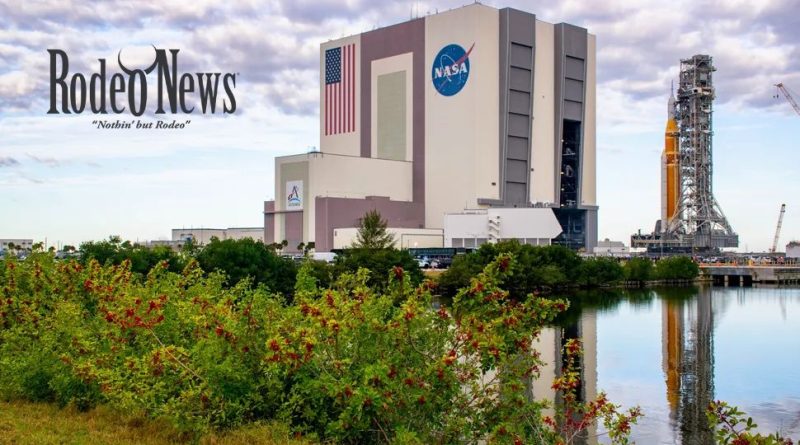
The Artemis 2 SLS rocket and its Orion crew capsule were rolled out from the Vehicle Assembly Building at NASA’s Kennedy Space Center on Jan. 17, arriving at Launch Complex 39B after a slow, carefully monitored journey. Since then, teams have focused on securing the rocket’s mobile launch platform, connecting ground systems, and preparing the vehicle for its most demanding prelaunch test.
The wet dress rehearsal is designed to replicate launch-day operations as closely as possible. Over a multi-day period, launch teams will staff their stations, power up flight systems, and conduct a full countdown simulation.
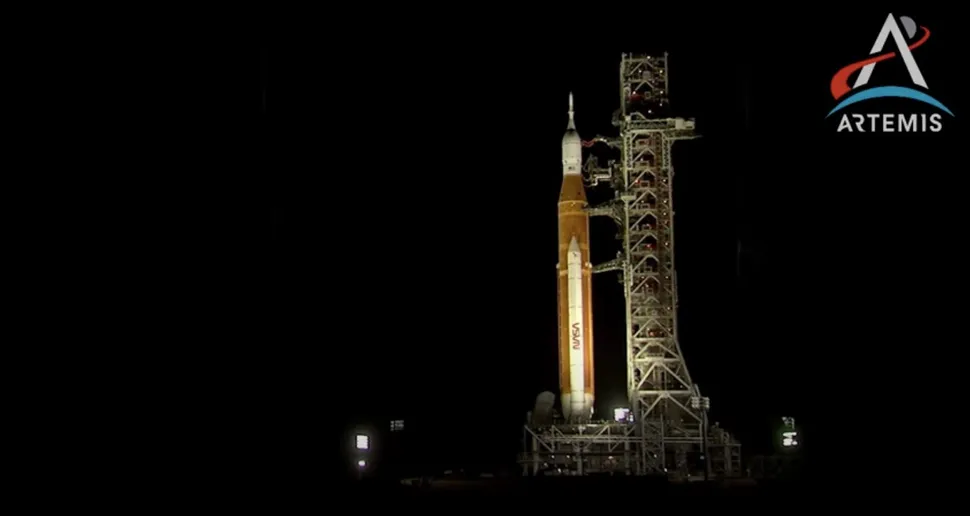
The most critical phase of the test will occur Saturday, when engineers begin loading the rocket with cryogenic liquid hydrogen and liquid oxygen. In total, the SLS will be filled with more than 700,000 gallons of supercooled propellant, bringing the fully fueled rocket to a mass of approximately 5.75 million pounds.
Countdown Simulation to T-33 Seconds
During the rehearsal, NASA plans to run the countdown clock down to T-33 seconds, the point at which the rocket’s onboard computers would assume control during an actual launch. After reaching that milestone, teams will reset the clock to T-10 minutes and conduct a second terminal countdown to T-30 seconds.
The process allows NASA to test not only the rocket but also the coordination between flight controllers, ground crews, and automated systems. Multiple planned holds during the final 10 minutes will help teams practice procedures for stopping, resuming, and recycling the countdown under real-world conditions.
If the test proceeds without major issues, NASA could formally clear the rocket for launch readiness. However, agency officials caution that even a flawless rehearsal does not guarantee an on-time liftoff.
Lessons Learned From Artemis 1
NASA is keenly aware of the stakes. The uncrewed Artemis 1 mission faced repeated setbacks during its own wet dress rehearsal campaign, which required four attempts and forced the rocket to roll back to the Vehicle Assembly Building three times due to fueling leaks and valve issues.
Officials have said those problems have since been resolved, but the agency remains cautious. Any unexpected technical issue during Artemis 2’s rehearsal could still delay the launch timeline.
Cold Weather Adds Another Variable
Weather is another factor looming over the test. An unusual cold snap is forecast to reach Florida’s Space Coast this weekend, with overnight temperatures at Kennedy Space Center expected to dip below freezing.
“Technicians are taking steps to ensure environmental control systems keeping Orion and SLS elements at the proper conditions are prepared for the cold,” NASA said.
While the massive SLS rocket withstood a hurricane ahead of its Artemis 1 launch in November 2022, freezing temperatures pose a different kind of risk. NASA remains particularly sensitive to cold-weather concerns due to the 1986 Challenger disaster, in which low temperatures contributed to the failure of solid rocket booster seals.
Crew Safety Remains Central Focus
As NASA prepares for its first crewed lunar flight since Apollo 17 in 1972, safety remains the agency’s overriding priority. In recent weeks, engineers identified and replaced faulty brakes on the emergency escape baskets designed to rapidly evacuate astronauts from the launch tower if needed.
Meanwhile, the four astronauts assigned to Artemis 2 have entered pre-mission quarantine to protect their health ahead of launch.
The crew includes Reid Wiseman, the mission’s commander; Victor Glover, the pilot; Christina Koch, mission specialist; and Jeremy Hansen of the Canadian Space Agency, also serving as a mission specialist. Artemis 2 will mark the first time humans fly aboard the Orion spacecraft.
A Historic Flight Around the Moon
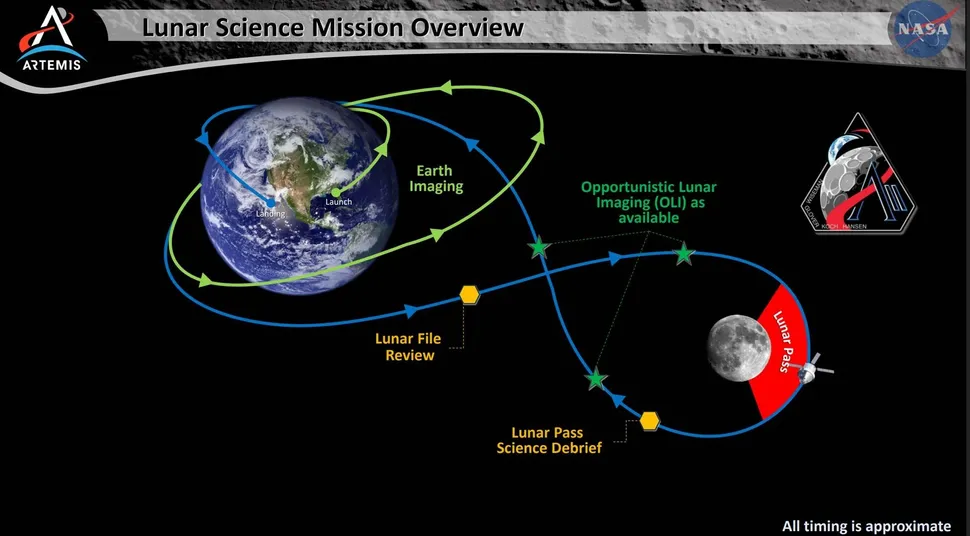
The Artemis 2 mission is expected to last about 10 days. After reaching Earth orbit to verify spacecraft systems, Orion will head toward the moon on a “free-return” trajectory — a figure-eight path that loops around the lunar far side and naturally returns the spacecraft to Earth.
Unlike Artemis 3, the mission will not attempt a lunar landing. Instead, it will serve as a critical test of deep-space life-support systems, navigation, and crew operations.
Depending on launch timing and trajectory, Artemis 2 could send its astronauts farther from Earth than any humans have ever traveled.
Looking Ahead to Artemis 3 and Beyond
If Artemis 2 is successful, NASA plans to proceed toward Artemis 3, a mission aimed at landing astronauts on the lunar surface later this decade. That mission is currently expected to launch no earlier than 2028.
By then, NASA hopes to deploy early components of its Gateway space station in lunar orbit and complete development of its Human Landing System. SpaceX’s Starship has been selected for the first landing, though NASA has signaled interest in adding additional providers, including Blue Origin, to accelerate progress.
For now, attention remains fixed on the upcoming wet dress rehearsal, which is scheduled to begin as early as Thursday evening and culminate in a simulated launch at 9:00 p.m. EST on Saturday. NASA plans to broadcast portions of the test on its streaming platforms.