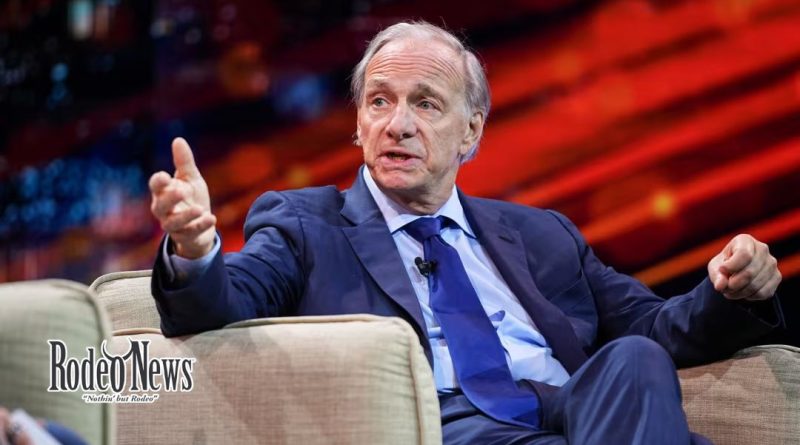
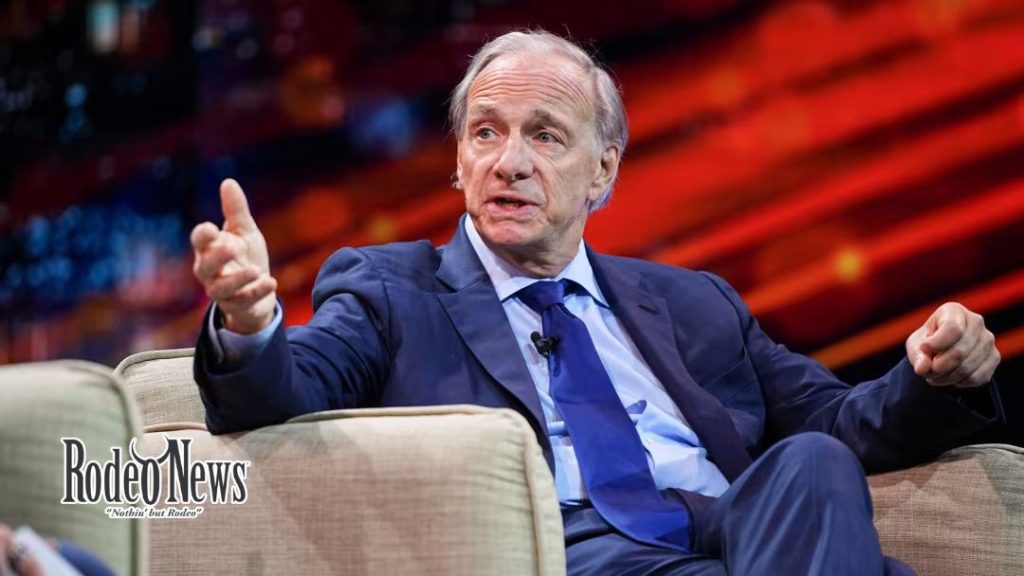
Billionaire Ray Dalio Sends Two-Word Warning as Stock Sell-Off Exposes Deeper Market Risks
Global stocks may be flashing warning signs after a powerful rally, but for billionaire investor Ray Dalio, the turbulence unfolding across financial markets is neither sudden nor surprising.
As equities wobble amid renewed trade tensions and rising geopolitical uncertainty, the founder of Bridgewater Associates has distilled his concerns into a blunt, two-word message: “capital wars.”
Dalio’s warning comes at a moment when markets appear increasingly fragile. After suffering a tariff-driven 19% sell-off last spring, U.S. stocks staged a remarkable rebound. The Nasdaq Composite surged nearly 50% from its April lows, while the S&P 500 climbed 36% in less than a year — gains that would normally signal confidence and stability.
Instead, Dalio argues they may signal complacency.
“Stocks are priced to perfection,” he has warned, even as trade disputes resurface and global political fractures deepen. New tariffs on European allies announced over the weekend have reignited fears of an escalating trade conflict, pushing investors to reassess risks that had largely been ignored during the rally.
A Global Order Under Strain
Dalio has spent much of the past year cautioning that the world is entering a period of structural upheaval — not just economically, but politically and geopolitically.
“The existing fiat monetary order, the domestic political order, and the international geopolitical order are all breaking down,” Dalio wrote in a post on X earlier this year. “We are at the brink of wars.”
At the center of his concern is the growing distrust in traditional stores of value, particularly government-issued debt and fiat currencies. The United States’ swelling debt burden, combined with intensifying trade disputes, has begun to erode confidence among foreign creditors and central banks that once viewed U.S. Treasurys as the ultimate safe haven.
According to Dalio, this erosion of trust is not theoretical — it is already reshaping capital flows worldwide.
From Trade Wars to ‘Capital Wars’
Dalio describes today’s environment as the next phase beyond trade wars. As tariffs and sanctions disrupt global commerce, the battle is increasingly shifting toward capital itself — where nations choose to store wealth, allocate reserves, and settle transactions.
“The monetary order is breaking down,” Dalio said in a recent interview. “Fiat currencies and debt as a store of wealth are not being held by central banks in the same way.”
Foreign demand for U.S. debt has softened as geopolitical risks rise, contributing to upward pressure on Treasury yields. Even longtime U.S. allies are rethinking their exposure to the dollar and American bonds, Dalio noted, as economic nationalism and strategic rivalries intensify.
“At the other end of trade wars are capital wars,” he said.
Gold Emerges as the Clear Winner
If there is one asset class that reflects this shift most clearly, it is gold.
Gold prices surged more than 66% in 2025, dramatically outperforming the S&P 500’s total return of 17.8%, according to data from NYU Stern. The trend has continued into 2026, with gold extending gains as investors seek protection from currency risk and geopolitical instability.
The SPDR Gold Shares (GLD) ETF is already up more than 10% year-to-date, including a sharp jump following President Donald Trump’s announcement of new tariffs on European allies. The move, aimed at pressuring NATO partners over Greenland-related security negotiations, rattled markets and underscored how quickly political decisions can reverberate through global finance.
For Dalio, gold’s resurgence is not speculative — it is structural.
“The biggest market to move last year was the gold market,” he said. “That tells you where confidence is going.”
Central Banks Rethink Reserve Strategy
Central banks have been among the most aggressive buyers of gold, quietly increasing reserves as a hedge against currency debasement, sanctions risk, and political fragmentation.
Gold has now become the world’s second-largest reserve asset, trailing only the U.S. dollar. Major financial institutions expect the trend to continue, with several large banks forecasting further price increases over the coming years as diversification away from dollar-denominated assets accelerates.
The shift reflects a broader reassessment of what constitutes safety in a world where alliances are less stable and economic policy is increasingly weaponized.
What It Means for Investors
Dalio’s message is not a call to abandon stocks altogether, but a warning that traditional assumptions may no longer hold. In an era of “capital wars,” investors face risks that cannot be diversified away simply by owning index funds or relying on historical correlations.
Rising debt levels, political polarization, and geopolitical conflict are converging to challenge the foundations of the post-war financial system. Assets once considered risk-free may no longer deserve that label.
For investors enjoying the market’s recent gains, Dalio’s two-word warning serves as a reminder: beneath the surface of record highs, the global financial order itself may be undergoing a profound and unpredictable transformation.