Operation Cowboy: The WWII Mission That Saved 1,200 Horses
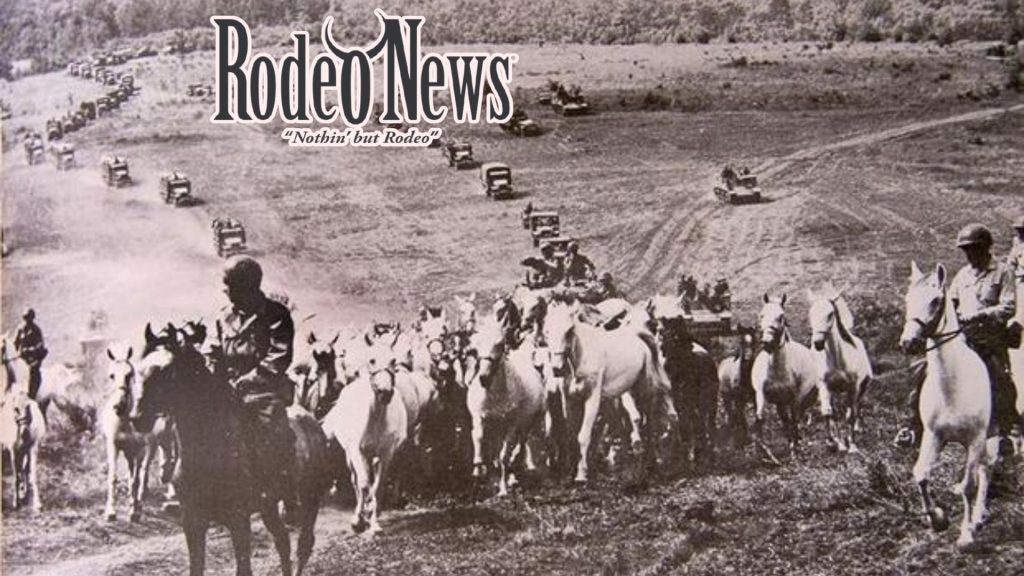
In the closing weeks of World War II, amidst the chaos of collapsing frontlines and advancing armies, a truly unusual mission unfolded in Czechoslovakia. On April 28, 1945, American cavalrymen and surrendered German soldiers joined forces to execute what became known as Operation Cowboy — a daring effort to save more than 1,200 horses, including hundreds of rare Lipizzaner horses, from falling into the hands of the Soviet Red Army.
The Cultural Cost of War
During the Nazi occupation of Austria and Czechoslovakia, German authorities had relocated prized horses from the Spanish Riding School in Vienna to a stud farm in Hostau. Among them were 375 Lipizzaners, bred for centuries under the Habsburgs and admired for their elegance and skill. These majestic horses were not only invaluable for their lineage but also symbolized a part of European cultural heritage at risk of extinction.
As the Red Army advanced from the east, German caretakers feared the worst — Soviet troops had already killed other royal horse herds and routinely slaughtered horses for food. In desperation, German officers sought help from the nearest American unit, the 42nd Cavalry Reconnaissance Squadron of the U.S. Third Army.
Unlikely Allies in a Race Against Time
General George S. Patton — himself a former cavalryman and equestrian — approved the mission. A task force assembled under Maj. Robert P. Andrews pushed deep into German-held territory toward Hostau, navigating artillery barrages and tense negotiations. Upon arrival, the Germans formally surrendered the farm and pledged to help.
At Hostau, the Americans faced a critical dilemma: how to defend the sprawling farm and its animals while fending off potential Waffen-SS resistance and racing against the Russians closing in from the east. To meet this challenge, Capt. Thomas Stewart recruited an extraordinary mixed force — including liberated Allied prisoners of war, anti-Soviet Cossacks, and German soldiers — forming what became known as Stewart’s Foreign Legion.
In one of only two recorded incidents of American and Wehrmacht troops fighting side by side during WWII, this unlikely coalition repelled SS attacks long enough to begin the evacuation.
A “Cowboy” Evacuation
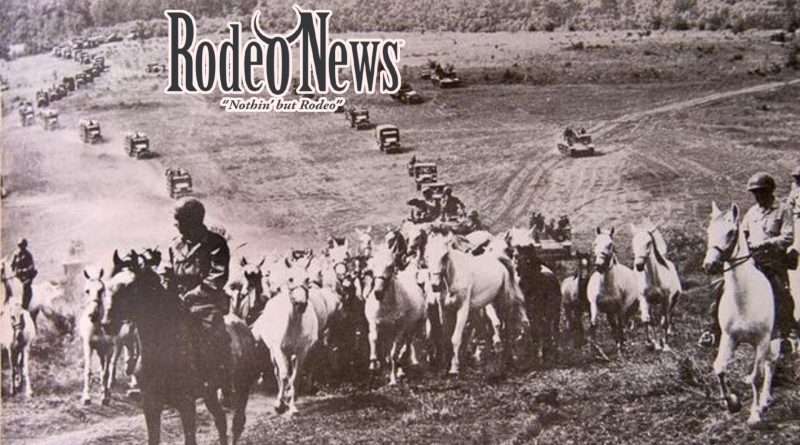
With Soviet tanks nearly at Hostau’s edge, the rescue became a logistical and emotional spectacle. Horses were ridden out by officers, herded on foot like a Western roundup, and transported in trucks — all under fire and the threat of encirclement. In total, the mission successfully brought over 1,200 horses to safety within American lines.
Two American soldiers lost their lives during the operation, and several others were wounded in hostilities with retreating SS forces. For his leadership, Capt. Stewart received the Bronze Star and further recognition from Austria.
Legacy and Cultural Impact
In the broader context of the war’s end, Operation Cowboy is remembered as a poignant testament to preserving beauty and heritage amid brutality. The rescued Lipizzaner horses eventually returned to Austria after the war, where their descendants continue to perform at the prestigious Spanish Riding School.
While often overshadowed by larger battles, Operation Cowboy has endured in historical memory — commemorated in events and honored by military historians as an exceptional blend of courage, cooperation, and compassion at the twilight of World War II