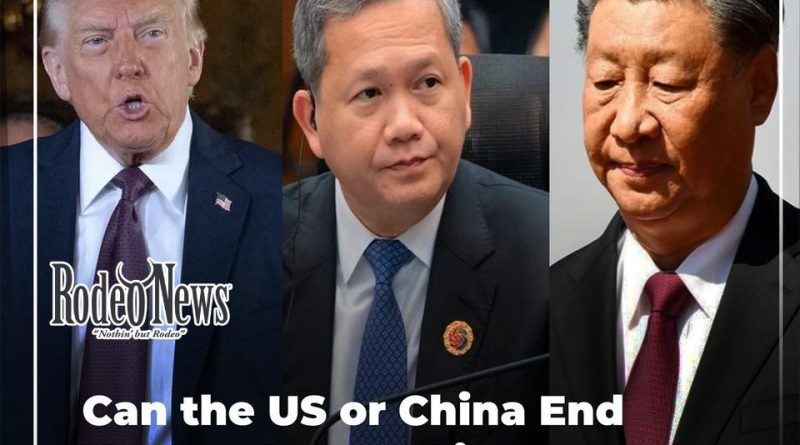
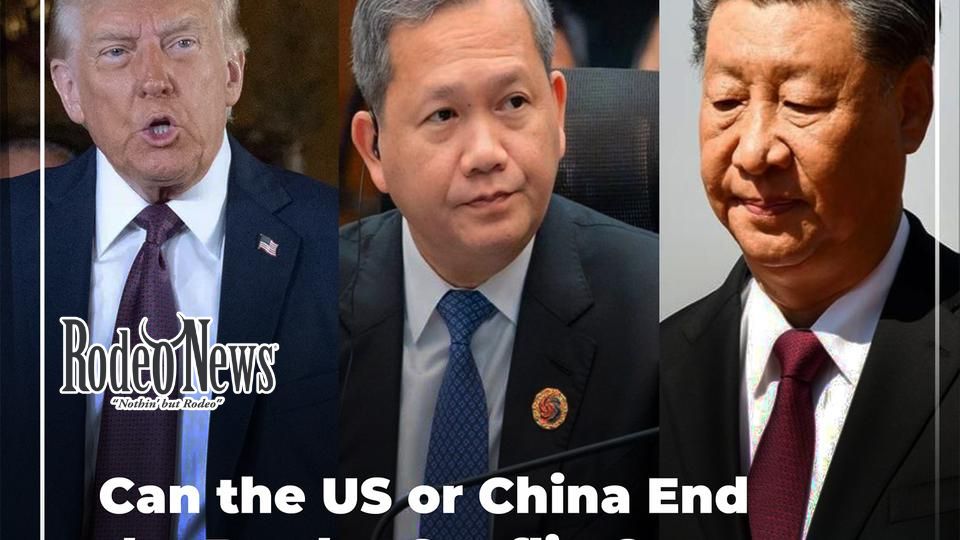
Can the US or China End the Border Conflict?
An Escalating Crisis Between Cambodia and Thailand: Who Can Broker Peace?
The border conflict between Cambodia and Thailand has rapidly escalated, with violent clashes continuing to devastate both sides. In the midst of escalating tensions, global powers such as the United States and China have become key players, raising questions about whether either country can intervene effectively to bring an end to the fighting.
Eighteen days have passed since clashes erupted between the two nations, with Cambodian civilians bearing the brunt of the violence. The conflict has already claimed the lives of 21 Cambodians and left 86 others injured. Despite calls for peace, fighting rages on, even in areas far from the border. For example, on December 19, Thai F-16 fighter jets targeted a crucial bridge over the Ojik River in Cambodia’s Siem Reap province, further intensifying the crisis.
As the military strikes continue, civilian casualties mount, and infrastructure, including schools, homes, and government buildings, is being systematically destroyed. Despite the ASEAN foreign ministers meeting, the military on both sides has shown little willingness to halt hostilities.
The US and China’s Roles in the Crisis
The involvement of global powers in this conflict has raised concerns about their influence on the region’s stability. US President Donald Trump and Malaysian Prime Minister Anwar Ibrahim brokered the Kuala Lumpur Peace Accord in October 2025, but China was notably excluded from the process.
While Trump’s administration has made efforts to bring about peace, their approach has drawn mixed reactions. A US official stated that they did not believe China had any “significant” role in peace efforts, noting the lack of China’s participation in the peace talks. Cambodia’s President, Ou Virak, suggested that China might view the exclusion as a slight, especially now that the ceasefire brokered by the US has broken down.
Trade Tariffs and Diplomatic Tensions
Adding to the complexity of the situation is the imposition of tariffs. In the wake of the first clashes in July, the US imposed a 19% tariff on imports from Thailand and Cambodia, a move designed to pressure both sides into a ceasefire. However, with the ongoing violence, the US has refrained from any further action, leaving the tariff unchanged.
Virak argues that the US could use higher tariffs to press Thailand into a ceasefire, but this tactic has yet to yield results. He claims that Thailand’s targeting of civilian areas has increasingly pointed to the country as the aggressor in the renewed conflict, but global leaders have been hesitant to take a firm stance against Thailand.
The China-Cambodia Relationship
Cambodia’s historical ties to China are well-documented. From the Cambodian government’s support of the One China policy to its alignment on regional matters, China has been a consistent ally. However, policy experts like Virak suggest that China’s interests might lie more with Thailand than Cambodia, particularly because of Thailand’s strategic importance in the region. The Belt and Road Initiative, a key part of China’s global strategy, runs through Thailand, making the country a valuable partner.
Despite this, Cambodia has leaned on China for humanitarian aid during the conflict. In August 2025, China made donations of $100,000 to Cambodia to assist victims of the initial clashes, followed by another 20 million yuan ($2.8 million) to help rebuild the war-torn country. However, no such assistance has been offered in the latest round of fighting.
Prime Minister Hun Manet of Cambodia, however, has emphasized the need for neutrality, stating that Cambodia cannot rely solely on either China or the US. He famously remarked that Cambodia needs both “vegetables and beef,” referring to China as Cambodia’s vegetables and the US as its beef—both important but in different ways.
ASEAN’s Inaction and Cambodia’s Plea for Peace
The Association of Southeast Asian Nations (ASEAN) has largely remained silent on the issue, despite Cambodia’s calls for intervention. While countries like Vietnam, Singapore, and Malaysia have called for an immediate ceasefire, the broader ASEAN bloc has failed to take substantial action. Cambodia’s director of international relations, Kin Phea, criticized ASEAN’s inaction, saying the group had “ignored the situation” and failed to release an official report on the conflict’s origins.
Phea, along with other experts, argues that Cambodia, as a smaller nation, has been left vulnerable in this conflict, with few allies willing to intervene. He suggested that Cambodia must strengthen its military capabilities and become more self-reliant in the face of growing aggression.
The Cambodian people are also suffering deeply. Trok Rothana, the daughter of a fallen soldier, expressed the desperation of those living in the war zones, where entire villages have been destroyed, and families displaced. For Rothana, the lack of significant international intervention has only deepened her despair.
The Search for a Ceasefire and Peace Talks
On December 22, ASEAN foreign ministers met in Kuala Lumpur to discuss the conflict, but by that point, fighting had only intensified in Poipet province. Both the US and ASEAN continue to engage in diplomatic efforts, with a General Border Committee meeting scheduled for December 24, 2025, aimed at discussing a ceasefire agreement. However, the situation remains tense, with no sign of immediate relief.
President Trump has expressed confidence in reaching a peace deal, telling reporters that “talks are going okay.” However, the Thai military continued shelling civilian areas even after Trump’s optimistic remarks. The Thai government, meanwhile, has dismissed Trump’s statements, accusing the US president of misrepresenting facts about the conflict.
Can Global Powers Bring Peace?
As the conflict persists, the question remains whether external powers like the US or China can end the bloodshed. Cambodia, while seeking assistance, is also caught between two great powers with competing interests in the region. While China may be hesitant to alienate Thailand, the US has shown a willingness to engage, though its leverage appears limited without China’s involvement.
As the situation continues to unfold, both global diplomacy and regional cooperation will play critical roles in determining whether peace can be achieved—and whether Cambodia will emerge from this conflict stronger or further entrenched in suffering.