Cambodia to Welcome Home Three Sacred Khmer Artefacts Looted During War
Cambodia is preparing to welcome home three sacred Khmer masterpieces, ending a decades-long absence after they were removed during years of conflict and instability that devastated the country’s cultural heritage.
The National Museum of Asian Art at the Smithsonian Institution in Washington, D.C., has approved the repatriation of the artefacts, a move Cambodian officials described as a historic act of cultural restoration and healing.
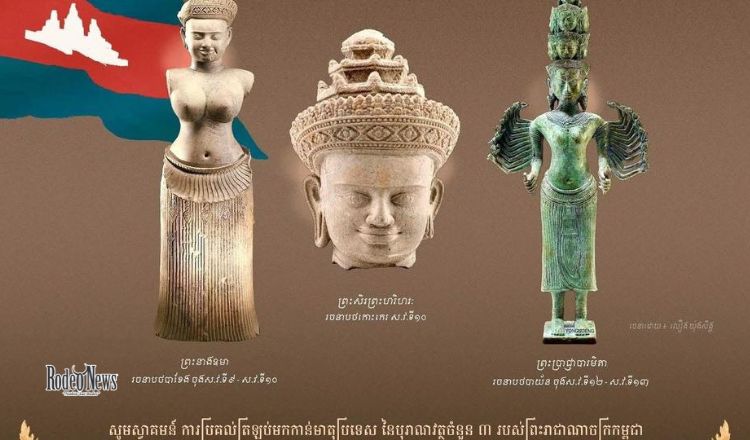
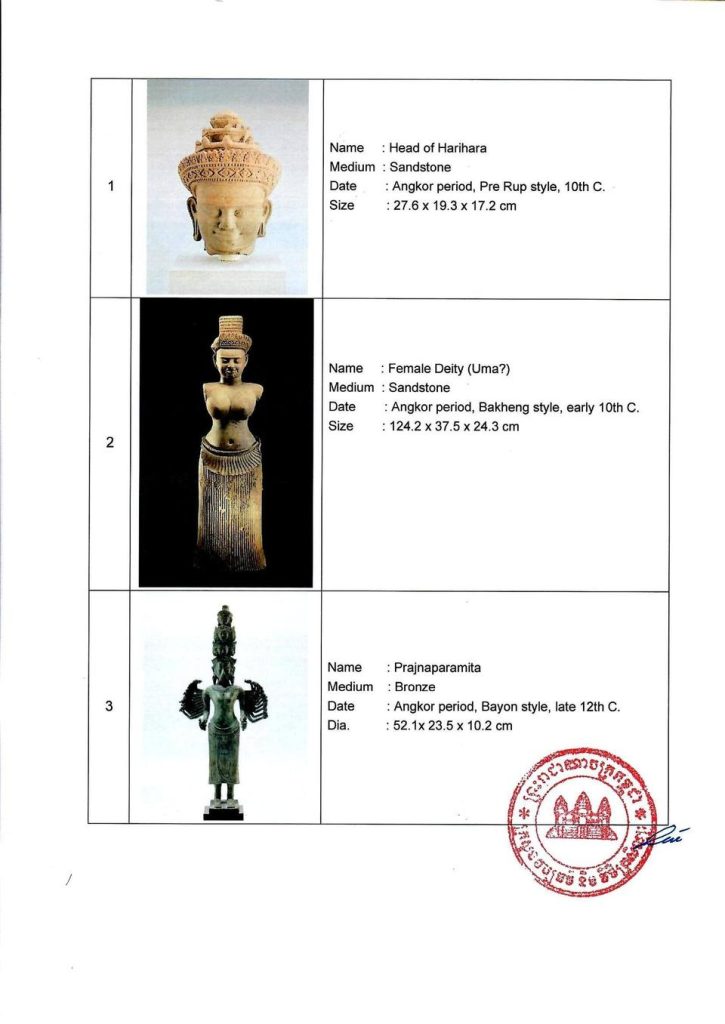
The sculptures — the 10th-century Head of Harihara, a 10th-century female deity believed to represent Goddess Uma, and Prajnaparamita from the late 12th century — span the height of the Angkor Empire, a civilisation renowned for its spiritual devotion, artistic mastery and architectural legacy.
In a statement released on December 17, Cambodia’s Ministry of Culture and Fine Arts (MCFA) confirmed that the artefacts would soon be returned, following an extensive investigation into their provenance.
A Return Shaped by Ethics and History
According to the ministry, the inquiry concluded that the three sculptures were removed from Cambodia during decades of civil war and insecurity — a period marked by widespread looting of temples and archaeological sites.
“This return represents a deeply meaningful step toward cultural restoration for the Cambodian people,” the MCFA said, noting that the repatriation is the first carried out under the Smithsonian’s Ethical Return Policy for the National Museum of Asian Art.
The policy, adopted in recent years, reflects a growing international shift among museums to address historical injustices linked to colonial-era collecting practices and conflict-driven looting.
Symbols of Faith, Identity and Survival
Cambodian officials have repeatedly emphasised that the artefacts are far more than museum pieces.
Phoeurng Sackona, Minister of Culture and Fine Arts, described the sculptures as “living embodiments of our ancestors’ spirit and identity,” underscoring their profound spiritual and national significance.
“These works are not merely extraordinary works of art,” Sackona said. “They represent the Angkor Empire’s timeless strength, devotion and creativity.”
She added that the return of the artefacts marks “a moment of national reflection and healing” for Cambodia, a country that endured decades of conflict, cultural destruction and loss.
The artefacts themselves represent different facets of Khmer religious tradition, blending Hindu and Buddhist influences that shaped the Angkor civilisation between the 9th and 15th centuries.
Public Reaction and National Pride
News of the repatriation has sparked widespread public interest and pride across Cambodia.
Royal du Cambodge, an unofficial Facebook page that shares news related to the Cambodian royal family, described the decision as a moment of national celebration despite ongoing regional challenges.
“This invaluable heritage belonging to our Khmer ancestors was unlawfully taken and is now being returned to the Kingdom of Cambodia by the United States,” the page stated in a post announcing the decision.
The post also framed the return as a reaffirmation of Cambodia’s sovereignty and resilience, drawing a symbolic connection between cultural preservation and national identity.
A Long Road Home for Khmer Heritage
The three artefacts are the latest in a long series of successful repatriations.
According to the Ministry of Culture and Fine Arts, 1,086 looted and missing ancient Khmer artefacts have been returned to Cambodia since 1996 — the result of sustained diplomatic engagement, scholarly research and cooperation with international institutions.
“These returns are the outcome of dedicated efforts by government bodies, museums, researchers and individuals who share a commitment to justice and cultural preservation,” the ministry said.
Cambodia has intensified its campaign in recent years, working closely with foreign governments and museums to trace artefacts that left the country illegally during periods of turmoil.
A Broader Global Shift
The Smithsonian’s decision reflects a broader reckoning within the global museum community, as institutions reassess collections acquired under questionable circumstances.
Across Europe and North America, museums have increasingly acknowledged the moral and legal imperatives to return cultural property displaced by war, colonisation or illicit trade.
For Cambodia, each returned artefact represents not just a recovered object, but a restored chapter of its history.
As the three sacred sculptures prepare for their journey home, they stand as enduring symbols of a civilisation that survived war, loss and displacement — and of a nation determined to reclaim its cultural legacy.