Cambodian Community in Japan Holds Mass Protests Against Thai Attacks on Cambodia
On December 14, 2025, approximately 1,500 members of the Cambodian community, including migrant workers and students, took to the streets across Japan to protest what they described as Thailand’s aggressive military actions against Cambodia. The protests, held at six locations nationwide, were a unified response to what organizers called Thailand’s “brutal attacks” on Cambodia’s sovereignty.
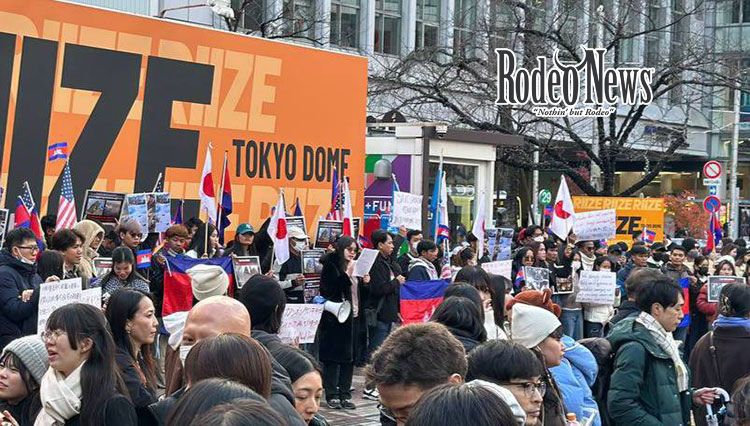
The coordinated demonstrations took place in major cities such as Tokyo, Osaka, Aichi, Hiroshima, and Fukuoka, with two separate protests in Tokyo. Protesters expressed outrage over what they said were indiscriminate airstrikes and artillery attacks launched by Thai forces. These attacks, according to the Cambodian community, have not only endangered civilians but also displaced hundreds of thousands of people along Cambodia’s border with Thailand.
Protests Across Six Locations
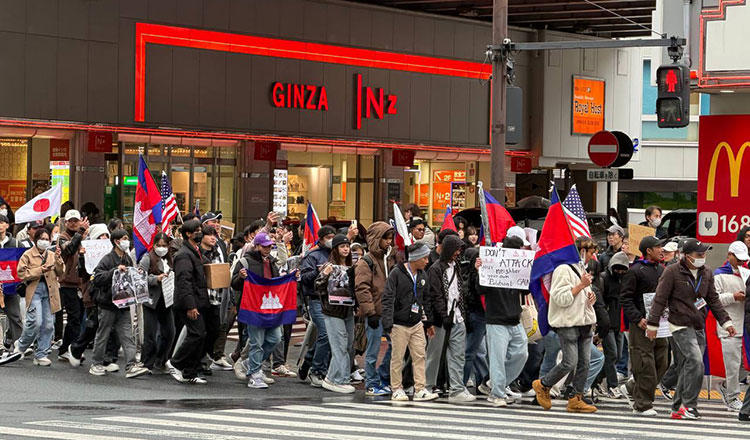
Despite harsh weather conditions—near-freezing temperatures and rain—thousands of Cambodians gathered in public squares and outside key embassies to voice their opposition to the escalating violence. The demonstrators chanted slogans in solidarity with Cambodia’s military and government, condemning the Thai military’s alleged use of heavy weaponry that has resulted in widespread destruction.
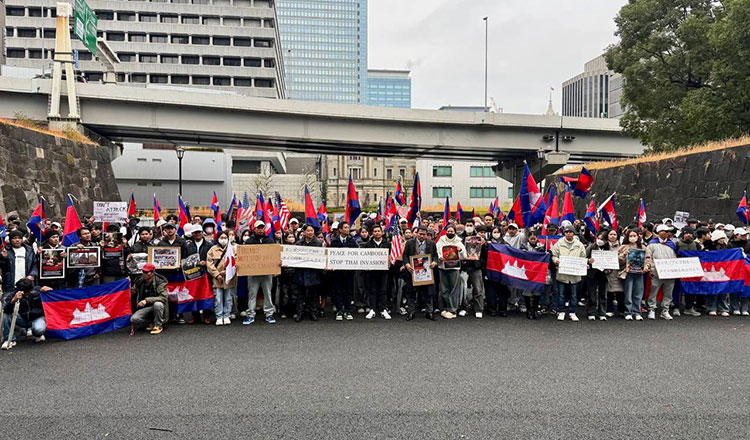
Participants carried banners demanding international action to stop the attacks, with many calling for stronger condemnation from the United States, Malaysia, and the broader international community. At several locations, protesters submitted petitions to the U.S. and Malaysian embassies in Japan, as well as Japan’s Ministry of Foreign Affairs, urging diplomatic pressure on Thailand to cease its military operations against Cambodia immediately.
Calls for International Intervention
The Cambodian community’s primary demand was clear: Thailand’s military aggression must be halted, and those responsible for the attacks held accountable. The protesters specifically condemned the destruction of civilian infrastructure, including schools and pagodas, as well as the reported human rights violations committed by Thai forces.
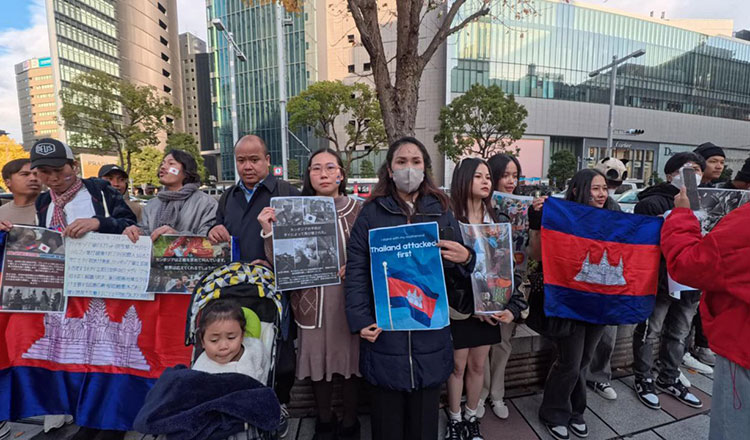
“Our children, our families, our countrymen—how can we sit back and let them suffer?” said one protester, who identified himself as a Cambodian student in Japan. “We call on the global community to stand with Cambodia. If we don’t act now, this violence could spill over and threaten peace in the entire region.”
The Cambodian diaspora in Japan warned that continued attacks would put civilian lives at risk, destabilize the region, and further strain diplomatic relations between Thailand and Cambodia. In their petitions, they called for immediate diplomatic intervention, urging Japan to join the global effort to pressure Thailand to end its offensive.
Solidarity with Cambodian Armed Forces
Many of the protestors expressed unwavering support for Cambodia’s armed forces, which they praised for their efforts to defend the country’s territorial integrity. Cambodian nationals across Japan showed solidarity with their government, rallying around the leadership’s decisions to resist Thai military actions and protect the nation’s sovereignty.
“We stand with our leaders. We stand with our soldiers,” one protester declared, holding a banner that read: “Stop Thai Aggression, Defend Cambodia’s Sovereignty.” The demonstration was not only a political statement but also a show of cultural pride, with Cambodian flags and traditional attire visible among the crowds.
Previous Protests and Rising Tensions
The December 14 protests were the second major demonstration held by the Cambodian community in Japan in less than a week. On December 10, similar protests took place in both Tokyo and Osaka, signaling the growing sense of urgency within the Cambodian diaspora to draw attention to the escalating conflict.
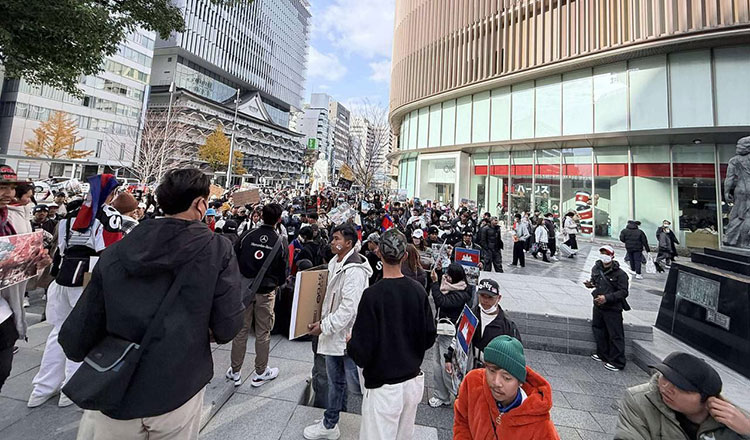
The Thai government has not yet issued a formal response to the Cambodian protests, though official statements have previously asserted that military operations are necessary for national security and territorial defense. However, the international community, including human rights organizations, has begun to scrutinize the situation, raising concerns over the humanitarian crisis unfolding along the border.
The International Community’s Role
As Cambodia’s calls for intervention intensify, the Cambodian community in Japan is now looking to the United States and Malaysia—two countries with close ties to both Cambodia and Thailand—for support. They have called for stronger diplomatic engagement to prevent further escalation and ensure that human rights are upheld in the region.
“We need the world to know what’s happening,” said another protester, an Aichi-based Cambodian migrant worker. “We cannot stay silent. This is about our people, our families, our future.”
As the situation continues to evolve, the Cambodian community in Japan remains resolute in their demands for peace, justice, and a swift end to the violence. The protests serve as a stark reminder of the power of diaspora communities in shaping international discourse and advocating for the rights of their home countries on the global stage.