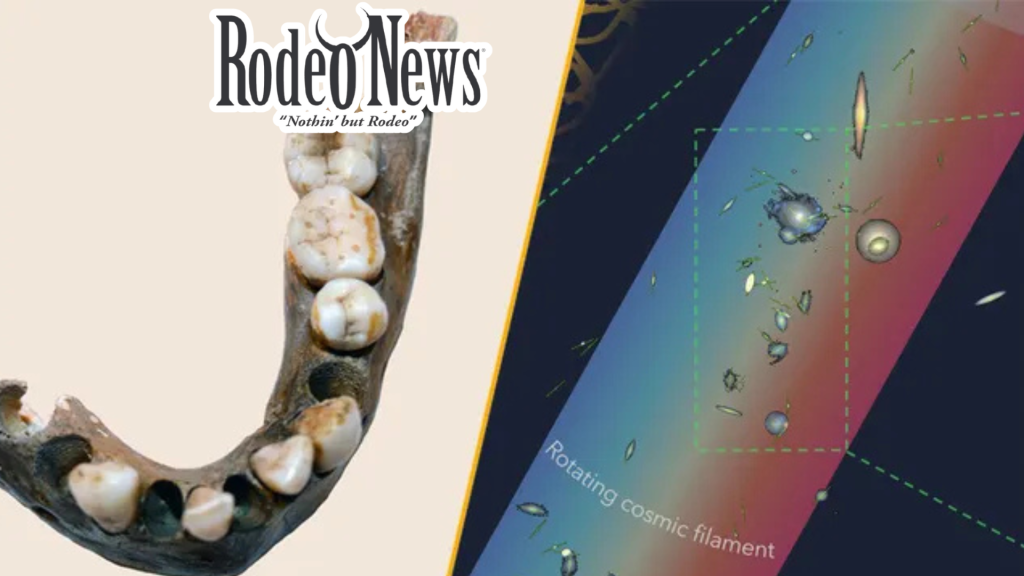
This Week in Science: Isolated Human Population, Spinning Structure in Space, and a Pit of Skulls
This week, the scientific world has made several remarkable discoveries, from the secrets of an ancient human population that remained isolated for thousands of years to the unveiling of the largest spinning structure in the universe. Plus, archaeologists uncovered a chilling pit full of skulls, offering a glimpse into a mysterious chapter of history. Here’s a roundup of the most fascinating science news.
A Human Population Isolated for Over 100,000 Years
In a groundbreaking discovery, researchers have found evidence of a human population that remained isolated for more than 100,000 years, living in near-complete isolation from the rest of the world. This population, believed to have thrived on an island off the coast of Southeast Asia, provides a unique window into human evolution. Genetic studies suggest that the group developed distinct physical traits and cultural practices that set them apart from other human populations. This discovery raises intriguing questions about the development of human societies and how isolation influenced cultural and biological traits.
The Biggest Spinning Structure in the Universe
Astronomers have uncovered an enormous spinning structure located deep in space, earning the title of the largest spinning object in the known universe. This colossal structure, a galaxy cluster known as Abell 2256, spins at an incredible speed, creating a massive magnetic field that could have profound effects on the surrounding space. Scientists believe this discovery will shed light on the behavior of matter in extreme conditions, such as in black holes and neutron stars, and improve our understanding of cosmic forces that govern the universe.
A Pit Full of Skulls: Uncovering Ancient Rituals
Archaeologists in Mexico have uncovered a gruesome and fascinating site: a pit filled with human skulls dating back over 1,000 years. The skulls, believed to be the remains of individuals who were part of a ritualistic sacrifice, offer new insights into the spiritual and cultural practices of ancient civilizations. The discovery provides compelling evidence of how these societies viewed death, the afterlife, and their relationship to the divine. Researchers are now working to understand the exact nature of the rituals and how they were linked to power structures within these ancient communities.