Death of Afghan Commander, Financial Stress Under Scrutiny in National Guard Shooting Investigation
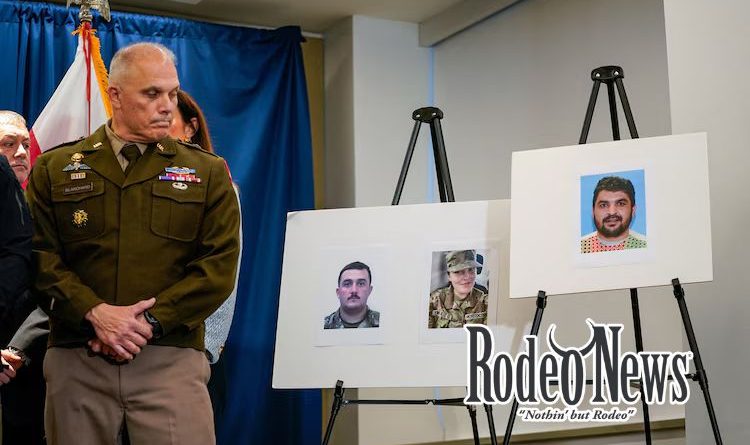
Washington, D.C. — The investigation into the tragic shooting of two National Guardsmen near the White House on November 26 has uncovered a complex web of personal, financial, and potentially psychological stress surrounding the suspect, Rahmanullah Lakanwal, 29. As authorities continue to probe the incident, sources close to the investigation have revealed key details that may shed light on what motivated Lakanwal, whose actions left one Guardsman dead and another critically injured.
Multiple sources familiar with the case told ABC News that investigators are focusing on Lakanwal’s financial situation, which appeared to be dire in the days leading up to the shooting. The suspect, who was not employed and facing an expired work permit, was reportedly struggling to meet basic needs, such as paying rent and feeding his family. Lakanwal, who had a wife and five children, was reportedly overwhelmed by the mounting pressures of his personal life.
The Death of an Afghan Commander
Adding a layer of complexity to the investigation, sources revealed that Lakanwal had been deeply affected by the recent death of an Afghan commander he allegedly revered. The commander, who worked with Lakanwal in Afghanistan, was said to have played a significant role in the suspect’s life. According to the sources, the loss of the commander came at a time when Lakanwal’s financial and emotional stress was reaching a breaking point.
Lakanwal had worked closely with U.S. forces in Afghanistan, including the CIA, and was reportedly a trusted member of a team that targeted counterterrorism operations in Kandahar. His connection to the U.S. military and intelligence agencies dates back several years, but his life in the United States had been marked by personal and financial turmoil.
Mounting Pressures and Possible Mental Health Strain
In addition to his financial challenges, the suspect may have been grappling with a mental health crisis. Sources suggest that Lakanwal’s stress may have been compounded by the feeling of being disconnected from his past life in Afghanistan and the growing uncertainty about his future in the U.S. With his work permit expired and no steady income, Lakanwal faced significant obstacles in establishing a stable life for his family.
Law enforcement officials have also suggested that Lakanwal’s actions may have been influenced by an overwhelming sense of desperation. While there is no confirmed evidence linking Lakanwal to any terrorist organization, investigators are leaving no stone unturned. The FBI, Homeland Security, and intelligence officials have all been involved in examining whether there was any international involvement or influence behind the attack.
Despite these investigations, no specific evidence has surfaced tying Lakanwal to any known terror group, and authorities have not filed terrorism-related charges as of now.
The Shooting and the Fallout
On the day of the attack, Lakanwal drove from his home in Washington state to Washington, D.C. There, he approached two members of the National Guard near the White House and opened fire, critically wounding one Guardsman and killing another. The fatality was identified as a female service member, who succumbed to her injuries the following day. The incident has sent shockwaves through the National Guard community and raised concerns about security in the nation’s capital.
U.S. President Donald Trump condemned the attack, calling it “an act of evil, an act of hatred, and an act of terror.” He further pointed to the suspect’s Afghan background and his arrival in the U.S. after the 2021 Afghanistan withdrawal as points of concern. Trump also used the tragedy to criticize the Biden administration’s handling of the Afghanistan withdrawal, although no evidence has emerged suggesting that Lakanwal’s actions were connected to any political or ideological movement.
Lakanwal’s Background and Asylum Status
Lakanwal’s past is equally murky. According to sources, he was part of the Zero Unit, a group that worked closely with the CIA and the Joint Special Operations Command in Afghanistan. This elite force was tasked with targeting high-value counterterrorism targets, and Lakanwal was reportedly a trusted operative within that team.
After fleeing Afghanistan in 2021, Lakanwal applied for asylum in the United States in 2024. His asylum request was granted under the Trump administration in April 2024, though questions remain about whether his past affiliations or mental state should have been more thoroughly examined before his application was approved.
Ongoing Investigation and Legal Repercussions
As the investigation continues, authorities are sifting through Lakanwal’s personal history, including his family life, financial struggles, and potential links to terrorist networks. The FBI has been interviewing his relatives and associates, while agents have also been combing through his social media accounts and mobile devices in search of any clues that might explain his motivations.
Despite the extensive investigation, no formal charges have been filed against Lakanwal at this time. Law enforcement is still exploring all possibilities, including whether this tragic shooting was a result of a personal crisis rather than an act of terrorism.
This story is still developing, and authorities have pledged to provide further updates as more information becomes available. The community remains shaken by the events, and many are left questioning how an individual facing such immense personal and financial challenges could have reached such a breaking point.