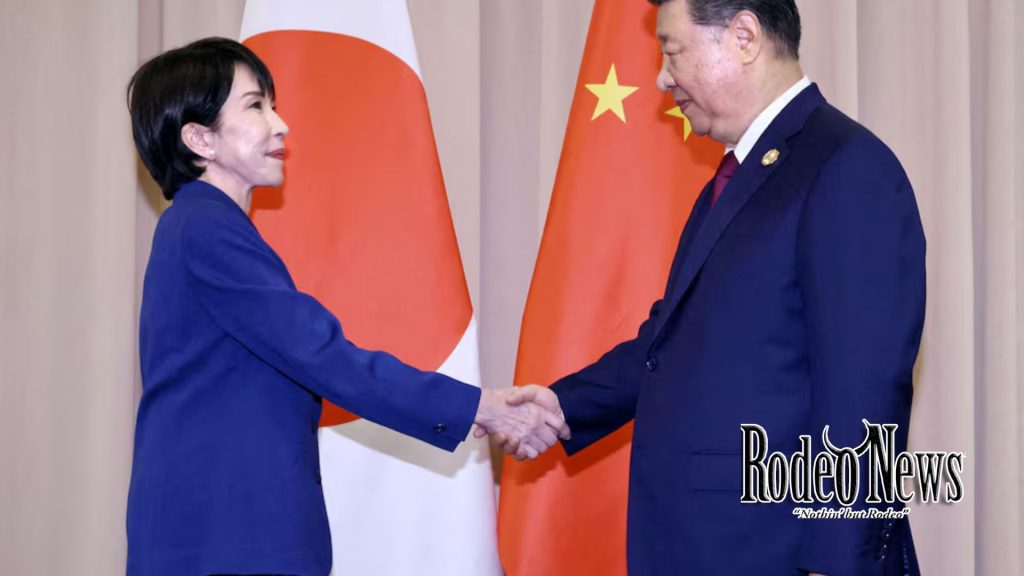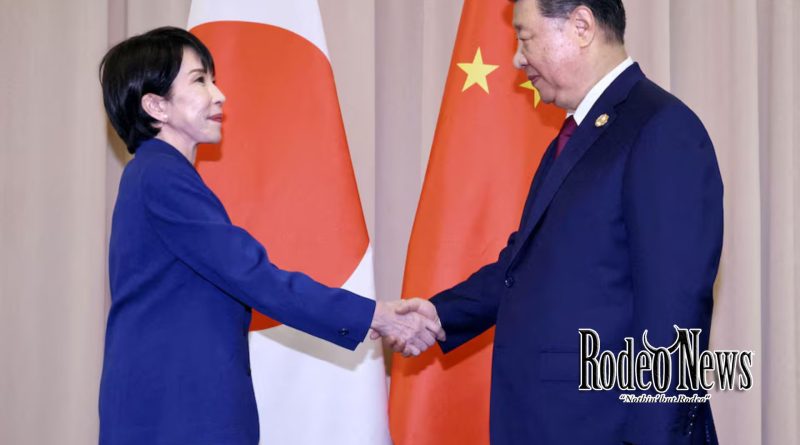
China has formally elevated its dispute with Japan over Taiwan to the United Nations, accusing Tokyo of threatening an “armed intervention” and vowing to defend its sovereignty with unprecedented firmness.
In a letter to U.N. Secretary-General Antonio Guterres, China’s U.N. Ambassador Fu Cong sharply rebuked Japanese Prime Minister Sanae Takaichi, saying her recent warning that a Chinese attack on Taiwan could trigger a Japanese military response constitutes “a grave violation of international law and diplomatic norms.” Reuters+2Investing.com+2
Fu went on to warn that any Japanese attempt to intervene militarily in the Taiwan Strait would be seen by Beijing as an act of aggression. He added that China “will resolutely exercise its right of self-defence under the U.N. Charter and international law,” underscoring what it sees as its sovereign right to respond. Investing.com+2The Straits Times+2
A Deepening Crisis
This confrontation marks one of the most serious bilateral crises between China and Japan in years. At its core lies Beijing’s long-standing claim that Taiwan is part of China—a stance Taiwan rejects, insisting its future should be determined by its people.
Takaichi, who became prime minister last month, broke from Japan’s past ambiguity on Taiwan by suggesting a Chinese assault could be interpreted as a “survival-threatening situation” for Japan—a legal justification for deploying its Self-Defense Forces. This line of reasoning triggered China’s robust diplomatic backlash.
Beyond Diplomacy
The fallout has already stretched beyond diplomatic letters. China has cancelled Japanese cultural events, including concerts, and said Tokyo’s recent statements “openly challenge” its core interests. bdnews24.com+1
Fu’s letter also invoked historical grievances, referencing the Potsdam and Cairo Declarations—post–World War II agreements that Beijing argues support its sovereignty claims over territories including Taiwan. Investing.com+1 However, many governments view these postwar documents more as political statements than legally binding treaties. The Japan Times
Global and Regional Implications
The timing of the letter coincides with heightened tensions elsewhere. According to Chinese officials, Japan’s recent remarks aren’t just a policy shift—they challenge the postwar international order. Chinese Mission to the UN
China’s warning also carries a practical message: it is prepared to use its right to self-defence, not only rhetorically, but potentially in line with its interpretation of international law.
Japan, for its part, has reiterated that its commitment to peace remains unchanged, even as diplomatic channels heat up. Reuters
Conclusion
By bringing its dispute with Japan before the U.N., China is signaling that it views Tokyo’s recent comments on Taiwan not merely as diplomatic provocations but as a threat to its territorial integrity. With both sides now publicly raising the stakes, the risk of escalation in East Asia appears to be growing