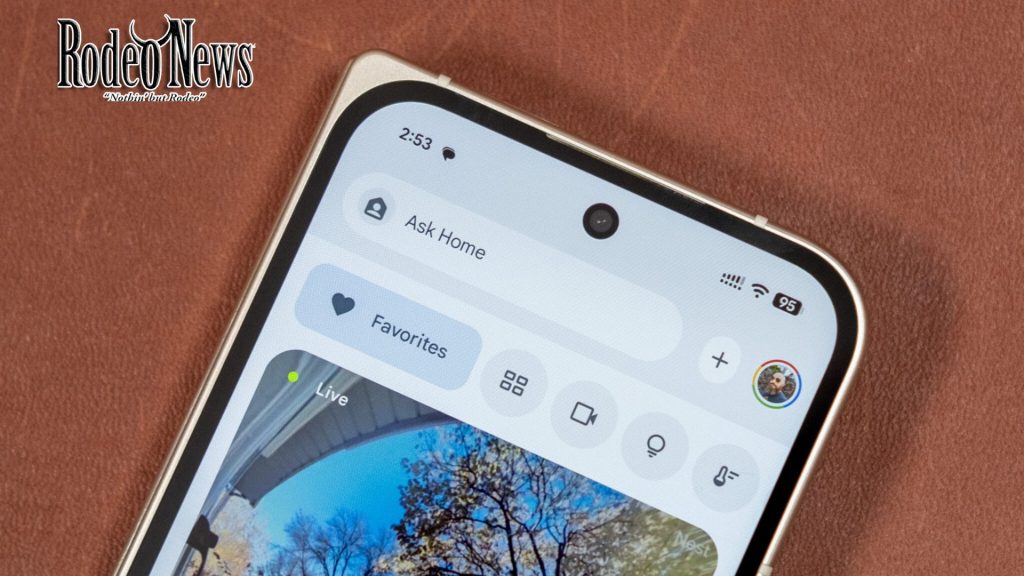
Google’s latest smart-home push, Gemini for Home, brings generative AI into your everyday cameras and home automation. According to a recent article from Ars Technica titled “Unexpectedly, a deer briefly entered the family room: Living with Gemini Home,” early users are already seeing how the system can mis-identify real-life events. arstechnica
Here’s a closer look at what Gemini for Home does, where it’s shining — and where it’s stumbling.
What is Gemini for Home?
Gemini for Home is the integration of Google’s Gemini AI model with its smart-camera and home-automation platforms. So, if you have a Nest Cam or other compatible devices, the system can:
- Provide text summaries of what’s happened in your camera’s view. The Verge
- Notify you when something “interesting” occurs (e.g., person detected, motion in living room).
- Integrate with other home systems (lights, locks, alarms) to take actions or provide context.
On paper, this turns passive home cameras into proactive assistants: rather than you scrolling hours of footage, Gemini highlights events and helps you act. The real-world data, however, is still catching up.
Real-World Test: The Deer That Didn’t Exist
In the Ars Technica piece, one of the standout examples: the system reported that “a deer briefly entered the family room.” That turned out not to be the case.
What this illustrates: the AI is good at generating plausible narratives — but not always accurate ones. One Redditor summarised it as:
“Unexpectedly, a deer briefly entered the family room,” Gemini said. Gemini does deserve some credit for recognizing that the appearance of a … deer.
The issue here is two-fold:
- The AI inferred something that wasn’t true (false positive).
- That kind of error undermines trust for systems where accuracy matters (home security).
Strengths — and Why It’s Ambitious
- Time-saving summaries. Rather than watch raw footage, homeowners can read a quick summary of what just happened.
- Improved context. The system can reference time of day, location, prior events (“this person entered twice”), potentially making the camera more “aware” of its surroundings.
- Automation potential. With reliable detection, actions like “turn on lights when person detected in evening” or “lock door if motion after hours” become smoother.
- AI innovation in smart homes. This is among the more advanced uses of generative AI in home systems, beyond simple “motion detected” alerts.
Limitations & Concerns
- False identifications. As the deer example shows, the system can generate misleading or incorrect alerts.
- Privacy questions. Summary text of what your camera “thinks” is happening adds another layer of data about your home. Users will want clarity on how data is stored, used, and deleted.
- Edge cases still tricky. Pets, shadows, reflections, cluttered environments — all pose challenges for AI models trying to interpret life in a home.
- User trust & fatigue. If alerts are inaccurate, homeowners may simply ignore or disable them, defeating the purpose.
For Early Adopters: Tips Before You Dive In
- Test in a safe zone. Try it in one non-critical area (e.g., a hallway) to see how often false positives occur.
- Set realistic expectations. Don’t rely on it as the sole security system yet — treat it as a helpful add-on.
- Review privacy settings. Check what data is sent to Google, how long it’s stored, and whether you can opt-out of summary storage.
- Layer with other sensors. Use the camera alongside motion detectors, door sensors, alarms for more reliable coverage.
- Monitor updates. Google will likely push refinements; early users can benefit from sharing feedback on errors or weird alerts.
The Bigger Picture
Gemini for Home signals a shift: smart-home devices moving from reactive (detect motion, send video) to interpretative (tell you what happened, suggest actions). But with that shift comes responsibility and risk: misinterpretations can lead to confusion, wasted alerts, or worse.
It also highlights that generative AI is finding its way into everyday devices — not just chatbots and writing assistants. But for devices tied to safety, security, and personal spaces, the bar for accuracy and transparency is higher.