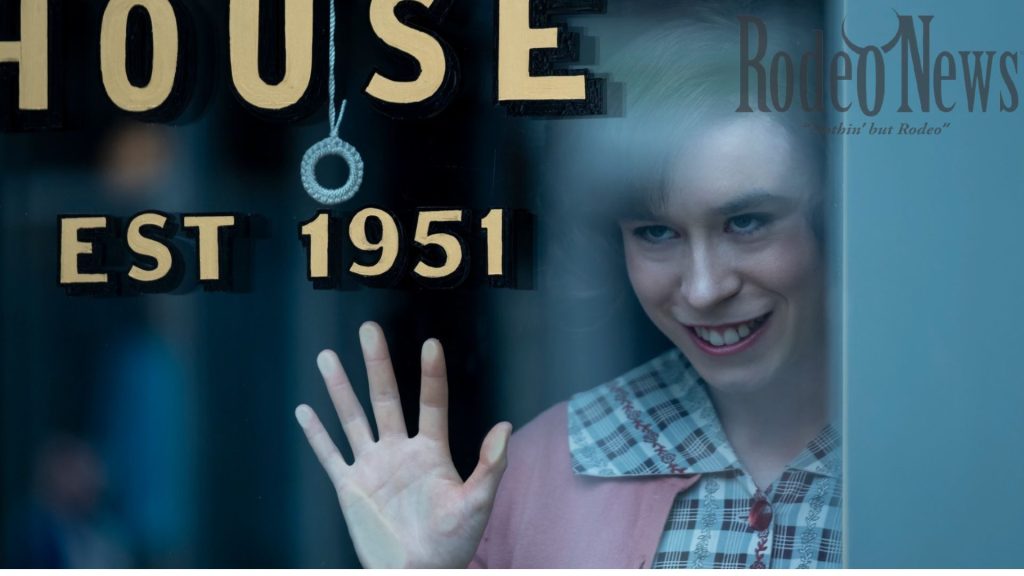
A fresh take on an old terror
Yes, the terrifying clown known as Pennywise still looms large. But the makers of Welcome to Derry insist the real horror lies in what the town tolerates—its everyday cruelty, its buried history, its collective amnesia.
As producer Barbara Muschietti told Salon:
“Derry is synonymous with the country … It’s a reflection of whatever is going on in any town in America.
Thematic core: fear as weapon
Showrunners Brad Caleb Kane and Jason Fuchs emphasize that they used King’s source material more for its thematic breadth than its literal plot. “The weaponization of fear. The use of fear as a tool to divide, to conquer, to consume, to pacify in order to gain power.” Fuchs said
The setting of Derry is re-imagined: the factory jobs, the military base, industrial hazards, institutional neglect—all forms of terror that fly under the radar.
A more inclusive horror landscape
Welcome to Derry broadens the story beyond the familiar white protagonists of previous versions. It highlights historically marginalized groups—Black and Indigenous characters—placing them at the heart of Derry’s mythology and its resistance
For example: Leroy Hanlon, a returning Air Force major, and his family become key players in Derry’s hidden narrative.
Why this matters
Horror rarely stays in the dark. It reflects the time we live in. By putting communal fears—bigotry, neglect, systemic violence—alongside the supernatural, the show asks: what do we ignore when we focus only on monsters?
In doing so, Derry becomes less a fictional town and more a mirror.
What to watch for
- The interplay between the supernatural (Pennywise) and the mundane (everyday terror).
- Episodes that centre on marginalized characters and their distinct fears.
- How the season develops the “weaponization of faith” and “weaponization of fear” across future seasons (the creators have a three-season plan).
- Moments where the town’s structure itself is shown as oppressive, rather than only the monster in the sewer.