Pentagon Deploys Aircraft Carrier to Latin America Amid Escalation by Trump Administration
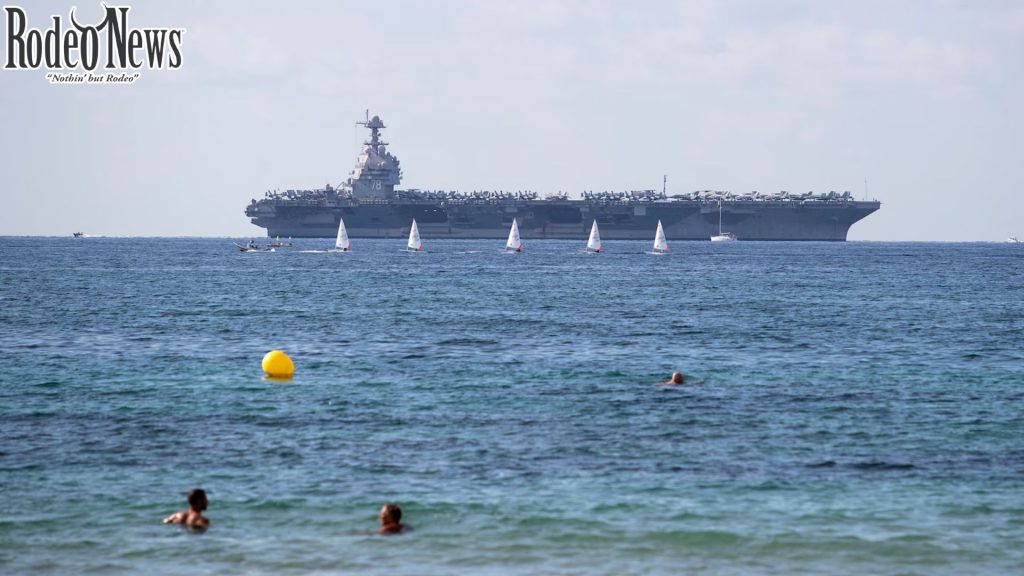
The USS Gerald R. Ford and its accompanying strike-group are being deployed to Latin America in a major intensification of U.S. anti-drug operations, as the United States Department of Defense (DoD) and the administration of Donald Trump signal a shift from maritime interdiction to broader regional military posture.
According to Pentagon statements, the purpose of this deployment is two-fold: to “disrupt narcotics trafficking” in the Western Hemisphere and to “degrade and dismantle” the criminal networks responsible.
What’s happening
The Ford strike-group, currently transiting from Europe, will join several warships already operating in the Caribbean Sea.
The deployment will significantly increase U.S. military presence in the region; approximately 6,000 personnel across eight warships are involved, in addition to advanced F-35 fighters staged in Puerto Rico.
The Washington Post
In tandem, a new joint task force under Calvert Worth has been activated to oversee operations in the region.
The impetus is tied closely to President Trump’s tough rhetoric on narcotics and the naming of regional states, including Venezuela and its leader Nicolás Maduro, as key threats in the drug-trafficking network.
Why this is significant
This deployment marks a notable escalation in how the U.S. approaches narcotics control abroad. Traditionally a law-enforcement and border-control domain, the operations are now taking a clear military character. The involvement of a super-carrier and task-force-level assets underscores that shift.
Legal and diplomatic implications
Critics and legal experts warn that targeting individuals engaged in illicit trafficking with military force may violate international law, given that these are not conventional armed-combat actors.
Diplomatically, the move has stirred tension with regional partners. For example:
The administration has leveled sanctions against Colombia’s president Gustavo Petro — historically a U.S. ally in anti-narcotics efforts — accusing him of enabling cartel activities.
The focus on Venezuela and possible future strikes against land infrastructure raise concerns about sovereignty and potential spill-over into regional stability.
What to watch
Operational focus: Will the Ford and its strike-group act purely in the Caribbean waters, or will operations extend to the eastern Pacific or even land‐based targets in Venezuela or neighbouring countries?
Rules of engagement: How will the U.S. define its targets and apply force under this campaign? Will this be framed as military conflict, law enforcement, or a hybrid?
Regional response: How will Latin American countries react to increased U.S. naval presence and possible operations near or inside their territories?
Domestic accountability: The depth and transparency of U.S. justification for military action against criminal networks will likely draw scrutiny from rights advocates and legal scholars