Indonesia Forms Building Inspection Task Force After Fatal Islamic School Collapse
Jakarta, October 12, 2025 — The Indonesian government has announced the creation of a special building inspection task force to assess the safety of religious boarding schools (pesantren) across the country, following a deadly school collapse in Sidoarjo, East Java, that claimed the lives of dozens of students.
According to The Star, the task force will prioritize inspections on older or unlicensed pesantren buildings to identify potential structural hazards and prevent future disasters. The move comes after a devastating tragedy that shocked the nation and sparked urgent calls for stricter construction oversight.
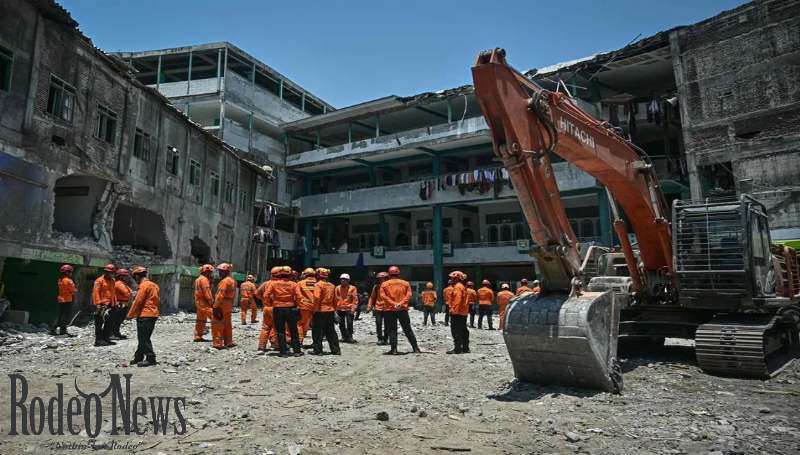
The accident occurred on September 29, 2025, when part of the Al Khoziny Islamic Boarding School collapsed during the afternoon prayer, trapping dozens of students under concrete debris. The collapse was linked to an unauthorized extension project that overloaded the building’s structure. After a week-long search operation, 61 victims were confirmed dead, making it one of the deadliest building accidents in Indonesia’s recent history.
Tragedy That Sparked a Nationwide Audit
The collapse of Pondok Pesantren Al Khoziny became a turning point for the government’s approach toward infrastructure safety in Islamic schools. The building, initially a two-story structure, had recently undergone renovation to add another floor. Investigators later discovered that the foundation and main support columns were not built according to safety standards, leading to structural failure when concrete for the new floor was poured.
Police have launched a criminal probe into possible negligence during construction, summoning civil engineers, contractors, and local permit authorities for questioning.
The scale of the tragedy triggered widespread public outrage, prompting senior officials to act swiftly. The formation of a nationwide building inspection task force was seen as a first step toward preventing similar disasters in Indonesia’s vast network of Islamic schools.
The National Building Inspection Team: Goals and Functions
Coordinating Minister for Social Empowerment and Investment, Muhaimin Iskandar, confirmed that the government would establish a special task force to audit pesantren infrastructure throughout the archipelago. The initiative, he said, is not merely reactive but part of a broader strategy to ensure educational facilities meet basic safety requirements.
The new task force will focus on five core areas:
- Comprehensive Data Mapping
Compiling a nationwide database of pesantren buildings and cross-verifying their licensing, age, and ownership records. - Structural Safety Audits
Sending certified engineers to examine key structural components — foundations, beams, and columns — as well as overall design integrity. - Repair & Reinforcement Recommendations
High-risk buildings will receive immediate repair or demolition recommendations, and operations may be suspended if safety thresholds are not met. - Permit Enforcement (PBG Regulation)
Every pesantren must comply with the national Persetujuan Bangunan Gedung (Building Approval Permit). The team will verify compliance and impose penalties for unauthorized construction. - Periodic Monitoring
Regular follow-up inspections will ensure that any structural improvements are maintained over time and new risks are addressed.
Officials emphasized that the task force will start with the oldest and most vulnerable institutions before expanding nationwide.
Implementation Challenges
Despite the urgency, experts warn that implementing the program will be a major logistical challenge.
- Massive Number of Pesantren
Indonesia hosts more than 42,000 Islamic boarding schools, but only around 50 have official building permits, according to The Star. That means the majority operate without formal structural inspections or certified engineering oversight. - Limited Technical Resources
Deploying qualified civil engineers and testing equipment to remote areas requires significant coordination and funding. - Funding Constraints
Many pesantren operate on limited budgets and rely heavily on community donations. If the inspection reveals structural risks, these schools may struggle to finance repairs or reconstruction. - Overlapping Jurisdictions
Pesantren institutions fall under the Ministry of Religious Affairs, not the Ministry of Public Works. This bureaucratic overlap complicates supervision and regulatory enforcement. - Balancing Safety and Access to Education
Shutting down unsafe pesantren could disrupt education for thousands of students, especially in rural areas where alternative schools are scarce. Officials stress that enforcement must be balanced with compassion and practical support.
Education watchdog groups argue that the inspection initiative must be backed by long-term investment in safe school construction rather than relying on short-term emergency audits.
Reactions Across the Nation
The announcement has drawn a mix of relief and concern from various sectors.
- Educational and Watchdog Organizations
The Indonesian Education Oversight Network (NEW Indonesia) welcomed the plan but urged the government to provide financial assistance for building maintenance to prevent further tragedies. - Parents and Local Communities
Parents of pesantren students expressed both gratitude and anxiety — grateful for the government’s intervention, but fearful that closures may temporarily displace students. - Religious Leaders
Several pesantren administrators voiced support for the initiative, provided that inspections are transparent and accompanied by technical guidance rather than punitive action. - Law Enforcement and Engineers
Police investigators are already working with civil engineers to determine whether criminal negligence contributed to the Al Khoziny collapse. Early findings suggest that cost-cutting and poor supervision played a significant role.
The broader consensus is clear: this tragedy must serve as a wake-up call for Indonesia’s construction oversight and education infrastructure systems.
Lessons and Implications for the Future
The establishment of a nationwide inspection team could mark a historic shift in how Indonesia safeguards its educational facilities.
- Standardizing Safety Across Islamic Schools
For decades, many pesantren were built through community efforts without formal engineering input. Creating a national safety standard could help prevent avoidable structural failures. - Government Responsibility in Education Safety
Education law should guarantee not only access to learning but also the physical safety of students in all types of schools — public, private, and religious. - Cultivating a Culture of Safety
School administrators must embrace regular maintenance, routine safety training, and independent audits to ensure long-term building integrity. - A New Oversight Model
The pesantren inspection framework could eventually be applied to all types of schools across Indonesia, creating a unified system of structural accountability.
Voices of Hope Amid Tragedy
In East Java, recovery efforts continue both physically and emotionally. Local officials and volunteers have worked tirelessly to support survivors and affected families. Prayers and condolences have poured in from across Indonesia and abroad.
“The pain of losing so many young lives must lead to reform,” said a civil engineer volunteering in Sidoarjo. “We owe it to them to make sure every school stands on solid ground — literally and morally.”