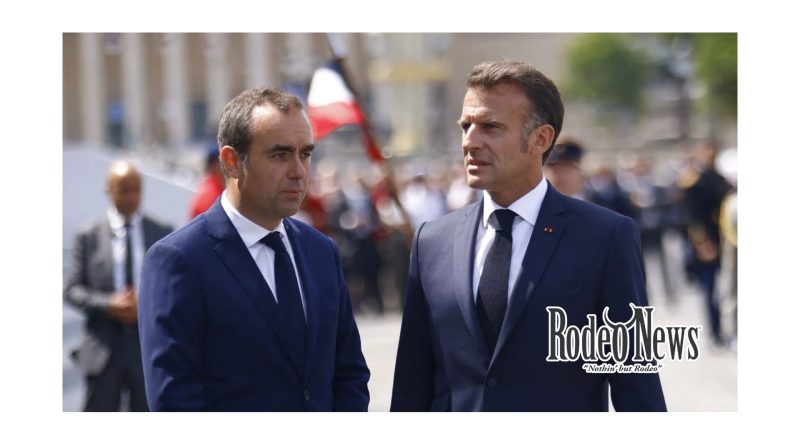
France’s Macron Reappoints Sébastien Lecornu as Prime Minister Amid Political Crisis
Paris, October 11, 2025 — French President Emmanuel Macron on Friday reappointed Sébastien Lecornu as prime minister, less than a week after Lecornu’s unexpected resignation plunged the country into deeper political uncertainty. Macron tasked Lecornu with forming a government and delivering a budget, in a bid to resolve France’s ongoing political deadlock and mounting economic challenges.
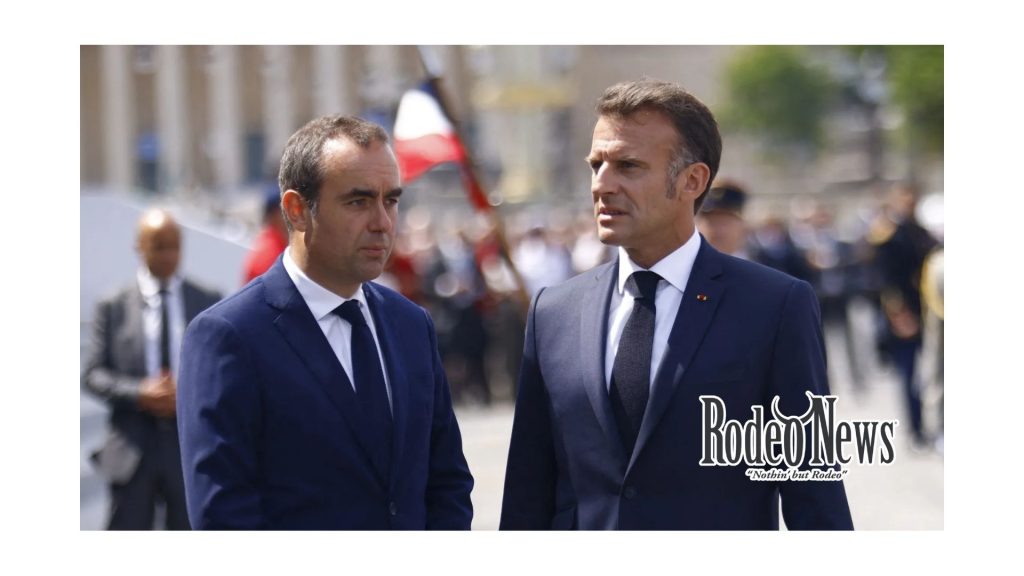
The move comes after intense negotiations and political wrangling following Lecornu’s sudden resignation earlier this week, which was triggered by internal disputes within his newly formed Cabinet. France is currently grappling with soaring public debt, economic stagnation, and rising poverty—issues compounded by the instability in the government.
Macron’s decision to reappoint Lecornu is widely viewed as a critical attempt to stabilize his administration during his second term, which runs through 2027. Without a majority in the National Assembly, Macron’s centrist coalition has struggled to push through key reforms, leading to growing criticism both from opposition parties and factions within his own camp.
A brief statement from the President’s office late Friday confirmed Lecornu’s reinstatement, marking a swift turnaround since his initial appointment a month ago and his resignation four days prior. Lecornu accepted the role, citing a sense of duty and emphasizing his commitment to presenting a viable budget by year-end and addressing everyday issues faced by French citizens.
In a statement posted on social media, Lecornu underscored the need for political renewal and diversity within the Cabinet, noting that all members would forgo ambitions to run in the 2027 presidential election. “We must put an end to this political crisis that exasperates the French, and to this instability damaging France’s image and interests,” he wrote.
Lecornu’s abrupt resignation on Monday came just hours after announcing a new Cabinet that faced immediate backlash from a key coalition partner. The shock departure reignited calls from opposition factions for Macron to either resign or dissolve parliament again, as he did in mid-2024. Yet, Macron opted to seek a swift resolution by promising to name a successor within 48 hours.
On Friday, Macron convened a meeting with political party leaders that lasted over two hours, aiming to build consensus amid concerns that appointing another prime minister from his fragile centrist bloc could prolong the parliamentary deadlock. Marine Tondelier, leader of The Ecologists, voiced skepticism: “How can one expect that all this will end well? The impression is that the more isolated he is, the more rigid he becomes.”
France’s political turbulence has now entered its second year, with successive minority governments falling and leaving the European Union’s second-largest economy mired in crisis. At the end of Q1 2025, France’s public debt stood at a staggering €3.346 trillion ($3.9 trillion), equating to 114% of its GDP. Meanwhile, poverty reached a historic high of 15.4% in 2023, according to national statistics.
This combination of economic fragility and political stalemate has raised alarms among financial markets, credit rating agencies, and the European Commission, which continues to pressure France to comply with EU fiscal rules designed to limit debt accumulation.
Notably, the two largest opposition parties—the far-right National Rally and the far-left France Unbowed—were excluded from the discussions on Friday. The National Rally demands fresh legislative elections, while France Unbowed calls for Macron’s resignation.
Despite the opposition, Lecornu remains cautiously optimistic. Earlier this week, he argued there remains a “majority that can govern,” including Macron’s centrist bloc, allies, and moderate opposition members. However, he acknowledged the challenges ahead in securing parliamentary support.
Lecornu now faces a critical task: to forge compromises that could prevent an immediate vote of no confidence. This may require abandoning deeply unpopular policies such as Macron’s pension reform, which raised the retirement age from 62 to 64 despite widespread protests and parliamentary resistance.
The current deadlock traces back to Macron’s controversial decision in June 2024 to dissolve the National Assembly, triggering snap elections that resulted in a hung parliament. The political gridlock has frustrated voters, spooked investors, and stalled efforts to control France’s growing deficit and public debt.
Without a stable parliamentary majority, Macron’s governments have repeatedly faltered, with Lecornu’s resignation—just 14 hours after unveiling his Cabinet—highlighting the fragility of the president’s coalition amid fierce political and personal rivalries.
As Lecornu embarks on his renewed mandate, France watches closely, hoping for a resolution to its political paralysis and a path to economic recovery.