Cost of Living Protests Sweep 4 European Nations
Thousands of people have taken to the streets across France, Belgium, Italy and Portugal as mounting living costs, housing pressures and concerns over public services fuel demonstrations across Europe. The protests on October 17, 2026, highlighted growing public frustration over household expenses, wages and the ability of ordinary people to maintain a decent standard of living.
Although the demonstrations were organised separately, they reflected similar concerns about economic insecurity and the pressure on families struggling to meet everyday expenses. France witnessed the largest mobilisation, while demonstrations in Belgium, Italy and Portugal brought attention to education costs, housing affordability and low wages.
The unrest is putting renewed pressure on governments across the European Union to address economic concerns that continue to affect households, students and workers.
Cost of Living Protests Reach France, Belgium, Italy and Portugal
France experienced one of the most significant days of demonstrations, with hundreds of thousands of people participating in rallies across the country. According to figures reported by French authorities, approximately 550,000 demonstrators took part in 110 marches nationwide. Organisers estimated attendance at around 800,000.
The demonstrations brought together students, trade union members, teachers, activists and people concerned about rising living expenses. Participants expressed frustration over the cost of essential goods, deteriorating school conditions and wider questions surrounding economic inequality.
However, the protests were not entirely peaceful. Clashes between demonstrators and police were reported in several cities, prompting officers to use tear gas and water cannons. French authorities also reported arrests as incidents involving property damage and looting occurred in some locations.
Despite the disturbances, many participants joined peaceful marches to express their concerns about household finances and public services.
The demonstrations also drew comparisons with France’s Yellow Vest movement, which emerged in 2018 amid anger over fuel prices and broader economic grievances.
Belgium Sees Student Protests Over Education Costs
In Belgium, demonstrations focused heavily on education expenses and concerns about access to higher education.
In Brussels, student-led protests escalated into clashes with police. Officers used tear gas and water cannons after some demonstrators allegedly threw objects and started fires. Authorities also reported disturbances in Liège, where protesters raised concerns about education costs and access to study materials.
The demonstrations followed weeks of student mobilisation over university registration fees and proposed reforms that students fear could make higher education less accessible.
For many young people, the debate extends beyond university fees. Education expenses, housing costs and uncertain employment prospects can create significant financial challenges for students entering adulthood.
The Belgian demonstrations illustrate how concerns about living costs can intersect with broader questions about educational opportunity and social mobility.
Authorities have condemned the violence while facing pressure to maintain public order. Meanwhile, the underlying concerns raised by students remain part of a wider debate about the affordability of education.
Portugal Protests Focus on Housing and Low Wages
Portugal also experienced major demonstrations, with tens of thousands of people reportedly marching in Lisbon against rising living costs, low wages and the housing crisis.
Trade unions and housing advocacy groups joined the mobilisation, calling for higher wages, improved pensions and stronger public services. Protesters argued that rising housing expenses have made it increasingly difficult for ordinary workers to afford accommodation in major cities.
Housing affordability has become a particularly prominent issue in Portugal. House prices have more than doubled since 2017, while rents for newly signed leases have also increased substantially, according to the reporting.
These pressures have created difficulties for renters, younger workers and families attempting to balance accommodation costs with food, transport and other essential expenses.
In Lisbon, demonstrators also highlighted the gap between housing prices and household incomes. For people whose wages have not kept pace with expenses, finding affordable accommodation can mean sacrificing other basic needs.
Portuguese government representatives have pushed back against pressure from street demonstrations. Nevertheless, the scale of public mobilisation shows that housing affordability and purchasing power remain important political and economic issues.
Italy Witnesses Clashes During Cost of Living Demonstrations
In Italy, demonstrations in Milan and Bologna also highlighted concerns about living costs, although some rallies were accompanied by confrontations with police.
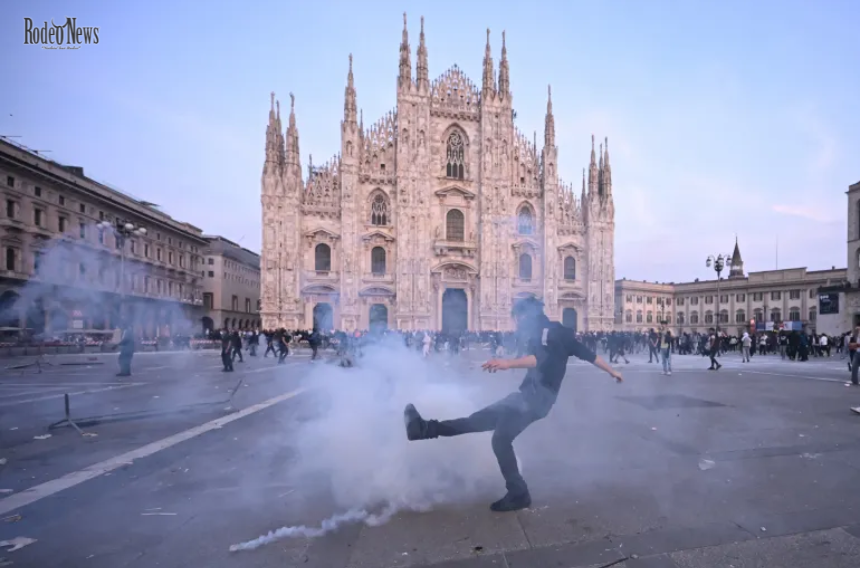
In Milan, a march that began peacefully escalated when masked individuals clashed with riot police, threw objects and set fires. Police deployed tear gas and water cannons to disperse crowds in central areas.
Reports indicated that officers were injured and demonstrators were detained. The incidents also caused damage to property and disrupted activity in parts of the city centre.
The demonstrations reflected frustration over economic pressures and broader international and domestic concerns. However, the violence drew criticism from political leaders and local authorities, who distinguished the right to demonstrate from acts that threaten public safety.
The events in Italy underline the challenge facing governments and law enforcement agencies: responding to legitimate public grievances while preventing demonstrations from escalating into violence.
Why Cost of Living Protests Are Growing Across Europe
The simultaneous demonstrations point to several economic and social pressures affecting European households.
Housing affordability remains a major concern. Rising rents and property prices can consume a substantial share of household income, leaving less money for food, transport, healthcare and education.
Wages are another central issue. Workers whose incomes fail to keep pace with essential expenses may experience declining purchasing power, even when they remain employed.
Public services and education are also under pressure. Students and families are concerned about the costs of education, while demonstrators in several countries have called for better-funded services and improved access to essential support.
These issues are interconnected. When accommodation becomes more expensive, workers may need higher wages simply to maintain their existing standard of living. At the same time, inadequate public services can increase the financial burden on families.
Although the demonstrations share common themes, they should not be treated as one coordinated European movement. Each country has its own political circumstances, economic challenges and protest organisers.
Nevertheless, the scale of the mobilisation suggests that economic security remains a significant concern across different parts of the continent.
European Governments Face Growing Public Pressure
The protests come at a politically important moment for Europe, with several countries preparing for national elections over the coming year.
Large demonstrations can influence public debate by bringing household concerns to the forefront of political discussions. Housing policy, wages, education funding and the cost of essential goods may consequently receive greater attention from political parties and government officials.
However, demonstrations alone do not guarantee policy changes. Governments must balance demands for additional public spending and economic support against budgetary constraints and competing priorities.
The challenge is particularly complex because the problems raised by protesters often require different solutions. Housing shortages may require changes to construction, planning and rental policies, while wage pressures may involve employers, unions and national labour policies.
Education concerns, meanwhile, may require targeted funding and reforms to improve access without placing additional burdens on students and families.
The effectiveness of government responses will depend on whether proposed measures address the underlying problems rather than only the immediate unrest.
What Happens Next?
The demonstrations across France, Belgium, Italy and Portugal have placed the cost of living firmly back in the European public debate.
For protesters, the central demands concern affordability, economic security and access to essential services. For governments, the immediate challenge is to maintain public order while responding to concerns that affect everyday life.
The protests also raise questions about whether similar demonstrations could emerge elsewhere in Europe. Analysts cited in reporting on the unrest have pointed to shared grievances involving education funding, rising expenses and uncertain prospects for younger generations.
Any further escalation will depend on local circumstances, political responses and the willingness of citizens to continue mobilising.
For now, the demonstrations offer a clear indication that housing, wages and public services remain major sources of concern for many Europeans. Whether that public pressure translates into lasting policy changes will be an important issue to watch in the months ahead.