NCAA-Ohio Lawsuit: 5 Key Facts About Eligibility
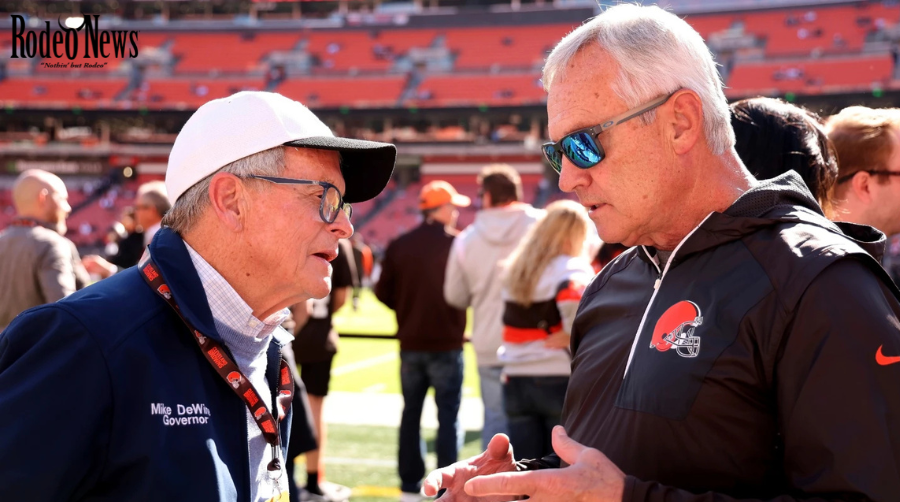
The NCAA-Ohio lawsuit has opened a new front in the growing battle over college sports eligibility, raising questions about who gets to establish the rules governing student-athletes. The National Collegiate Athletic Association has filed a federal lawsuit against Ohio Governor Mike DeWine after he issued an executive order allowing universities in the state to consider giving certain athletes an additional season of competition.
The dispute centers on athletes who graduated from high school in 2022 and have already completed four seasons of college competition. Under the NCAA’s new eligibility framework, these athletes are generally excluded from receiving a fifth season under the revised rules. DeWine’s order challenges that restriction by allowing Ohio institutions to consider letting affected players return.
The NCAA argues that Ohio’s action threatens consistent competition across college athletics. Meanwhile, the dispute highlights the difficult position of athletes whose remaining eligibility could determine their opportunities to play, earn compensation and continue their education.
As the litigation unfolds, the outcome could have consequences beyond Ohio, particularly as colleges and athletic organizations navigate a changing legal landscape.
1. Why the NCAA-Ohio Lawsuit Was Filed
The NCAA announced its lawsuit on October 16, 2026, after DeWine issued an executive order intended to give Ohio colleges and universities flexibility in applying the organization’s eligibility rules.
According to the NCAA, the order attempts to allow Ohio institutions to disregard restrictions that continue to apply elsewhere. The organization argues that this could give schools in the state an advantage when recruiting players and assembling competitive teams.
NCAA President Charlie Baker described the legal action as an extraordinary measure. The organization maintains that a common set of eligibility requirements is necessary to preserve fairness among institutions competing in the same athletic system.
The lawsuit was filed in federal court in Ohio. The NCAA is seeking judicial relief to prevent the governor’s order from undermining its rules.
In its public explanation, the organization argued that the order raises constitutional concerns, including questions involving interstate commerce and the First Amendment. Those arguments represent the NCAA’s legal position, and the court must determine their merits.
The case is unusual because it places the national governing body in direct legal conflict with a state governor over the administration of college sports.
The disagreement also illustrates a broader challenge for the NCAA: maintaining consistent national rules when state officials and courts intervene in disputes involving individual athletes.
2. What Ohio’s Fifth-Year Eligibility Order Means
The executive order focuses on athletes who graduated from high school in 2022 and have already used four seasons of college eligibility.
Under the order, Ohio’s public and private universities can consider allowing those athletes to compete for another season, even though the NCAA’s revised guidance generally excludes that group.
The distinction matters because college eligibility affects more than participation in games. An additional season can influence a player’s development, academic progress, professional prospects and financial opportunities.
For some athletes, another year could provide additional time to earn a roster position, complete a degree or demonstrate their abilities to professional scouts. Others may be pursuing opportunities connected to name, image and likeness compensation or school revenue-sharing arrangements.
However, the order does not resolve the national eligibility dispute by itself. The NCAA continues to challenge the state’s approach, and the legal status of affected athletes depends on the applicable court proceedings and eligibility decisions.
The dispute also creates uncertainty for athletic departments. Coaches must evaluate potential roster additions while considering whether those players will remain eligible throughout the season.
Ohio’s approach therefore presents a practical question for college sports: can a state provide its universities with a different eligibility standard while those institutions remain members of a national organization?
That question sits at the heart of the NCAA-Ohio lawsuit.
3. How the NCAA’s New Eligibility Rules Changed College Sports
The legal dispute follows a significant change in the NCAA’s Division I eligibility framework, approved in June 2026.
Under the revised system, athletes can generally compete in five seasons over a five-year period. The eligibility clock begins with full-time college enrollment or the academic year following an athlete’s 19th birthday, whichever occurs first.
Previously, the established framework generally allowed athletes five years to complete four seasons of competition.
The revised approach also limits opportunities to receive additional eligibility extensions. Exceptions are largely restricted to specific circumstances, such as religious missions, maternity-related situations and active-duty military service. The new framework no longer treats injuries as a general basis for extending eligibility.
The transition has proved particularly controversial for athletes who graduated from high school in 2022.
Many members of that group completed their fourth seasons during the 2025-26 academic year. They expected to have exhausted their eligibility under the previous system, only to see the NCAA introduce a new framework that allows five seasons for qualifying athletes under different timing rules.
However, the NCAA’s implementation does not generally extend the new five-season benefit to the affected 2022 graduating class.
That distinction has fueled allegations of unequal treatment. Athletes challenging the policy argue that they should not be excluded from an additional season when other players may benefit from the revised system.
The NCAA has defended its decision by arguing that allowing the older group to return could displace incoming recruits and create additional harm across college athletics.
The disagreement has since expanded into multiple lawsuits, with athletes, universities and state officials seeking different solutions.
4. Why the NCAA-Ohio Lawsuit Matters Beyond Ohio
The case could have implications for how college sports are governed across the United States.
The NCAA operates through a national framework intended to establish consistent standards for member institutions. When states adopt different approaches, schools may face competing expectations about which rules to follow.
Ohio’s executive order raises the possibility that athletes who are ineligible under NCAA guidance could receive different treatment depending on where they attend college.
That could influence recruiting decisions, roster planning and competition between universities in different states.
For example, a coach at an Ohio university might consider recruiting an athlete who has already completed four seasons. A coach at an institution elsewhere could face a different eligibility situation when evaluating the same player.
Such differences could complicate recruiting and create pressure on other states to seek similar flexibility.
The NCAA argues that this type of uneven treatment threatens competitive fairness. Its position is that schools should not be able to gain an advantage by following state-specific exceptions to common membership rules.
Critics of the eligibility restrictions, however, point to the athletes who could lose meaningful opportunities under the transition policy. From their perspective, consistent enforcement does not automatically make a rule fair to every affected player.
The courts must consider the legal arguments rather than simply decide which policy would be preferable for college sports.
The case also highlights a broader question about the relationship between private athletic organizations and state government. The NCAA establishes rules for its member institutions, but those rules may still face legal challenges when affected parties allege violations of applicable law.
A ruling could influence how similar conflicts are approached in other jurisdictions, although the precise consequences will depend on the court’s reasoning and the scope of any order.
5. Previous Lawsuits Have Added to Eligibility Uncertainty
The NCAA-Ohio lawsuit is part of a wider wave of legal challenges involving the revised eligibility rules.
One prominent case involved basketball player Brock Wisne, who brought a federal class-action lawsuit challenging the exclusion of athletes from the 2022 high school graduating class.
A federal judge in Denver ruled in Wisne’s favor, creating an opportunity for affected athletes to seek another season at their former colleges. However, an appeals court subsequently paused that ruling, leaving the dispute unresolved.
Separate state-court cases have produced different outcomes. Some judges have granted temporary relief allowing players to return, while other proceedings have left eligibility questions open.
According to Associated Press reporting, at least 26 eligibility cases had been filed in state and county courts around the country, with judges granting restraining orders or injunctions in at least 10 of those cases.
The varying decisions have created difficulties for athletes and institutions trying to plan for upcoming competitions.
A player may receive temporary permission to participate while the NCAA continues to challenge the underlying decision. A university must then consider how to manage its roster when the player’s status could change.
The timing is especially important for basketball programs preparing for the season, as well as football teams already competing.
In Ohio, the dispute has involved basketball players whose eligibility status could affect their participation in the upcoming season. Xavier forward Filip Borovićanin was among the players whose situation attracted attention after the governor’s order.
The Ohio Supreme Court has also become involved in proceedings concerning the legality of the executive order and related eligibility questions.
These developments demonstrate why the NCAA’s legal challenge is only one part of a much larger dispute.
What Happens Next in the NCAA-Ohio Lawsuit?
The immediate question is whether the federal court will grant the NCAA’s requested relief against Ohio’s executive order.
The organization must pursue its legal arguments through the judicial process, while the state may defend the governor’s action. Until the relevant courts resolve the issues, uncertainty may continue for athletes and universities affected by the policy.
The case involves constitutional questions that could require careful consideration of the NCAA’s authority, the state’s actions and the practical effects of different eligibility standards.
A court decision favoring the NCAA could limit Ohio’s ability to permit exceptions to the national framework through the challenged order. A decision favoring Ohio could complicate the NCAA’s efforts to apply a uniform standard across member institutions.
Neither outcome should be treated as certain before the court rules.
The broader eligibility litigation may also continue independently of the federal dispute. Even if one case produces a significant decision, other lawsuits could address different claims, athletes or legal questions.
For that reason, universities may need to prepare for continued uncertainty rather than expect an immediate nationwide resolution.
Could Congress Eventually Settle the Dispute?
The growing number of lawsuits has renewed calls for federal legislation addressing college sports governance.
The NCAA has argued that congressional action could help establish clearer national standards and reduce the disruption caused by repeated legal challenges.
Supporters of federal intervention contend that consistent legislation could provide universities with greater certainty when making recruiting and eligibility decisions. It could also clarify the relationship between national athletic rules and state-level policies.
However, reaching an agreement would not necessarily be straightforward. College sports involve competing interests among universities, conferences, athletes, lawmakers and athletic administrators.
Athletes may prioritize their ability to compete and receive compensation, while institutions may emphasize competitive balance, roster management and compliance obligations.
Lawmakers would need to consider these competing concerns when evaluating any proposed legislation.
Federal legislation could potentially create a more consistent framework, but its effect would depend on the specific provisions enacted and how courts interpret them.
Until then, the NCAA and affected institutions must continue responding to the existing rules and the legal challenges surrounding them.
What the NCAA-Ohio Lawsuit Means for Student-Athletes
For student-athletes, the most immediate consequence is uncertainty about eligibility and future opportunities.
A fifth season could provide additional playing time, academic progress and potential financial benefits. Conversely, an adverse ruling could close that opportunity for players who have already planned their futures around returning to college competition.
Universities face their own challenges. Coaches must evaluate recruits and returning players without always knowing whether eligibility decisions will remain in effect.
Athletic departments also need to consider the financial and administrative consequences of roster changes, particularly when recruiting decisions depend on a player’s expected availability.
The dispute may eventually help clarify how eligibility policies are applied during major rule changes. Nevertheless, the legal process could take time, and temporary decisions may continue to shape individual players’ opportunities.
Athletes should therefore distinguish between a state order, a temporary court ruling and a final decision on the merits. These developments can have different legal effects, and an athlete’s eligibility cannot be determined solely by the existence of a lawsuit.
Conclusion: A Defining Legal Battle for College Sports
The NCAA-Ohio lawsuit represents a significant escalation in the conflict over college sports eligibility.
By challenging Governor Mike DeWine’s executive order, the NCAA is seeking to defend a consistent national framework for determining which athletes may compete. Ohio’s position, meanwhile, offers a different approach to athletes who graduated from high school in 2022 and believe they should receive another season.
The outcome could affect roster decisions, recruiting strategies and the broader relationship between state governments and college athletics.
Yet the central issue extends beyond one governor or one graduating class. It concerns how eligibility rules should be applied, how changes should affect existing athletes and how competing legal authorities can resolve disagreements over college sports.
For now, the lawsuit remains part of an unsettled national debate. Athletes, universities and fans will be watching the courts for greater clarity as the college sports season continues.
Related coverage: Follow developments through AP News, the official NCAA website and relevant court announcements.
Editorial note: This article is an original news-style summary based on publicly reported information. The lawsuit’s claims are allegations, not final judicial findings. Update this article as new court decisions become available.