Hilary Swank Pregnancy at 52: Actress Challenges Backlash Over Older Motherhood
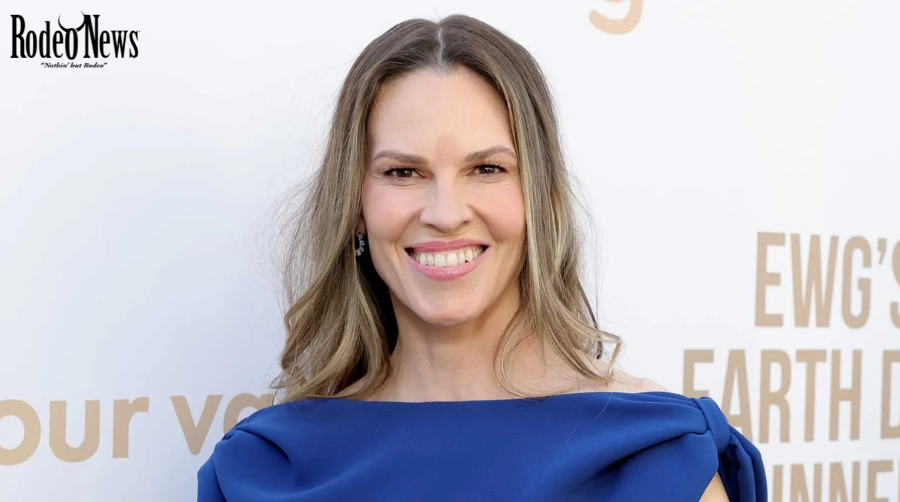
Hilary Swank is speaking out against criticism she has received for becoming a mother later in life, highlighting what she sees as a double standard between women and men who have children at an older age. The two-time Academy Award winner, now 52, recently announced that she is expecting her third child with her husband, Philip Schneider. Her pregnancy announcement sparked congratulations from fans, but it also brought renewed scrutiny of her age and decision to expand her family.
EW.com
+1
In a preview of her upcoming appearance on The Drew Barrymore Show, Swank discussed the negative reactions women can face when they have children in their 40s and 50s. She questioned why women are often judged for these decisions when older fathers do not appear to receive the same level of public criticism.
Her comments have sparked a wider conversation about motherhood, age, personal choice, and the expectations placed on women. They have also given Swank an opportunity to explain how she views the criticism, including a particularly emotional comment from someone who lost a parent at a young age.
Rather than dismissing that person’s feelings, Swank said she understood the pain behind the concern. However, she also explained why she believes experiencing a loving relationship with a parent, even for a limited time, can be better than never having that relationship at all.
Hilary Swank Pregnancy at 52 Sparks Debate About Older Mothers
Swank addressed the criticism in a preview of her October 20 appearance on The Drew Barrymore Show. During the conversation, she observed that women face significant backlash for having children later in life, while men often encounter less judgment for becoming fathers at older ages.
EW.com
+1
Her observation reflects a longstanding cultural debate about how society evaluates parenthood differently depending on whether the parent is a man or a woman.
Women who become mothers later in life can face questions about their health, energy, family responsibilities, and how old they will be when their children reach adulthood. Men who become fathers at similar ages may also face practical concerns, but the public conversation surrounding them is not always framed in the same way.
During the interview, host Drew Barrymore supported Swank’s point by noting that men can father children well into their later years without receiving the same level of outrage. Barrymore also recalled that Swank had not always received a positive response when she became a mother in her 40s.
Swank’s comments were not simply about defending her own pregnancy. They highlighted the broader expectations that can shape how women are judged for decisions about their families.
For many women, the timing of parenthood is influenced by circumstances that cannot be reduced to a single choice. Relationships, career paths, personal goals, fertility, finances, and family situations can all affect when someone becomes a parent.
Swank has previously spoken about wanting children and eventually starting a family later than she initially imagined. Her current pregnancy is another chapter in that journey.
The actress’s response also illustrates why conversations about reproductive decisions can become deeply personal. What one person views as a concern about the future may feel to another like an unfair judgment of a life they have chosen carefully.
Swank acknowledged that criticism exists, but she made clear that she does not believe women should automatically be judged more harshly than men for becoming parents later in life.
The Emotional Comment That Stayed With Hilary Swank
One of the most revealing parts of Swank’s interview involved a woman who criticized her decision to have children at an older age.
According to Swank, the woman argued that she was too old to become a mother and might not be alive when her children were older. The commenter connected her concern to her own experience of losing her father, whom she described as her favorite person, when she was in her early 20s.
EW.com
+1
The comment stood out to Swank because she could relate to the grief behind it. Her own father, Stephen Michael Swank, died in 2021, and she has spoken about how important he was to her.
Instead of treating the woman’s remarks as simply hostile, Swank recognized the emotional experience that may have shaped her perspective.
She explained that she would rather have been born and experienced the love of someone who became her favorite person, even if their time together was shorter than she would have wanted, than never to have experienced that relationship at all.
EW.com
+1
Her response added a personal dimension to a debate that can otherwise become focused on age alone.
Losing a parent can leave lasting grief, particularly when the loss happens during young adulthood. It can also influence how someone thinks about family, time, and the possibility of children growing up without a parent.
Swank did not dismiss that concern. Her response suggested that she understood why the woman felt strongly about the issue because she had experienced the loss of a beloved parent herself.
At the same time, she did not accept the idea that the possibility of a shorter lifetime together automatically means a child should never be born.
Her perspective emphasizes the value of relationships and the experiences people share, even when no one can guarantee how long those relationships will last.
That is an emotional argument rather than a promise about the future. No parent can know exactly what lies ahead, regardless of age. Swank’s comments focused on the meaning she attaches to love and family rather than claiming that later parenthood has no challenges.
Hilary Swank Announces Her Third Baby With a Creative Reveal
Swank revealed her third pregnancy on October 14 through a playful Instagram video featuring herself, Schneider, and their twins wearing glowing stick-figure costumes.
The creative announcement showed the family dancing together before revealing a glowing baby figure on Swank’s belly. Rather than making a conventional announcement, the actress used humor and visual storytelling to share the news with her followers.
She captioned the video with a playful reference to her next project, writing that many people had been asking what she would work on next and that the new project would arrive in December. The wording served as a lighthearted way to announce the expected arrival of the baby.
EW.com
+1
The announcement quickly attracted attention because Swank is 52 and already has young children at home.
Her first children, twins Aya and Ohm, were born in April 2023, when she was 48. Their arrival marked a major milestone after years of wanting a family.
The third pregnancy means that Swank and Schneider are preparing to welcome another child while their twins are still very young.
The actress has not treated the announcement solely as a celebrity headline. Her subsequent comments have focused on the emotions and realities surrounding motherhood, including the criticism that can accompany becoming a parent later in life.
The response to her pregnancy has also demonstrated how a personal family announcement can quickly become part of a much broader public conversation.
For some followers, the news is an encouraging example of a family growing in a way that differs from traditional expectations. For others, it has raised questions about age and parenting.
Swank’s response has been to address the criticism directly while sharing the meaning the experience holds for her and her family.
From Becoming a Mother at 48 to Expecting Another Child
Swank’s experience of motherhood began later than she once imagined.
In 2023, she and Schneider welcomed twins Aya and Ohm. Their arrival was especially meaningful because Swank had previously discussed her desire to have children.
The actress has also reflected on how the timing of parenthood unfolded differently from what she might have planned earlier in life. She has explained that she would have welcomed having children sooner, while recognizing that the circumstances eventually came together at a meaningful point for her.
AARP
+1
Her experience illustrates that family planning does not always follow a predictable timeline.
Some people become parents in their 20s, while others start families in their 30s or 40s. Still others become parents later through different circumstances and family-building paths. Each situation can involve distinct opportunities, challenges, and personal considerations.
For Swank, becoming a mother in her late 40s came after an established acting career and years of life experience.
She has previously discussed how becoming a parent at that stage of life has influenced her approach to parenting. In a 2025 interview with Women’s Health, she described herself as more patient and understanding than she might have been at a younger age. She also said that having an established career allowed her to be present with her children.
AARP
+1
Those reflections provide context for why she speaks about motherhood with such personal conviction.
Her comments do not mean every older parent will have the same experience. Nor do they suggest that having children later is inherently better than becoming a parent earlier.
Instead, they reflect how Swank understands her own circumstances and the benefits she believes have come with them.
Her third pregnancy adds another dimension to that experience. She is preparing to welcome a new child while raising twins, and she has chosen to share her happiness despite the public scrutiny surrounding her age.
Why Older Mothers Face Different Expectations From Older Fathers
The discussion surrounding Swank’s pregnancy raises questions about how society defines an appropriate age for parenthood.
For generations, women have often faced strong expectations about when they should marry, have children, and establish a family. Those expectations can be particularly pronounced in public discussions about fertility and aging.
Men also face biological and practical changes as they age, and older fathers can encounter their own challenges. However, the cultural narrative around older parenthood has frequently placed greater scrutiny on women.
Part of the difference stems from the fact that pregnancy and childbirth involve physical processes that occur in women’s bodies. This can lead people to focus heavily on a woman’s age while giving less attention to the broader circumstances that shape family life.
Another factor is the expectation that mothers should be young enough to remain active throughout their children’s lives. Concerns about whether a parent will be present for major milestones can become especially intense when a woman announces a pregnancy in her 40s or 50s.
Swank’s response highlights the emotional complexity of those judgments.
The woman whose comment she recalled was speaking from the experience of losing her father early in adulthood. That loss was real, and Swank recognized its emotional significance.
But an individual’s painful experience cannot determine what every other family should do. People have different circumstances, and no parent can guarantee a particular lifespan.
A more constructive conversation can acknowledge practical concerns without treating age alone as proof that someone will be an inadequate parent.
It can also recognize that parenthood involves responsibilities at every age. Younger parents may face financial instability or career uncertainty, while older parents may have greater life experience but different health or energy considerations.
Neither group can be judged fairly through a single assumption.
Swank’s comments encourage people to think about these issues with more empathy and less automatic condemnation.
Pregnancy After 50: What to Understand About the Health Considerations
Although Swank’s announcement has centered on criticism and personal choice, pregnancy after 50 also raises legitimate medical questions.
Pregnancy at an older age can involve increased risks, including high blood pressure, gestational diabetes, certain chromosomal conditions, and pregnancy-related complications. The specific risks vary depending on individual health, medical history, and the circumstances of conception.
Pregnancy after 50 is uncommon, and general information about pregnancy in the late 30s or 40s should not automatically be treated as a precise assessment of risk for someone in their 50s.
For anyone considering pregnancy later in life, consultation with qualified medical professionals is essential. Clinicians can provide individualized guidance, discuss available testing and monitoring, and explain the risks relevant to a person’s circumstances.
It is also important to distinguish medical information from social judgment.
Recognizing that a pregnancy may require additional medical attention is not the same as declaring that a person should not become a parent. Likewise, celebrating a celebrity’s pregnancy does not mean ignoring the need for appropriate prenatal care.
Swank has shared her personal experience publicly, but her story should not be taken as medical advice or a guarantee that pregnancy at the same age will be possible or safe for everyone.
The broader conversation is best approached with both compassion and accurate information. People can acknowledge that later pregnancy may involve additional medical considerations while respecting the dignity of those navigating their own family-building decisions.
Hilary Swank’s Message to Women Facing Criticism
Swank’s response ultimately goes beyond the criticism surrounding her age. It reflects a desire to have her family life understood as a personal journey rather than a decision that must satisfy public expectations.
Her pregnancy announcement was joyful and creative, but the reactions it generated show how quickly a personal milestone can become a debate about what someone else should do.
By discussing the double standard between older mothers and fathers, Swank invited viewers to consider why women can be judged so harshly for the timing of parenthood.
Her response to the woman who lost her father also demonstrated that she was willing to engage with the emotional reasons behind criticism instead of treating every negative comment as meaningless.
She recognized the grief involved while maintaining her belief that a loving relationship remains valuable even when its duration cannot be guaranteed.
That message may resonate with people who have experienced loss, struggled with family planning, or felt pressure to meet social expectations about when major life events should happen.
It may also offer encouragement to people whose lives have unfolded differently from what they once expected.
However, her story does not establish a universal timeline for parenthood. Some people choose not to have children, some become parents early, and others start families later in life. Those decisions and circumstances deserve to be understood individually.
Swank’s experience is one example of how family life can take an unexpected path and still become a source of profound happiness.
The Bottom Line
Hilary Swank’s pregnancy at 52 has reignited a debate about older motherhood, but her response has focused on a broader issue: the different expectations society places on women and men who have children later in life.
The actress has challenged the criticism she has received while acknowledging the emotional concerns that can shape people’s opinions. Her recollection of a woman who lost her father young revealed why the discussion is deeply personal, while her own experience of losing her father helped her understand that perspective.
At the same time, Swank made clear that she values the opportunity to experience a loving relationship, even when no one can predict how long it will last.
As she and her husband, Philip Schneider, prepare to welcome their third child, Swank’s message is ultimately about family, empathy, and respecting the different paths people take through life.
Her story does not eliminate the medical considerations associated with pregnancy later in life, but it does offer a reminder that practical concerns and personal judgments are not the same thing.
For Swank, becoming a mother later than she once imagined has been an important part of her life. Now, as she prepares for another addition to her family, she is choosing to speak openly about both the happiness and the criticism that come with that experience.