Nico Iamaleava Injury Creates Major Setback for UCLA
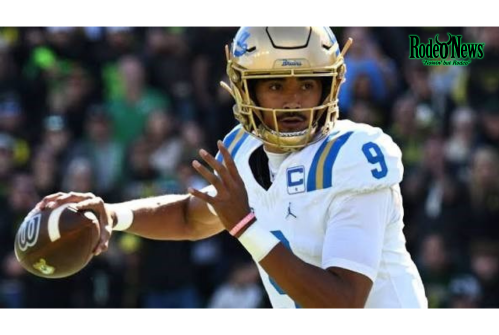
The Nico Iamaleava injury has become a major concern for UCLA football after the starting quarterback suffered a knee injury during the Bruins’ victory over Oregon. The injury has put the team’s unbeaten 2026 season under pressure and raised questions about UCLA’s ability to remain competitive without its starting quarterback.
According to ESPN’s reporting on October 12, Iamaleava is out indefinitely, with his return timeline dependent on further medical evaluation. Other reports, including coverage from the Los Angeles Times and CBS Sports, indicated that he is expected to miss the remainder of the season.
The injury occurred during UCLA’s 17-15 victory over Oregon on October 10. Iamaleava did not return for the second half, leaving backup quarterback Ty Dieffenbach to help the Bruins secure an important road victory.
UCLA has emerged as one of college football’s early surprises this season. The Bruins improved to 5-0 after defeating Oregon and climbed to No. 12 in the Associated Press poll.
However, losing their starting quarterback creates a significant challenge as the team approaches the middle of its schedule.
The Bruins must now prepare for upcoming games without knowing when, or whether, Iamaleava will be able to return this season. Their response could determine whether their impressive start develops into a legitimate College Football Playoff campaign.
1. Nico Iamaleava Injury: What Happened Against Oregon?
The injury occurred late in the first half of UCLA’s game against Oregon at Autzen Stadium.
Iamaleava was running with the football when he was tackled during a play involving Oregon defenders. He landed awkwardly and appeared to experience discomfort in his leg.
Medical staff attended to the quarterback before he left the field. He subsequently returned for another play, but UCLA replaced him at quarterback for the second half.
The sequence raised immediate concerns about the severity of the injury.
According to Reuters’ account of the game, Iamaleava had completed 10 of 17 passes for 162 yards before leaving. He threw two interceptions and also lost a fumble during the first half.
The quarterback’s final interception came during the sequence surrounding his injury.
Although the Bruins struggled with turnovers, they managed to hold on for a narrow victory.
Why the injury is particularly concerning
Knee injuries can vary considerably in severity. Some require relatively short recovery periods, while others involve structural damage that can keep an athlete out for months.
The precise diagnosis is therefore important.
As of October 13, the publicly reported information did not establish a definitive medical diagnosis or a confirmed return date from UCLA. ESPN initially reported that Iamaleava was out indefinitely pending further evaluation.
Subsequent reports from CBS Sports and the Los Angeles Times indicated that he was expected to miss the remainder of the 2026 season.
That distinction matters because an indefinite absence and a confirmed season-ending diagnosis are not identical.
Until the medical assessment is finalized and the team provides an official update, the precise nature of the injury and its long-term implications should be treated cautiously.
2. UCLA’s Unbeaten Season Faces Its Biggest Test
UCLA entered the Oregon game with a 4-0 record and left with a 5-0 mark after winning 17-15.
The victory was significant for several reasons.
First, Oregon was a highly ranked opponent playing at home. Winning on the road against a strong conference rival gave UCLA an important result in the Big Ten.
Second, the victory reinforced the team’s rapid improvement under head coach Bob Chesney.
Third, the Bruins demonstrated that they could win a close game even when their offense encountered significant difficulties.
However, the injury to Iamaleava changes the outlook considerably.
A starting quarterback often serves as the focal point of an offense. He makes pre-snap reads, identifies defensive alignments, distributes the ball, and helps establish the team’s offensive rhythm.
Replacing that player in the middle of a successful season can require adjustments to the playbook and game plan.
UCLA must now determine which offensive concepts its backup quarterback can execute most effectively.
The coaching staff may emphasize shorter passes, a stronger running game, and more conservative decisions while the new starter gains experience.
Can UCLA maintain its momentum?
The Bruins still have an opportunity to build on their unbeaten start.
Their defense and running game can help reduce the burden on a replacement quarterback. Strong special-teams performances and careful ball management could also prove important.
Nevertheless, the margin for error becomes smaller when a team loses an experienced starter.
UCLA’s upcoming games will provide a clearer picture of whether the team can maintain its early-season momentum.
3. Who Will Replace Nico Iamaleava at Quarterback?
Senior quarterback Ty Dieffenbach is the leading candidate to take over UCLA’s starting role after replacing Iamaleava against Oregon.
Dieffenbach entered the game in the second half and completed three of six passes for 43 yards and a touchdown.
His passing touchdown helped UCLA maintain enough offensive production to finish the game with a victory.
Although the statistical sample was small, his performance gave the coaching staff an initial opportunity to evaluate how he handled the pressure of a major conference game.
Dieffenbach transferred to UCLA from Cal Poly and had not seen game action during the 2026 season before entering against Oregon, according to contemporary reports.
That limited experience creates both an opportunity and a challenge.
He now has a chance to establish himself as the team’s starter, but he must prepare quickly for defenses that will study his tendencies and attempt to disrupt UCLA’s offense.
What Dieffenbach must improve
Taking over as a starting quarterback requires more than completing passes.
Dieffenbach will need to demonstrate that he can recognize defensive coverage, make quick decisions, protect the football, and maintain communication with his teammates.
Ball security is especially important after UCLA committed several turnovers against Oregon.
The coaching staff may also adjust the offensive scheme to emphasize plays that allow Dieffenbach to make decisions quickly.
A balanced attack could help prevent opposing defenses from focusing exclusively on the passing game.
Could Madden Iamaleava enter the competition?
Madden Iamaleava, Nico’s younger brother, could also be considered for a larger role.
Reports have identified him as another potential quarterback option for UCLA.
The coaching staff’s decision will depend on practice performance, familiarity with the offense, and the team’s assessment of each player’s readiness.
For now, Dieffenbach’s appearance against Oregon gives him an important advantage in the immediate competition.
However, UCLA has not publicly established a long-term quarterback succession plan in the reporting available as of October 13.
4. What the Injury Means for UCLA’s College Football Playoff Hopes
UCLA’s 5-0 start has placed the Bruins in a strong early-season position.
Their victory over Oregon was especially valuable because it came against a ranked opponent on the road.
The team subsequently climbed to No. 12 in the AP Top 25 poll, increasing attention on its potential postseason prospects.
But losing Iamaleava threatens to complicate that trajectory.
College Football Playoff selection depends on the overall season, including wins and losses, the strength of opponents, conference performance, and the selection committee’s evaluation of teams.
A quarterback injury does not automatically eliminate a team’s chances.
Nevertheless, it can influence future results if the replacement struggles or the offense becomes less productive.
UCLA’s remaining schedule will therefore be critical.
The Bruins must continue winning against quality opponents while adapting to their changed quarterback situation.
Why the next few games matter
UCLA’s next matchup is against Wisconsin at the Rose Bowl.
The game will provide an early indication of how the Bruins perform without their starting quarterback.
Wisconsin will likely study the Oregon game to identify opportunities to pressure the replacement quarterback and disrupt UCLA’s offensive rhythm.
The Bruins, meanwhile, will need to prepare a game plan that minimizes mistakes and takes advantage of their strengths.
A strong performance could reassure supporters that the team remains capable of competing at a high level.
A difficult outing would raise further questions about whether UCLA can sustain its early success.
Even so, one game will not determine the entire season. The team’s response over several weeks will provide a more reliable measure of its postseason potential.
5. Nico Iamaleava’s Injury Could Affect His NFL Prospects
Iamaleava’s injury also raises questions about his longer-term football future.
Before arriving at UCLA, he played for Tennessee and was widely regarded as a highly recruited quarterback prospect.
His transfer to UCLA ahead of the 2025 season gave him an opportunity to continue developing in a new environment.
The 2026 campaign appeared to be an important opportunity to strengthen his reputation and demonstrate progress as a quarterback.
Through his first five appearances, he had thrown for 982 yards and four touchdowns, according to reports published after the Oregon game.
He had also recorded four interceptions and contributed as a runner.
Those statistics provide only part of the picture. NFL evaluations also consider a quarterback’s mechanics, arm strength, processing speed, decision-making, leadership, and performance against different defensive systems.
An extended absence could limit the number of opportunities scouts have to evaluate his development during the season.
However, the long-term effect will depend on the severity of the injury, his recovery, and how medical assessments influence professional teams’ evaluations.
Could he return for another college season?
Iamaleava’s eligibility situation may also become relevant to his future plans.
Contemporary reporting has noted that he could have another season of college eligibility available.
If that remains the case, a return to college football could offer an opportunity to recover fully and demonstrate further development before entering the NFL Draft.
Such a decision would depend on his medical prognosis, eligibility confirmation, professional prospects, and personal preferences.
It is too early to determine how the injury will affect his eventual career path.
For now, the immediate priority is obtaining an accurate diagnosis and following an appropriate recovery plan.
UCLA’s Offensive Strategy Must Change
Losing a starting quarterback affects the entire offensive structure.
UCLA’s coaches must consider how the change influences passing concepts, running plays, protection schemes, and the pace of the offense.
A backup quarterback may have different strengths from the starter.
For example, one player might be more comfortable operating from the pocket, while another performs better when using mobility to extend plays.
The coaching staff must identify the strengths of the available players and build a system around them.
The running game could become more important
A productive running game can help a replacement quarterback settle into the offense.
Successful rushing plays keep the offense on schedule, create manageable passing situations, and force opposing defenses to account for multiple threats.
They can also help control possession and limit the number of opportunities available to the opposing offense.
UCLA may therefore look for ways to establish the run early in games.
However, relying too heavily on rushing plays can make an offense predictable. The Bruins will still need to create passing opportunities to prevent defenses from crowding the line of scrimmage.
Protecting the football is essential
UCLA’s turnover problems against Oregon underline the importance of disciplined offensive execution.
The Bruins cannot afford to give away possessions while their quarterback position is in transition.
Avoiding unnecessary risks, improving pass protection, and making sound decisions on third down could be especially important.
If UCLA can reduce turnovers and maintain a balanced offense, it may be able to remain competitive while its quarterback situation develops.
What UCLA Fans Should Watch Next
Several developments will determine how the situation evolves over the coming weeks.
Medical updates: The most important information will be an official diagnosis and a clearer understanding of the recovery process.
Quarterback decisions: UCLA’s practice sessions and coaching announcements should clarify whether Dieffenbach will become the permanent starter or face competition from other quarterbacks.
Offensive adjustments: The team’s play selection and passing production will reveal how effectively the coaching staff adapts.
The Wisconsin game: UCLA’s next contest will provide the first major test of its post-injury quarterback plan.
Playoff positioning: The Bruins’ results against upcoming opponents will determine whether they can remain in contention for a major postseason opportunity.
Iamaleava’s long-term future: His recovery and eligibility situation could influence decisions about a return to college football or preparation for the NFL.
These developments should be evaluated separately. A report about a player’s expected absence does not necessarily establish the final medical diagnosis, and a team’s quarterback decision can change as new information becomes available.
Conclusion: UCLA Must Adapt After Iamaleava’s Injury
The Nico Iamaleava injury represents a major challenge for a UCLA team that has started the 2026 season with five consecutive victories.
His absence creates uncertainty at the most important offensive position and could complicate the Bruins’ hopes of remaining among the country’s leading teams.
Ty Dieffenbach appears to be the immediate replacement after helping UCLA defeat Oregon, while Madden Iamaleava could also be considered as the coaching staff evaluates its options.
The team’s ability to protect the football, establish the running game, and adjust its offensive strategy will be critical.
The injury also raises questions about Iamaleava’s recovery and professional future. However, those questions cannot be answered definitively until more medical information becomes available.
For UCLA, the immediate objective is clear: maintain its winning momentum while preparing for the possibility of playing the remainder of the season without its starting quarterback.
The upcoming matchup against Wisconsin will offer the first significant indication of whether the Bruins can overcome this setback.