Riyadh Airport Attack Triggers International Outrage
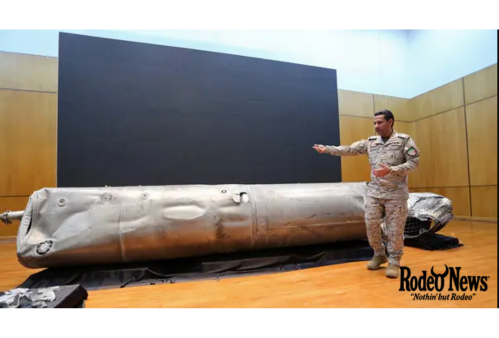
The Riyadh airport attack has triggered widespread international condemnation after Saudi authorities reported that at least 12 people were killed and more than 300 others injured in a deadly strike targeting King Khalid International Airport in the Saudi capital. The incident has intensified concerns about the escalating conflict between Saudi Arabia and Yemen’s Houthi movement, raising fears of a broader regional confrontation.
The attack occurred on Saturday, October 10, according to reports published the following day. Saudi authorities attributed the strike to Yemen’s Houthi movement, which has been fighting Saudi-backed forces as the conflict in Yemen intensifies.
The reported casualties included Saudi nationals and foreign citizens, highlighting the international implications of an attack on one of the kingdom’s major aviation hubs. The incident was described as the deadliest attack on Saudi territory in more than a decade.
Governments across the world, along with senior United Nations officials, condemned the reported strike. They warned that attacks against civilians and civilian infrastructure threaten regional stability and undermine efforts to prevent further escalation.
Meanwhile, US President Donald Trump said Washington was considering whether to join Saudi military operations against the Houthis. His remarks have added another layer of uncertainty to an already volatile security situation.
The developments have raised urgent questions about airport safety, international air travel, the future of the Yemen conflict, and the possibility of direct American military involvement.
What Happened in the Riyadh Airport Attack?
Saudi Arabia’s General Authority of Civil Aviation reported that the attack on King Khalid International Airport killed at least 12 people and injured more than 300 others.
According to the authorities, the victims included four Saudi citizens, two Bangladeshi nationals, and one citizen each from the United States, Jordan, Palestine, Syria, Sudan, and Egypt.
The reported death toll demonstrates the devastating consequences of an attack involving a major civilian transportation facility. Authorities also reported property damage, while some injured people required critical medical treatment.
The airport attack came after a series of reported assaults targeting Saudi aviation infrastructure earlier in the week. This pattern has heightened concerns that airports and other civilian facilities could remain vulnerable as hostilities intensify.
Saudi authorities temporarily suspended airport operations while officials assessed the situation. Flight disruptions and security concerns subsequently became important issues for passengers, airlines, airport employees, and international travelers.
The Saudi-led military coalition fighting the Houthis described the attack as a serious violation of international humanitarian law. Coalition spokesperson Major General Turki al-Malki said the coalition would respond decisively.
However, the broader circumstances remain politically sensitive. Responsibility for individual attacks, the circumstances surrounding casualties, and competing military claims must be assessed carefully, particularly when information comes from parties directly involved in the conflict.
The key confirmed development is the reported loss of life and the resulting international response. The question of how the conflict will develop next remains unresolved.
World Leaders Condemn the Riyadh Airport Attack
The Riyadh airport attack drew condemnation from governments across several regions, reflecting concern about civilian safety and the potential consequences of further military escalation.
The international reaction included statements from the United States, the United Nations, Egypt, Qatar, Pakistan, Jordan, Oman, India, Japan, Canada, Malaysia, Palestine, and Syria.
Although the statements differed in wording, many shared a common message: civilian facilities must not become targets in an expanding regional conflict.
United States Condemns the Deadly Strike
US President Donald Trump described the attack as terrible and said he planned to speak with Saudi Crown Prince Mohammed bin Salman.
Trump also indicated that the United States was evaluating whether to join Saudi military operations against the Houthis.
His comments could have significant implications for the conflict. Direct American participation would potentially expand the military confrontation beyond the current Saudi-led campaign and increase the risk of retaliatory attacks.
US Secretary of State Marco Rubio also condemned the reported attack, confirming that an American citizen had been killed.
Rubio expressed solidarity with Saudi Arabia and the victims’ families, calling for the attacks to stop.
The statements demonstrate Washington’s concern about the safety of American citizens and the security of a key regional partner. However, Trump’s comments did not constitute a formal announcement that US forces would enter the war.
Any decision on military participation would depend on subsequent political and security developments.
United Nations Calls for an Immediate End to Attacks
United Nations Secretary-General António Guterres strongly condemned the strike on King Khalid International Airport.
Guterres emphasized that attacks against civilians and civilian infrastructure violate international law and must cease immediately.
Hans Grundberg, the UN special envoy for Yemen, also warned that deadly attacks against civilian airports represent a serious escalation.
According to the envoy, such incidents threaten regional security, perpetuate cycles of violence, and make efforts to achieve peace in Yemen more difficult.
The UN response reflects a broader concern about the humanitarian consequences of continued fighting.
Civilian infrastructure is essential to daily life, economic activity, emergency response, and international connectivity. When airports are damaged or operations are suspended, the consequences can extend well beyond the immediate location of an attack.
For Yemen, renewed escalation also threatens to undermine diplomatic efforts aimed at reducing hostilities and establishing a more durable political settlement.
Asian Governments Express Solidarity With Saudi Arabia
Several Asian governments also condemned the reported attack.
Pakistan’s Prime Minister Shehbaz Sharif described the incident as a heinous attack and warned that violence against civilians and essential infrastructure threatens regional peace.
Pakistan also reaffirmed its support for Saudi Arabia’s sovereignty and territorial integrity.
India’s Ministry of External Affairs described the attack as unacceptable and called for attacks against civilians to cease immediately.
Japan’s embassy in Saudi Arabia similarly condemned the repeated attacks attributed to the Houthis, emphasizing that violence against civilians cannot be tolerated.
Malaysia’s Prime Minister Anwar Ibrahim also denounced the attack, arguing that there could be no justification for attacks against civilians or civilian infrastructure.
These statements underscore the concern among governments that further attacks could undermine international security and disrupt important diplomatic and economic relationships.
Qatar, Jordan, Egypt, and Canada Condemn the Strike
Governments across the Middle East and beyond also expressed strong opposition to the attack.
Qatar condemned the reported strike as a threat to Saudi sovereignty, regional security, civilian safety, and air navigation. Doha also expressed solidarity with Riyadh.
Egypt’s Ministry of Foreign Affairs denounced the attacks, describing them as a serious violation of international law.
Jordan’s King Abdullah conveyed condolences to Saudi leadership, while the Jordanian foreign ministry condemned the reported violence as a dangerous escalation.
Canada’s Prime Minister Mark Carney also criticized the attack, stating that civilian infrastructure must not be targeted.
The range of international reactions indicates that the consequences of the Riyadh airport attack extend beyond Saudi Arabia and Yemen.
Governments are concerned not only about the immediate casualties but also about the possibility that continued violence could disrupt regional transportation, threaten foreign nationals, and widen the conflict.
Why Is the Riyadh Airport Attack Significant?
The Riyadh airport attack is significant because it involves a major civilian aviation facility at a time when the conflict in Yemen is intensifying.
King Khalid International Airport serves the Saudi capital and plays an important role in domestic and international travel. Disruptions at the airport can affect passengers, airlines, cargo movements, business travel, and government operations.
An attack on such infrastructure can therefore produce consequences beyond physical damage.
Civilian Airports Face Growing Security Risks
Airports are essential civilian facilities. They support tourism, trade, humanitarian operations, business activity, and international mobility.
When an airport comes under attack, authorities must consider the immediate threat to passengers and staff as well as the possibility of further incidents.
Security agencies may increase inspections, restrict access, suspend operations, or divert flights to alternative airports.
These measures can reduce exposure to immediate danger, but they can also cause significant disruption.
Travelers may face cancellations, delays, unexpected accommodation expenses, or difficulties connecting to onward flights.
Airlines must also reassess operational risks and determine whether their scheduled services can continue safely.
The reported Riyadh incident illustrates how military conflict can directly affect civilian transportation networks.
Repeated Attacks Increase Regional Uncertainty
The latest incident followed other reported attacks against Saudi airports during the same week.
The repeated incidents have increased concerns that the conflict could expand to include additional civilian and economic infrastructure.
Saudi Arabia has previously faced missile and drone threats during its involvement in Yemen’s civil war. The latest escalation, however, comes amid renewed fighting between Houthi forces and the internationally recognized Yemeni government.
This wider context matters because the airport attack is not an isolated security issue. It is part of a broader struggle involving competing political authorities, military operations, and regional alliances.
Further attacks could trigger additional Saudi strikes against Houthi positions.
Retaliation could then prompt more missile or drone launches, potentially creating a cycle of escalation that becomes increasingly difficult to control.
The Yemen Conflict Is Intensifying
The Riyadh airport attack occurred as fighting intensified between Yemen’s internationally recognized government and the Houthi movement.
The Houthis, also known as Ansar Allah, control significant territory in Yemen, including the capital, Sanaa.
Saudi Arabia has supported the internationally recognized government and conducted military operations against Houthi positions.
The latest escalation follows the collapse of a ceasefire arrangement that had helped limit large-scale fighting since 2022, although the precise course of the conflict has varied across different fronts.
The renewed military campaign has increased the risk of attacks beyond Yemen’s borders.
Saudi Arabia Supports the Yemeni Government
Saudi Arabia has long viewed the Houthi movement as a major security concern.
The kingdom’s involvement in Yemen’s civil war began in 2015, when a Saudi-led coalition intervened against the Houthis after the group consolidated control over Sanaa and advanced into other parts of the country.
The conflict has since produced a severe humanitarian crisis, with widespread displacement, damaged infrastructure, and limited access to essential services in many areas.
Efforts to reach a lasting political settlement have repeatedly faced obstacles.
The latest fighting has raised concerns that years of diplomatic work could be undermined by renewed military confrontation.
For Saudi Arabia, the immediate priorities include protecting its territory, defending civilian infrastructure, and preventing additional attacks.
For the Yemeni government, the fighting is part of a broader effort to regain territory controlled by the Houthis.
For civilians, however, renewed hostilities bring the risk of further casualties, displacement, and disruption to essential services.
Houthi Threats Raise Concerns for Air Travel
The Houthis renewed warnings to airlines, airport workers, and travelers against using Saudi airports and airspace.
The warnings have raised questions about the safety of commercial aviation in areas affected by the conflict.
Airlines typically assess security risks using government advisories, intelligence assessments, aviation safety information, and guidance from relevant authorities.
When military activity creates unacceptable risks, carriers may suspend flights, change routes, or avoid certain airspace.
Such decisions can affect international connections and increase operating costs.
Passengers planning travel to Saudi Arabia should therefore consult their airlines and official travel advisories before departing.
Travelers should not assume that a scheduled flight will operate simply because a booking remains active. Flight status can change as airlines respond to evolving security conditions.
The latest warnings also underline the importance of reliable communication between aviation authorities, airlines, and governments.
Could the United States Join Saudi Military Operations?
One of the most consequential questions following the Riyadh airport attack concerns the possibility of direct American military involvement.
President Donald Trump said the United States was evaluating whether to join Saudi Arabia’s campaign against the Houthis.
He also indicated that a decision could come quickly, although he did not announce a final commitment.
The comments have increased uncertainty about Washington’s next steps.
Why American Involvement Matters
The United States has longstanding security and diplomatic relationships with Saudi Arabia.
Washington has previously provided different forms of military assistance and security cooperation connected to the Yemen conflict.
However, direct participation in the latest campaign would represent a consequential policy decision with potential implications for the wider region.
American military involvement could increase pressure on the Houthis, depending on the scope and nature of any operation.
It could also create additional risks for US personnel, American citizens in the region, and civilian infrastructure.
Any military action could provoke retaliation or encourage other parties to deepen their involvement.
The consequences would depend on the objectives, scale, duration, and geographic scope of the intervention.
For these reasons, Trump’s remarks should be understood as an indication that military participation is under consideration, not proof that a final decision has been made.
Diplomacy Remains an Important Option
Although