Protect College Sports Act: 7 Key Changes
The Protect College Sports Act cleared the U.S. Senate on September 28, 2026, in a 77-22 vote that could reshape how college athletics operates across the United States. The bipartisan legislation would establish federal rules covering athlete compensation, name, image and likeness (NIL) deals, transfers, eligibility, health care and several other areas that have become increasingly contentious in college sports.
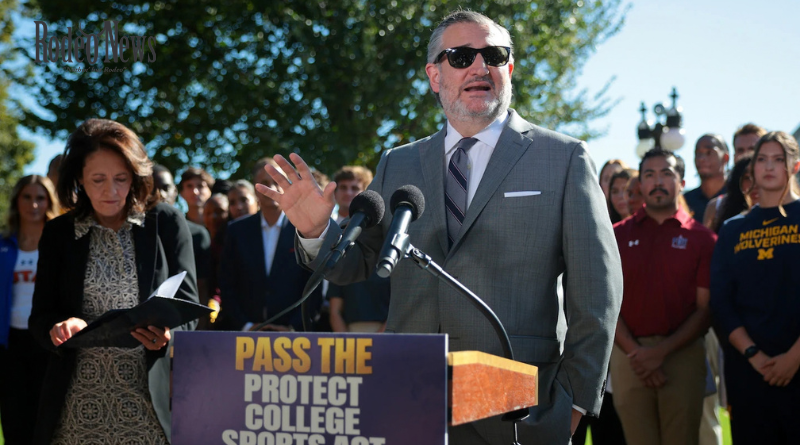
The legislation, formally known as S. 4668, was developed by Senate Commerce Committee Chairman Ted Cruz, R-Texas, and ranking member Maria Cantwell, D-Wash. Its passage represents a major step toward creating a national framework for an industry that has increasingly been governed through court settlements, NCAA rules and differing state laws.
However, the Senate vote does not make the legislation law. The bill now moves to the House of Representatives, where its future remains uncertain. House lawmakers are not expected back in Washington until after the November elections, adding another hurdle before the proposal could reach the president.
Here are the major changes the Protect College Sports Act would make if enacted.
1. Protect College Sports Act Would Create National NIL Rules
One of the central provisions concerns NIL compensation.
College athletes can already earn money from their name, image and likeness, but the rules surrounding those arrangements have developed through a mixture of state laws, NCAA policies and legal settlements.
The Protect College Sports Act would establish a federal framework for NIL rights and contracts. The legislation would require certain NIL agreements to include specific information about compensation and obligations, while also creating greater transparency around deals.
The legislation also addresses the role of agents. Agents representing student-athletes would face registration and certification requirements, while agent fees would be capped at 5 percent under the legislation. Athletes would have mechanisms to challenge certain violations in court.
Supporters describe the federal approach as a way to replace what they view as an inconsistent patchwork of rules. Critics, however, argue that the legislation places limits on athletes’ compensation while leaving other major sources of college sports spending less restricted.
2. College Athlete Revenue Sharing Would Get New Limits
The bill would also establish federal rules around direct revenue sharing with college athletes.
Under the framework developed after the House settlement involving the NCAA, colleges can share athletic revenue with their athletes. The Senate legislation would codify the existing settlement structure while adding another potential source of compensation through a retention fund.
The legislation provides for a $22.5 million retention fund, with the potential to reach $27.5 million when additional spending is tied to NIL opportunities involving women’s and Olympic sports.
The precise financial structure is important because college athletic departments have been dealing with rapidly increasing expenses. The Associated Press reported that some football programs now face roster payrolls exceeding $40 million.
The bill also contains provisions concerning pooled media rights. Participating schools could collectively negotiate certain media rights, potentially creating another way for athletic programs to generate revenue.
3. The Protect College Sports Act Would Change Transfer Rules
The transfer portal has become one of the defining features of modern college athletics.
The legislation would attempt to make transfers more predictable by establishing a national eligibility framework.
Under the Senate-passed bill, student-athletes would generally receive one transfer without having to sit out a year. A subsequent transfer could result in a year-long sit-out period, although the legislation contains exceptions for certain circumstances.
Exceptions include situations involving the discontinuation of an athlete’s sport, certain coaching changes and cases involving sexual assault or harassment.
The bill would also establish a five-year eligibility framework, with exceptions for specified circumstances.
The goal is to put clearer boundaries around a transfer system that has allowed players to move between schools with significantly fewer restrictions than in the past.
For athletes, that could mean more predictable eligibility rules. For schools, it could reduce some of the uncertainty surrounding roster construction and long-term recruiting.
4. Coaches Could Face New Restrictions on Midseason Moves
The proposed law would not regulate only athletes.
The Protect College Sports Act would also impose restrictions on certain midseason coaching transitions. The measure is designed to prevent football coaches and key staff from effectively leaving one program to take over another FBS program during the same competitive season.
That provision reflects a broader effort to create stability throughout college athletics.
The modern college sports environment has increasingly involved changes in coaches, athletes, conferences and media agreements. The legislation attempts to place some limits around those movements rather than leaving every dispute to individual conferences, the NCAA or courts.
Whether those restrictions ultimately survive the legislative process will depend on negotiations in the House and any amendments lawmakers make.
5. Student-Athletes Would Receive Expanded Health Protections
Health care is another significant component of the bill.
The legislation would require Division I schools to provide specified medical protections to student-athletes, including coverage for certain out-of-pocket medical expenses associated with athletic injuries and illness.
It would also require access to a second medical opinion in specified circumstances and an end-of-eligibility medical examination.
The bill includes standards involving areas such as heat exposure, brain injuries, sickle cell trait and asthma. It would also establish health and safety officials who operate independently from athletic departments.
Another major provision concerns health care after an athlete’s college career ends.
For Division I athletes, the proposal would require five years of post-eligibility medical coverage for sports-related injuries or illnesses. It would also create a medical trust fund intended to help financially challenged schools provide longer-term coverage.
These provisions are among the bill’s most direct attempts to establish federal protections for student-athletes beyond their time competing.
6. Scholarships and Women’s Sports Would Receive New Protections
The legislation also addresses academic scholarships.
Under the proposal, athletes would receive a 10-year scholarship guarantee after eligibility, allowing them additional time to complete their degrees. The bill would also prevent scholarships from being withdrawn because of injury or athletic performance.
Women’s and Olympic sports are another major focus.
The legislation would require schools to maintain certain roster spots and scholarship opportunities for women’s and Olympic sports, limiting the ability of athletic departments to cut those programs as they adjust to the financial demands of revenue-sharing arrangements.
This provision is particularly important because the growth of football and men’s basketball revenue has raised questions about how universities will finance other sports.
The bill attempts to address that issue by tying some additional retention funding to investment in women’s and Olympic sports.
7. The NCAA Would Gain More Regulatory Authority
Perhaps one of the most consequential changes would involve the NCAA itself.
The bill would give the NCAA a larger role in overseeing compliance with federal college sports rules. It would also provide limited protection against antitrust lawsuits concerning certain eligibility and competition restrictions.
That represents a significant change from the legal environment that has developed over the past several years.
Court challenges have played a major role in reshaping college athlete compensation and eligibility. The Senate legislation seeks to move some of those decisions into federal law, creating a clearer statutory framework for schools and athletes.
The proposal does not, however, classify college athletes as employees.
That distinction has become an important dividing line in the broader debate over college sports. Groups representing labor and civil rights interests have criticized the legislation in part because athletes would not receive employee status and corresponding collective-bargaining rights under the Senate proposal.
Why the Senate Vote Matters
The 77-22 vote demonstrated substantial bipartisan support for federal intervention in college athletics. The Senate’s official floor record confirms that the Protect College Sports Act passed with 77 votes in favor and 22 against.
The legislation is the result of months of negotiations between Cruz, Cantwell and other lawmakers.
Earlier versions of the bill were revised to address concerns from conferences and senators. The Senate Commerce Committee has said the updated legislation includes changes involving NIL transparency, retention funding, conference structures, NCAA oversight and athlete protections.
The Big Ten and Southeastern Conference also backed versions of the proposal during the legislative process, while other organizations and lawmakers have raised concerns about the balance between institutional interests and athlete rights.
That debate is likely to continue in the House.
What Happens Next?
The next step is the House of Representatives.
The Senate-passed bill must clear the House before it can be sent to the president. That creates several opportunities for the legislation to change.
House lawmakers could pass the Senate version without changes, approve a different version, amend the bill or decline to move it forward.
The House has previously struggled to reach consensus on federal legislation governing college athletics. The chamber’s current schedule also means lawmakers will not return to Washington until after the November elections, according to reporting from The Washington Post and the Associated Press.
That timing could become critical.
If Congress does not complete the legislation during the current session, lawmakers would have to begin again in the next Congress rather than simply carrying the Senate bill forward indefinitely.
For now, the Senate vote represents a major legislative milestone rather than a final change to college sports.
Supporters and Critics See Different Priorities
Supporters of the Protect College Sports Act argue that college athletics needs a national legal framework after years of lawsuits, changing state laws and rapid changes to NIL compensation and transfers.
The bill’s sponsors have emphasized athlete protections, financial stability, health care, scholarships and the preservation of a broad range of college sports.
Critics have a different set of concerns.
Some Democrats and athlete advocates argue that the legislation limits the share of revenue going directly to athletes without imposing comparable restrictions on coaches’ salaries or other athletic spending. They also object to the absence of employee status and collective-bargaining rights.
The Senate rejected amendments that would have capped coaches’ salaries at $5 million annually and increased compensation for athletes suffering catastrophic injuries. It also rejected an amendment addressing college athletics ticket prices.
Those votes illustrate the competing priorities surrounding the legislation: athlete compensation, institutional finances, competitive balance, consumer costs and the NCAA’s regulatory authority.
A New Federal Framework Could Reshape College Athletics
If enacted, the Protect College Sports Act would represent one of the most significant federal interventions in college athletics in decades.
The proposal touches almost every major issue currently shaping the industry: NIL agreements, direct athlete compensation, transfers, eligibility, health care, scholarships, media rights, conference expansion and NCAA enforcement.
But the Senate vote is only one stage of the process.
The House still has to consider the legislation, and differences between lawmakers could lead to significant revisions. Until both chambers approve identical legislation and the president signs it, the current college sports system remains in place.
For athletes and universities, the key question is therefore no longer whether Congress is considering a major college sports overhaul. The Senate has already answered that question.
The next question is what version, if any, will ultimately become federal law.
Source: The Washington Post report on the Senate college sports bill
Additional authoritative sources: U.S. Senate Commerce Committee materials and Senate floor records.