Harvest Moon Saturn 2026: A Rare-Looking Sky Show Arrives
The Harvest Moon Saturn 2026 pairing will give skywatchers a striking celestial display on Saturday, September 26, when September’s full moon rises near the ringed planet Saturn. The two objects will appear close together in the eastern sky, creating an easy-to-see pairing for observers with clear weather.
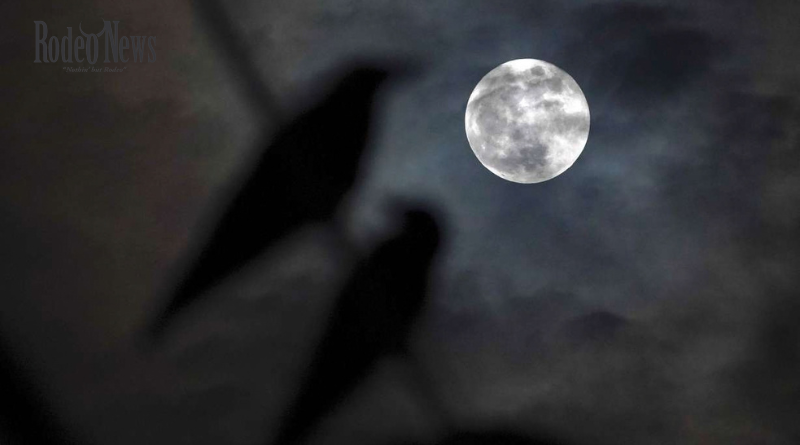
The September full moon reaches peak illumination at 10:49 a.m. MDT on Saturday, according to the KSL report, meaning the Moon will be technically full during daylight for much of North America. However, the best opportunity to enjoy the display will come after sunset, when the Moon rises and Saturn becomes visible nearby.
NASA’s September skywatching guide also identifies September 26 as the date when the Harvest Moon rises near Saturn and Neptune. Saturn should be visible without special equipment, while Neptune is considerably fainter and generally requires binoculars or a telescope.
For casual observers, however, the Moon and Saturn are the main attractions.
When to See the Harvest Moon Saturn 2026 Pairing
The key date for the Harvest Moon Saturn 2026 event is September 26.
The Moon will rise in the eastern sky shortly after sunset. Saturn will appear nearby, giving observers a convenient reference point for locating the distant planet.
Timeanddate reports that the Harvest Moon reaches full illumination at 16:49 UTC on September 26. Because the exact moonrise and Saturn’s position vary according to location, skywatchers should check their local sunset and moonrise times before heading outside.
The event is not limited to a single moment. The Moon will appear nearly full on the evenings surrounding the peak, while Saturn remains in the same general region of the sky.
That means cloudy conditions on Saturday do not necessarily eliminate the opportunity to see the celestial pairing.
KSL reports that Saturn will appear close to the full Moon from Friday through Monday, while Friday and Sunday also offer opportunities to see a nearly full lunar disk.
Look East After Sunset
Finding the pair should be relatively straightforward.
After sunset on September 26, look toward the eastern horizon. The bright full Moon will be the easiest object to identify. Saturn will appear nearby as a bright, yellowish-white point of light.
Space.com notes that Saturn may initially resemble a bright star because it does not have the intense brightness of Venus or Jupiter. The Moon therefore provides a useful guide for finding the planet.
No telescope is required to see Saturn itself.
However, a telescope can dramatically change the experience. With sufficient magnification, observers can distinguish Saturn’s famous rings, turning what appears to be a star-like point into one of the most recognizable sights in the solar system.
Space.com reports that Saturn’s rings are currently tilted enough for telescopic observers to see them, with an eyepiece providing at least about 30-power potentially revealing the ring system.
Why Is It Called the Harvest Moon?
The name “Harvest Moon” is not simply a reference to its color.
The Harvest Moon is traditionally the full moon closest to the autumnal equinox in the Northern Hemisphere. This year, the September full moon falls shortly after the equinox, which occurred on September 22.
The name has historical connections to agriculture. Before modern electric lighting and machinery became widespread, additional evening moonlight could provide farmers with more time to work in their fields.
The Old Farmer’s Almanac tradition also associates September’s full moon with agricultural names such as the Corn Moon. Different Indigenous communities have used different names for the September full moon as well.
The Harvest Moon’s timing around the equinox creates another interesting effect.
Around this period, the interval between successive moonrises becomes shorter in the Northern Hemisphere. Timeanddate explains that instead of the Moon rising roughly 50 minutes later each day on average, the difference can become significantly smaller around the Harvest Moon.
Historically, that meant several evenings of relatively early moonrise and extended natural light.
Why Does the Harvest Moon Look Orange?
One of the most recognizable features of a Harvest Moon is its warm orange or reddish appearance when it rises near the horizon.
But the Moon is not actually turning orange because it is the Harvest Moon.
The effect is primarily caused by Earth’s atmosphere.
When the Moon is low on the horizon, its light passes through a greater thickness of Earth’s atmosphere before reaching an observer. Shorter wavelengths of visible light are scattered more strongly, leaving relatively more red and orange light reaching the eye.
The same basic atmospheric phenomenon helps explain why the Sun can appear orange or red during sunrise and sunset.
There is another visual effect at work, too.
The Moon can appear unusually large when it is close to the horizon. This is known as the Moon illusion. The Moon’s actual size in the sky does not suddenly increase, but the human brain can perceive it as larger when it is viewed alongside objects such as trees, buildings or mountains.
That combination of a low Moon, warm color and familiar landscape can make the Harvest Moon especially dramatic for photographers.
Saturn Is Approaching Its Best Viewing Period
The timing of the Harvest Moon Saturn 2026 pairing is particularly interesting because Saturn is approaching opposition.
Saturn will reach opposition on October 4.
In astronomy, opposition occurs when a planet beyond Earth’s orbit appears opposite the Sun in Earth’s sky. Around opposition, the planet is generally at one of its closest points to Earth for that orbital cycle and receives favorable illumination from our perspective.
As a result, Saturn can appear brighter and more prominent in the night sky.
The timing gives skywatchers a useful opportunity to locate Saturn before its October opposition. KSL and Timeanddate both note that Saturn’s proximity to opposition contributes to its visibility during this period.
For anyone who has never observed Saturn through a telescope, the weeks surrounding opposition can be an excellent time to start.
Neptune Will Also Be Nearby
Saturn is not the only planet in the neighborhood.
NASA says Neptune will also appear near the Harvest Moon on September 26, creating a wider planetary grouping. However, there is an important difference between the two planets.
Saturn is bright enough to see with the naked eye.
Neptune is much fainter.
NASA describes Neptune as roughly magnitude 8 during the event, making it too dim for unaided viewing. Binoculars or a telescope, along with darker skies, can help observers locate the distant planet.
This means the September 26 display can appeal to both casual skywatchers and amateur astronomers.
Someone taking a short evening walk can enjoy the Moon and Saturn without equipment. More experienced observers can use the Moon as a guide to explore a larger region of the sky with optical equipment.
The Moon and Saturn Only Look Close
Although the Moon and Saturn will appear close together from Earth’s perspective, they are nowhere near each other in space.
The Moon orbits Earth at an average distance of about 384,000 kilometers.
Saturn, meanwhile, is more than a billion kilometers from Earth around this period.
Space.com estimates that on September 26, the Moon will be about 233,000 miles from Earth, while Saturn will be roughly 785 million miles away.
Their apparent proximity is therefore a perspective effect.
The Moon moves around Earth relatively quickly, changing its position against the background stars from night to night. Saturn moves much more slowly because of its much larger orbit around the Sun.
When their positions line up from our viewpoint, they can appear to form an attractive pairing even though the two worlds remain separated by an enormous distance.
How to Photograph the Harvest Moon Saturn 2026
The event should also provide an opportunity for amateur photographers.
A smartphone can capture the Moon, particularly when it is low on the horizon. For a more dramatic image, photographers can frame the Moon alongside a recognizable foreground object such as a tree, mountain, building or skyline.
A tripod can help stabilize the camera.
For those using a dedicated camera, a telephoto lens can make the Moon appear larger in the frame. However, photographing both the Moon and Saturn in the same image can be challenging because the Moon is extremely bright compared with the planet.
A telescope or long telephoto lens can provide a better view of Saturn separately.
Photographers should also remember that the most visually impressive colors often occur when the Moon is close to the horizon. Atmospheric conditions can change the appearance considerably from one location to another.
What If the Weather Is Cloudy?
Clouds could be the biggest obstacle for skywatchers.
Fortunately, the event is not restricted to one exact second.
The Moon will remain nearly full on the evenings immediately before and after September 26, and Saturn will continue appearing nearby in the night sky. KSL specifically notes that Friday and Sunday provide additional opportunities if Saturday’s conditions are poor.
For the clearest view, observers should move away from heavy city lighting when possible.
Dark skies are particularly important if someone wants to search for Neptune. Saturn and the Moon are bright enough to remain visible from many urban areas, but faint objects can disappear into light pollution.
More Full Moons Are Coming in 2026
The September Harvest Moon is not the final major full moon of the year.
According to the Farmers’ Almanac dates cited by KSL, the remaining 2026 full moons include the Hunter’s Moon on October 26, the Beaver Moon on November 24 and the Cold Moon on December 23.
November and December will also feature supermoons, when the full Moon occurs relatively close to Earth in its orbit and can appear somewhat larger and brighter than an average full moon.
That gives skywatchers several more opportunities to follow the changing appearance of the Moon through the final months of the year.
A Simple Night-Sky Event Anyone Can Enjoy
The Harvest Moon Saturn 2026 display does not require expensive equipment or specialized astronomical knowledge.
Start by checking the local sunset and moonrise times for September 26. Shortly after sunset, find a location with a clear view toward the eastern horizon.
Look for the bright full Moon first.
Then search nearby for Saturn, which should appear as a bright, steady point of light rather than a rapidly twinkling star. A pair of binoculars can help with the broader view, while a telescope can reveal Saturn’s rings.
If conditions are especially clear and dark, more experienced observers can also try locating Neptune with optical equipment.
The event is a reminder that some of the most accessible astronomical experiences happen without a rocket launch, a major eclipse or a meteor shower.
Sometimes, all it takes is stepping outside at the right time.
On September 26, the Harvest Moon will rise near Saturn, creating a simple but striking celestial pairing that can be enjoyed from backyards, parks, rural landscapes and other locations with an open view of the sky.
Final Takeaway
The Harvest Moon Saturn 2026 pairing is set for September 26, with the full Moon rising near Saturn shortly after sunset. Saturn should be visible to the naked eye, while Neptune will require binoculars or a telescope.
The event also comes just days before Saturn reaches opposition on October 4, adding another reason for astronomy enthusiasts to watch the planet during this period.
For the best experience, find a location with a clear eastern horizon, check local weather conditions and head outside shortly after sunset.
The Moon will provide the guide. Saturn will provide the planetary surprise.