Trump Xi AI Talks Put Artificial Intelligence in the Spotlight
The Trump Xi AI talks have placed artificial intelligence at the center of the latest high-level U.S.-China discussions, highlighting both countries’ growing technological competition and their shared concerns about the risks created by increasingly powerful AI systems.
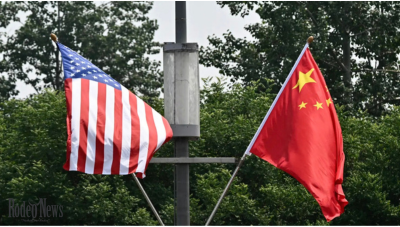
U.S. President Donald Trump and Chinese President Xi Jinping met at the White House on Sept. 24 as part of Xi’s state visit to Washington. Their discussions covered trade, technology, artificial intelligence, Taiwan and other international issues, with AI emerging as an important area where Washington and Beijing see both competition and potential cooperation.
The meeting came after U.S. and Chinese officials had already begun discussions about establishing a mechanism for communicating about serious AI-related incidents.
That development is notable because the two countries remain strategic competitors in advanced technology. Washington has imposed restrictions on some high-end technology exports to China, while Beijing continues to invest heavily in domestic AI capabilities.
Against that backdrop, the latest discussions suggest that AI is becoming too consequential for either side to treat purely as a commercial or technological issue.
Trump and Xi Take Different Approaches to AI
One of the clearest themes from the Trump Xi AI talks was the difference in how the two governments publicly describe AI governance.
Xi said China and the United States have both the capability and responsibility to develop and manage AI for beneficial purposes. He also said the technology should remain under human control and that the two countries could continue discussing its risks and benefits.
Trump has taken a more limited approach to regulation.
Ahead of his meeting with Xi, Trump said AI would be an important topic but indicated that he wanted to maintain the existing approach rather than impose broad new restrictions. His administration has emphasized the role of existing law enforcement mechanisms rather than a comprehensive regulatory framework specifically designed around AI.
The difference does not necessarily mean the two sides have no common ground.
Both governments recognize that increasingly capable AI systems can create national-security risks. The disagreement is more apparent in how those risks should be managed and how much government intervention should be involved.
1. The U.S. and China Are Competing for AI Leadership
The biggest backdrop to the talks is the race for technological leadership.
The United States remains home to many of the world’s most influential AI companies, including major developers of advanced models and providers of computing infrastructure. China, meanwhile, has invested heavily in AI research and domestic technology companies and has sought to reduce its dependence on U.S. technology.
The competition extends well beyond consumer chatbots.
AI development increasingly affects semiconductors, cloud computing, robotics, autonomous systems, military technology, cybersecurity, scientific research and industrial production.
That makes AI an important component of the broader U.S.-China strategic relationship.
The two countries have also been pursuing different technology strategies. Washington has used export controls and other measures to restrict China’s access to certain advanced technologies, while Beijing has pushed domestic innovation and greater technological self-reliance.
The result is a complicated environment in which cooperation on AI safety exists alongside intense competition over AI capabilities.
2. AI Safety Is Moving Into Diplomatic Discussions
The second major development is the emergence of AI safety as a formal diplomatic subject.
Before Trump and Xi met, U.S. Treasury Secretary Scott Bessent and Chinese Vice Premier He Lifeng discussed a possible AI notification mechanism.
The proposed system would focus on national-security-related AI incidents and provide a channel through which Washington and Beijing could communicate about serious developments. Reuters reported that the U.S. proposal was intended to increase transparency between the world’s two leading AI powers.
The concept is significant because AI systems can produce risks that do not respect national borders.
A major cyberattack, for example, could use AI tools developed in one country to target infrastructure in another. AI can also be applied to biological research, financial systems, military planning and misinformation.
The Associated Press reported that U.S. and Chinese officials have been discussing risks including cyberattacks, biological misuse, loss of control and threats to critical infrastructure.
A communication mechanism would not resolve those problems.
However, it could provide governments with a way to exchange information during a serious AI-related incident.
3. Xi Calls for AI to Remain Under Human Control
Xi’s comments offered one of the clearest statements from Beijing during the summit.
According to China’s official government readout, Xi said the United States and China should continue their AI dialogue, exchange views about the technology’s risks and benefits, and work together to prevent misuse and abuse.
He also emphasized the principle that AI should remain under human control.
That language reflects a broader Chinese emphasis on AI governance and state oversight.
China has introduced regulations governing various areas of AI development and deployment, while Chinese officials have repeatedly called for international discussions about the technology.
At the same time, China continues to push rapid AI development.
That combination — aggressive technological development alongside calls for governance — is an important feature of Beijing’s approach.
For Washington, however, the central challenge is different: how to address AI risks without slowing technological development or giving China’s AI sector an advantage.
4. Trump Emphasizes Competition and Development
Trump’s position has focused more heavily on maintaining technological momentum.
The White House has increasingly described AI as a strategic technology tied to American economic and national-security interests.
That approach creates a difficult policy balance.
If regulations are too restrictive, U.S. companies could face higher costs or slower development compared with competitors abroad. If governments impose too few safeguards, however, increasingly capable AI systems could introduce significant security and social risks.
The issue becomes even more complicated because the United States and China are competing directly.
Neither government wants to make decisions that could unintentionally weaken its own technological position.
The Trump Xi AI talks therefore represent an unusual diplomatic situation: the two governments are discussing shared risks while simultaneously attempting to maintain an advantage over each other.
5. The AI Conversation Could Expand Beyond Trade
AI has traditionally been discussed in U.S.-China relations as part of the technology and trade dispute.
That is changing.
The latest talks indicate that AI is increasingly being treated as a diplomatic and national-security issue.
The two sides have already discussed possible communication mechanisms for serious AI incidents. Future discussions could potentially cover broader subjects such as AI safety, cybersecurity, military applications and the protection of critical infrastructure.
However, there are significant obstacles.
The United States and China have different political systems, different approaches to regulation and different strategic objectives. Mutual distrust also remains an important factor.
The two countries are therefore unlikely to eliminate their AI competition simply because they establish a dialogue.
Instead, the more realistic possibility is that competition and limited cooperation will exist simultaneously.
Why the AI Talks Matter for the Global Technology Industry
The outcome of U.S.-China AI discussions could affect companies far beyond Washington and Beijing.
AI development depends on a global technology ecosystem involving semiconductor manufacturers, cloud providers, data centers, software companies and research institutions.
U.S. export restrictions can affect Chinese companies’ access to advanced chips and computing technology. Chinese manufacturing capacity, meanwhile, remains important to global supply chains.
Any major change in U.S.-China technology policy could therefore have consequences for companies and investors around the world.
The stakes are particularly high because AI infrastructure requires enormous amounts of computing power and electricity.
The expansion of data centers is already creating demand for advanced processors, networking equipment, energy infrastructure and cooling systems.
The AI competition is consequently becoming an economic issue as well as a technological one.
AI Becomes Another Test for U.S.-China Relations
The Trump-Xi meeting also took place against a broader effort to stabilize the U.S.-China relationship.
The two countries have been negotiating trade issues while attempting to avoid a return to the extreme tariff tensions seen previously. Reuters reported that the two sides agreed to extend their trade truce for two months, providing additional time for negotiations.
AI is now being added to that complicated relationship.
Unlike conventional trade disputes, AI touches nearly every part of modern technology.
It also has implications for national security.
That makes AI cooperation particularly difficult because information that could improve safety could potentially also provide strategic advantages to a rival.
This is one reason why a limited communication mechanism may be more achievable than a comprehensive agreement governing AI development.
The Role of U.S. Technology Leaders
The importance of AI was also reflected in the people invited to the White House state dinner for Xi.
Executives from some of the world’s largest technology companies attended, including Nvidia CEO Jensen Huang, Apple CEO Tim Cook, OpenAI CEO Sam Altman, Meta CEO Mark Zuckerberg and other prominent technology leaders.
Their presence illustrates how closely government policy and the technology industry are now connected.
AI companies are developing systems that can influence economic competitiveness, cybersecurity and national security.
At the same time, those companies depend on international supply chains and global markets.
The U.S.-China relationship therefore matters directly to the technology sector.
What Comes Next for U.S.-China AI Relations?
The immediate question is whether the latest discussions will produce a durable AI dialogue.
The proposed notification mechanism is an early step rather than a comprehensive agreement.
Both countries have reasons to maintain communication. Neither wants an AI-related crisis to escalate because of a misunderstanding or lack of information.
But cooperation will have limits.
Washington continues to prioritize technological leadership and national security. Beijing continues to pursue rapid AI development while promoting its own approach to AI governance.
The two countries may therefore cooperate on selected risks while continuing to compete aggressively in areas such as advanced computing, AI models and strategic applications.
That could become the defining pattern of the next stage of the global AI race.
A New Phase in the AI Race
The Trump Xi AI talks demonstrate how quickly artificial intelligence has moved from a technology-sector issue to a major subject of international diplomacy.
Trump and Xi did not end the U.S.-China technology rivalry.
Instead, their discussions highlighted a more complicated reality.
The United States and China are competing for AI leadership while recognizing that some AI risks are shared. Both governments have an interest in preventing dangerous incidents, yet neither wants cooperation to undermine its technological position.
Xi’s call for AI to remain under human control and Washington’s interest in maintaining technological momentum illustrate the different approaches.
The proposed AI notification mechanism could provide a starting point for more structured communication, but its effectiveness will depend on whether both sides are willing to share meaningful information and maintain dialogue during periods of tension.
For the global technology industry, the message is clear: AI is no longer simply a race between companies.
It is increasingly part of the strategic relationship between the world’s two largest powers.
The next stage of that competition will likely involve not only who develops the most powerful systems, but also how governments manage the risks those systems create while attempting to preserve technological and economic advantages.