
Nissan Z Kaze Revives 1990s Style With T-Top Roof
Nissan has brought a distinctly nostalgic twist to its modern Z sports car with the introduction of the new Nissan Z Kaze concept, a one-off project that combines a removable T-top roof, retro-inspired styling and performance upgrades influenced by the Japanese tuning scene of the 1990s.
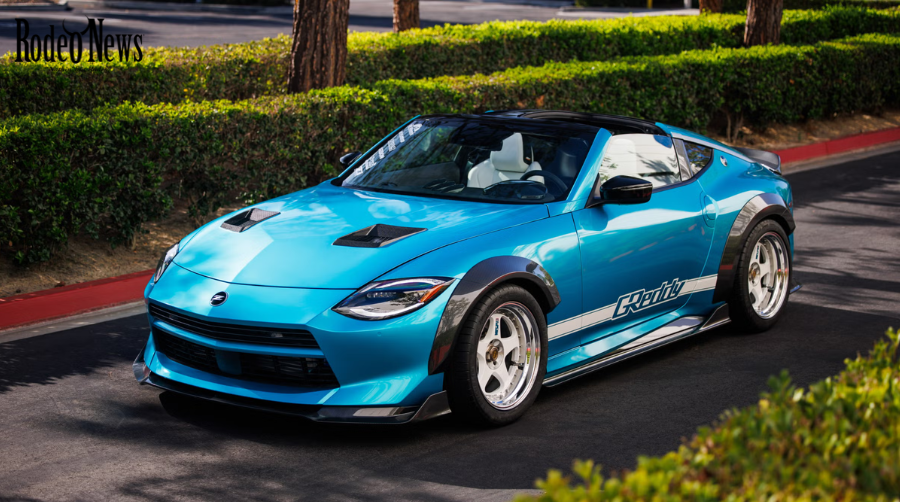
The concept was unveiled September 23 at ZCON, the annual gathering of Z-car enthusiasts in Phoenix, Arizona. Rather than simply presenting another styling exercise, Nissan developed the Z Kaze as a tribute to the open-air sports cars and tuner culture that helped define the company’s performance image decades ago.
The name “Kaze” comes from the Japanese word for “wind,” an appropriate reference to the concept’s most unusual feature. Instead of using a conventional convertible roof, Nissan engineers created a custom T-top system that allows the roof panels to be removed while retaining the basic character of a fixed-roof sports car.
A Modern Nissan Z With a Classic T-Top
The T-top is the defining feature of the Z Kaze. Nissan’s modern Z is transformed by a roof configuration strongly associated with earlier generations of the sports car.
The arrangement recalls the T-top roofs used by previous Z models, including the 300ZX. Nissan says the concept was created to celebrate the open-top heritage of its Z family while bringing that idea into the current generation.
The result is a sports car that looks familiar at first glance but has a substantially different personality once the roof panels are removed.
Nissan describes the project as a passion project developed by product planners and designers. The team reportedly imagined driving along California’s Pacific Coast Highway on a warm summer day, and that vision helped shape both the car’s appearance and its open-air character.
The Z Kaze is not currently being presented as a production vehicle. Nissan has specifically identified it as a concept, meaning there is no announcement that the T-top configuration will become available on customer cars.
Pacific Teal Gives the Z a 1990s-Inspired Look
The Z Kaze’s visual identity goes beyond its roof.
Nissan selected a Pacific Teal paint finish for the concept, a color intended to evoke the character of 1990s performance cars and tuner culture. The exterior also receives several carbon-fiber components that give the Z a wider and more aggressive appearance.
Among the major changes are a lightweight vented carbon-fiber hood, extended fender flares and a custom carbon-fiber aerodynamic body kit.
These modifications are intended to reference the aftermarket styling trends associated with Japanese performance cars during the 1990s without completely abandoning the modern Z’s original design.
The concept also uses a set of particularly distinctive wheels. Nissan sourced an original set of 18-inch NISMO LMGT2 wheels, which are no longer in production, and had them restored and rebuilt specifically for the project.
The wheels measure 10 inches wide at the front and 11 inches at the rear, giving the concept a pronounced staggered setup. Nissan describes the LMGT2 wheels as forged, multi-piece wheels with a connection to the company’s motorsports heritage.
NISMO and GReddy Hardware Add Performance Flavor
The nostalgic theme continues underneath the Z Kaze.
Nissan fitted the concept with upgraded suspension components from NISMO, the company’s performance division. The engine also receives components supplied by renowned Japanese tuning company GReddy.
The modifications include a GReddy SUPREME SP exhaust system, a front-mounted air-to-air intercooler kit and an Airinx air filter kit. Together, the upgrades reinforce the concept’s connection to the Japanese tuning culture Nissan is attempting to celebrate.
The Z Kaze retains the current Z’s twin-turbocharged 3.0-liter V6 architecture. Nissan has not provided a specific horsepower figure for the modified concept, however, so it remains unclear whether the GReddy hardware produces a meaningful increase over the standard engine’s output.
For comparison, the current Z’s production powertrain already provides substantial performance, meaning Nissan did not need to radically alter the engine for the concept to fit its performance-oriented theme.
Instead, the modifications appear to focus on creating the right combination of sound, appearance and driving character.
A White Interior Complements the Exterior
Inside, Nissan takes a different approach from the increasingly dark interiors found in many modern performance cars.
The Z Kaze features custom white leather-appointed seats, giving the cabin a brighter appearance and helping emphasize the open-air concept created by the T-top roof.
Carbon-fiber trim appears throughout the interior, tying the cabin visually to the exterior bodywork.
The concept also incorporates Bose Personal Plus headrest speakers into the seats. The system is designed to provide a more immersive audio experience, particularly when the roof panels are removed and outside noise becomes a larger part of the driving environment.
Despite the extensive exterior modifications, the cabin remains recognizable as the modern Nissan Z rather than being transformed into a completely new interior design.
That approach reinforces the idea that the Z Kaze is essentially a highly customized interpretation of the existing sports car rather than a preview of an entirely new generation.
Nissan Looks Back at Its Z-Car Heritage
The Z Kaze is also significant because it connects several different eras of Nissan’s sports-car history.
The Z nameplate has been associated with performance cars for generations, and the company’s previous models established much of the visual and cultural identity that the current Z continues to draw upon.
The 300ZX in particular became closely associated with the Japanese performance scene, while later Z models continued to develop the formula through the 350Z and 370Z.
Nissan’s decision to bring back the T-top configuration therefore carries more significance than simply giving the current Z a removable roof. It connects the modern car to a period when Japanese sports cars, aftermarket modifications and import tuning became major parts of enthusiast culture.
Nissan itself describes the Z Kaze as a celebration of its iconic open-top sports cars while recognizing the 1990s tuning culture that contributed to the company’s NISMO identity.
Could the Z Kaze Lead to a Production T-Top?
The obvious question surrounding the concept is whether Nissan could eventually offer a production Z with a removable T-top.
For now, there is no indication that Nissan has committed to such a model.
The company has positioned the Z Kaze as a concept and passion project rather than announcing a production version. That distinction is important because concept cars often allow manufacturers to explore enthusiast reactions and design ideas without making a commitment to manufacturing.
A production T-top Z would also require Nissan to address engineering, structural, safety, weather sealing, weight and manufacturing considerations.
Nevertheless, the Z Kaze demonstrates that Nissan is willing to revisit ideas from its performance-car history.
The current Z already emphasizes traditional sports-car characteristics, and a T-top configuration would extend that philosophy by adding an open-air driving experience without converting the car into a conventional full convertible.
Where to See the Nissan Z Kaze
The Z Kaze concept will remain on display at ZCON in Phoenix, Arizona, through September 26, 2026.
After the Z-car gathering, Nissan plans to bring the concept to the Japanese Classic Car Show in Long Beach, California, on October 3.
That schedule gives enthusiasts two opportunities to see the unusual Z in person shortly after its debut.
For Nissan, the project also provides a way to celebrate the history surrounding the Z name while keeping the current model connected to the enthusiast community.
A Modern Z Designed to Feel Like the 1990s
The Nissan Z Kaze concept is ultimately less about introducing a new production model and more about revisiting a particular era of Nissan’s performance-car history.
Its Pacific Teal paint, carbon-fiber bodywork, restored NISMO LMGT2 wheels, GReddy components and custom T-top roof deliberately bring together elements associated with 1990s Japanese sports-car culture.
The removable roof is easily the most important part of the package. It gives the modern Z a feature that has largely disappeared from today’s sports-car market while directly connecting it with earlier Z generations.
Whether Nissan eventually builds a production T-top Z remains unanswered. For now, the Z Kaze stands as a carefully constructed concept that demonstrates how the company’s current sports car can be reinterpreted through the lens of its own heritage.
With the Z Kaze, Nissan is not simply looking backward. It is using recognizable elements from the past—including T-tops, NISMO wheels and Japanese tuner-inspired modifications—to explore what a more nostalgic version of today’s Z could look and feel like.