Howard Buffett Takes Over as Berkshire Hathaway Chairman
Howard Buffett has taken an unusual path to the top of one of America’s most closely watched companies.
The son of legendary investor Warren Buffett did not build his career by following his father into Wall Street or by pursuing a conventional corporate education. Instead, he spent much of his adult life working as a farmer, conservationist, businessman and philanthropist.
Now, at 71, Howard Buffett has become chairman of Berkshire Hathaway, the conglomerate his father transformed into a global business empire. The move represents another major step in Warren Buffett’s carefully planned succession and puts a farmer with decades of experience outside traditional corporate finance at the center of Berkshire’s future governance.
Warren Buffett stepped down as Berkshire Hathaway’s chairman on September 18, 2026, after serving in the role for more than six decades. He had already retired as chief executive officer at the beginning of the year, with Greg Abel taking over operational leadership.
The transition leaves Howard Buffett responsible for helping protect the company’s culture and long-term direction while Abel runs Berkshire’s day-to-day business.
But Howard Buffett’s background makes the appointment particularly interesting.
1. Howard Buffett Chose Farming Over a Traditional Career
Howard Buffett did not follow the obvious path that might have been expected of Warren Buffett’s son.
Rather than building a career in investment banking, asset management or corporate finance, he developed a deep connection with agriculture.
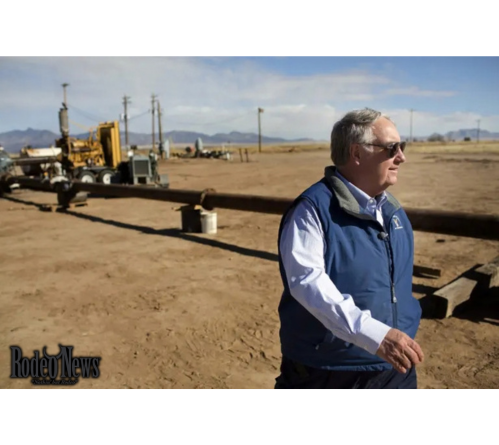
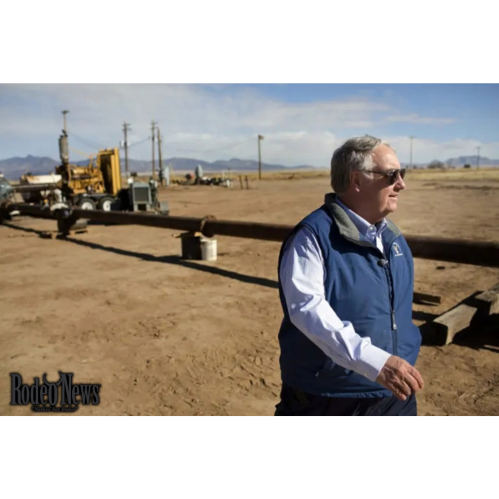
He began farming in Nebraska in 1977 and eventually became an experienced farmer and advocate of conservation agriculture. His career has included work with crops such as corn and soybeans, as well as long-term efforts involving soil conservation and agricultural research.
That background is especially striking given the company he now chairs.
Berkshire Hathaway is a vast conglomerate with interests spanning insurance, railroads, utilities, manufacturing, retail and investments. It is a business environment that is very different from a working farm.
Yet Warren Buffett has long emphasized qualities such as judgment, independence and character when discussing his family’s future role in Berkshire.
Howard’s career gave him experience making decisions where conditions cannot always be controlled. Farming depends on weather, markets, costs, land quality and long-term planning. Those experiences may have helped shape the practical approach he later brought to business and philanthropy.
2. Howard Buffett Did Not Need a Wall Street Resume
The appointment also highlights an important distinction between the roles of Berkshire Hathaway’s chairman and CEO.
Howard Buffett is not taking over as Berkshire’s chief executive. Greg Abel remains CEO and is responsible for operating the company.
Instead, Howard is expected to play a major role in preserving Berkshire’s culture and governance.
That distinction matters because Howard’s professional background is not centered on running a giant publicly traded corporation.
His decades of experience have instead included farming, business, public service, photography, conservation and philanthropy. Barron’s reported that Howard oversees a large farm operation and leads the Howard G. Buffett Foundation, which focuses on issues including food security, conflict mitigation and human trafficking.
The structure allows Berkshire to separate operational leadership from cultural stewardship.
Abel can focus on running the conglomerate, allocating capital and managing its operating businesses. Howard, meanwhile, can concentrate on helping maintain the principles that Warren Buffett developed during his long tenure.
That was one of the reasons Warren Buffett identified his son for the chairman position years before the eventual succession.
Howard Buffett and Warren Buffett Took Very Different Career Paths
The contrast between father and son is one of the most fascinating elements of the story.
Warren Buffett became one of the world’s best-known investors. He built Berkshire Hathaway through decades of disciplined capital allocation, acquisitions and investments in companies with strong competitive positions.
Howard Buffett took another route.
He became a farmer.
That difference did not necessarily create distance between them. Instead, it became part of Howard’s identity.
Howard has remained involved with Berkshire for decades, serving on the company’s board since 1993. His long association with the business means he is not an outsider suddenly arriving at the top of the organization.
His experience with the Buffett family business has also given him a long view of how Warren approached ownership, employees and corporate culture.
That perspective could become increasingly valuable as Berkshire enters a new era.
3. Howard Buffett Has Been Preparing for the Role for Years
The 2026 transition may look sudden to people unfamiliar with Berkshire’s succession planning, but Howard Buffett’s potential role was discussed long before Warren Buffett stepped down.
Warren Buffett publicly indicated years ago that he wanted Howard to eventually serve as Berkshire’s non-executive chairman.
That plan reflected the different responsibilities Warren believed were important after his retirement.
Howard was not selected because he was expected to replicate his father’s investment career. Instead, his role was designed around protecting Berkshire’s culture and values.
This distinction is critical.
Berkshire Hathaway’s investment decisions will not suddenly be controlled by a farmer replacing Warren Buffett as chief executive. The company already has a separate operational leader in Greg Abel.
Howard’s job is more closely connected to governance and continuity.
That makes his appointment less about inheriting Warren Buffett’s investment abilities and more about preserving the environment in which those abilities helped Berkshire flourish.
4. His Farming Career Became Part of His Philanthropic Mission
Howard Buffett’s work in agriculture eventually extended well beyond his own farm.
He became closely associated with conservation, food security and humanitarian causes through the Howard G. Buffett Foundation.
The foundation has supported projects around the world, including efforts involving agriculture, food security, conflict and humanitarian assistance.
His philanthropic work has been particularly visible in Ukraine since Russia’s full-scale invasion in 2022. Barron’s reported that the foundation had directed substantial funding toward Ukraine, reflecting Howard’s strong personal involvement in the country.
That experience has given Howard a public profile separate from his father’s investment career.
It also illustrates why describing him simply as “Warren Buffett’s son” misses much of his professional history.
Howard built his own career around agriculture and humanitarian work before becoming Berkshire Hathaway’s chairman.
His farming background also influenced his interest in conservation.
Rather than treating agriculture purely as a business, Howard has spent years studying how farming practices affect soil, productivity and long-term sustainability.
That approach fits with a broader philosophy of thinking beyond short-term results.
5. Berkshire Hathaway Is Entering a New Era
The arrival of Howard Buffett as chairman comes at an important moment for Berkshire Hathaway.
Warren Buffett’s departure from the chairmanship ends a remarkable era. He took control of Berkshire in the 1960s and turned a struggling textile company into a sprawling conglomerate with a market value of roughly $1.1 trillion.
The company now faces the challenge of maintaining its culture without its iconic leader in the chairman’s seat.
Greg Abel has already taken responsibility for the CEO role.
Howard Buffett now becomes an important part of the second generation of leadership.
His challenge is not simply to protect Warren Buffett’s reputation. He must help preserve the organizational principles that made Berkshire distinctive while allowing the company to evolve.
That could prove especially important as Berkshire grows larger and attracts greater attention from investors, analysts and activist shareholders.
Why Howard Buffett’s Appointment Is Being Closely Watched
The appointment has generated debate because Howard Buffett does not have the conventional background many investors might expect from the chairman of a trillion-dollar company.
Critics have questioned whether family succession should play a role in Berkshire’s governance.
The issue is particularly sensitive because Berkshire has traditionally emphasized decentralized management, shareholder alignment and careful capital allocation.
The counterargument is that Howard’s responsibilities are fundamentally different from those of the CEO.
Berkshire does not need Howard to become another Warren Buffett.
Instead, the company needs someone who understands its history and can help defend the culture that Warren built.
Some investors and observers therefore view Howard’s long relationship with Berkshire and his personal connection to Warren’s principles as valuable qualifications.
That debate is likely to continue as Berkshire moves deeper into the post-Warren Buffett era.
Howard Buffett’s Unconventional Background Could Be an Advantage
At first glance, becoming chairman of Berkshire Hathaway after working as a farmer might seem like an unlikely career progression.
But Howard Buffett’s story also demonstrates why conventional résumés do not always explain how major organizations are governed.
Farming requires patience.
It requires accepting uncertainty and making decisions that may not produce results for months or years. It also requires careful management of resources.
Those qualities overlap with some of the principles that have defined Warren Buffett’s investment philosophy.
Long-term thinking has always been central to Berkshire Hathaway.
Howard’s career may therefore be unconventional, but it is not completely disconnected from the philosophy associated with the company.
His experience has also exposed him to a world far removed from corporate headquarters and financial markets.
That could give him a different perspective as Berkshire considers its future.
Warren Buffett’s Legacy Now Depends on More Than One Person
The transition at Berkshire Hathaway is not simply a story about Warren Buffett’s son replacing his father.
It is a story about dividing Warren Buffett’s responsibilities among a new generation of leaders.
Greg Abel has the operational responsibility.
Howard Buffett has a governance and cultural role.
Meanwhile, Warren Buffett’s influence remains part of the company’s identity even after his retirement as chairman.
That structure is designed to prevent Berkshire from becoming dependent on a single individual.
For decades, Warren Buffett was synonymous with Berkshire Hathaway. Investors followed his annual shareholder letters, studied his investment decisions and listened closely to his comments about markets and business.
The company now has to prove that its principles can survive without him running the organization.
Howard Buffett’s appointment is one piece of that transition.
The Bigger Lesson From Howard Buffett’s Career
Perhaps the most striking part of Howard Buffett’s story is that his career did not resemble his father’s.
He did not need to become a legendary investor to build a successful life.
Instead, he followed agriculture, conservation, business and philanthropy before eventually taking on one of the most prominent governance positions in American corporate life.
His story also complicates the familiar idea that success must follow a straight path.
Howard left the traditional college-to-corporate route behind and spent decades developing expertise in fields far removed from Wall Street.
Now, those experiences are part of the background he brings to Berkshire Hathaway.
The significance of his appointment will ultimately depend on what happens next.
If Berkshire maintains its culture, protects shareholder interests and successfully adapts to a world without Warren Buffett at the center, Howard’s unconventional background could become one of the more interesting elements of the company’s succession story.
If the transition struggles, questions about family influence and governance are likely to become louder.
For now, however, Howard Buffett has stepped into the role his father envisioned for him years ago.
And the man who once chose the farm over a conventional college and finance career is now helping oversee the future of a company worth roughly $1.1 trillion.