
Trump Welcomes Xi Jinping to Washington as High-Stakes U.S.-China Visit Begins
Chinese President Xi Jinping arrived in Washington on Wednesday for a closely watched state visit, receiving an unusually personal welcome from President Donald Trump as the leaders of the world’s two largest economies prepare for talks on trade, artificial intelligence, technology and global security.
Trump traveled to Joint Base Andrews, outside Washington, to meet Xi as he stepped from his aircraft. The gesture marked a significant departure from the more typical practice of having senior U.S. officials receive visiting foreign leaders at the airport before they travel to the White House.
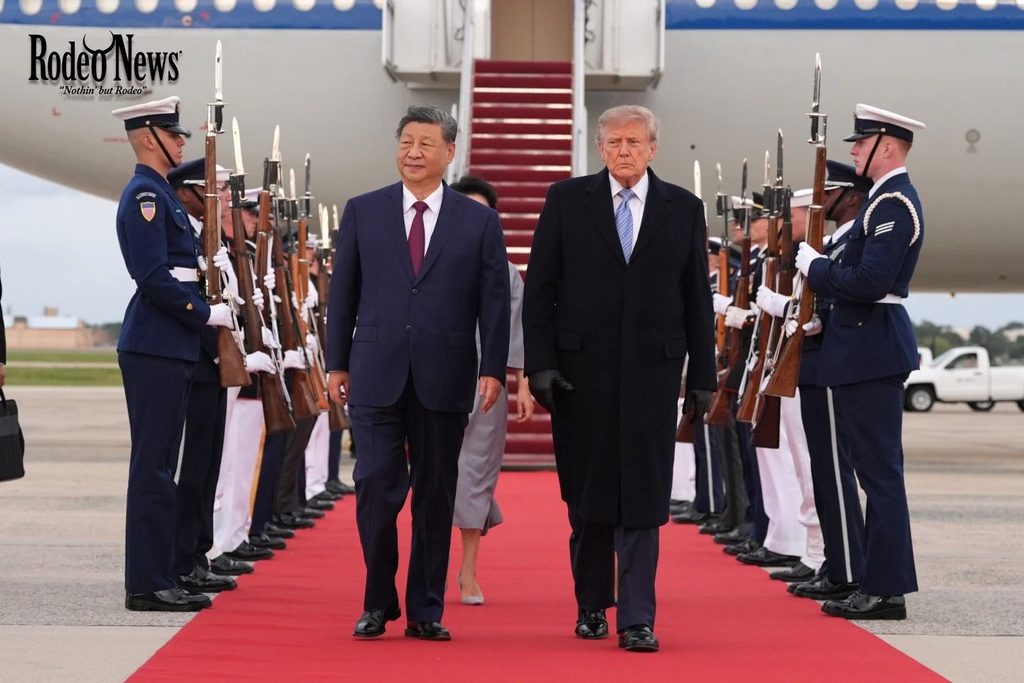
Xi and his wife, Peng Liyuan, were greeted by Trump and first lady Melania Trump at the aircraft. A formal ceremony featured a long red carpet, an honor guard and military participation, underscoring the importance Washington has placed on the visit.
The three-day trip is Xi’s first state visit to the United States in more than a decade. His previous state visit came in September 2015, when Barack Obama was president. Since then, relations between Washington and Beijing have become substantially more complicated, with disagreements expanding across trade, technology, military power, Taiwan and global influence.
A Symbolic Welcome Amid Deep Rivalry
The elaborate reception carries particular significance because the United States and China remain strategic competitors despite efforts by Trump and Xi to maintain direct communication.
The two leaders have met previously during Trump’s second term, including Trump’s visit to China in May. Their Washington meeting represents another effort to keep relations from deteriorating while both governments pursue competing economic and security interests.
The symbolism of the visit is therefore difficult to separate from its practical objectives. The ceremony and state dinner are designed to project diplomatic respect, while the discussions behind closed doors are expected to address some of the most difficult disputes between Washington and Beijing.
The relationship has changed considerably since Xi’s 2015 visit. China has expanded its economic, technological and military capabilities, while Washington has increasingly treated Beijing as a major competitor in strategic industries and national security. Analysts cited by the Associated Press have described the current relationship as one in which both sides have strong reasons to seek stability despite their rivalry.
Trade Remains a Central Issue
Trade is expected to occupy an important place in the discussions.
The United States and China have spent years imposing tariffs, export restrictions and other economic measures on each other. The countries have since taken steps to reduce some of the immediate pressure, but major disagreements remain.
One issue involves the future of tariff arrangements between the two countries. Reuters reported that officials are watching for indications of whether an existing tariff truce can be extended as its expiration approaches. Washington and Beijing are also negotiating over market access, technology restrictions and critical minerals.
China’s control over a large portion of the global supply of rare earth minerals gives Beijing an important position in negotiations. These minerals are essential for numerous modern products, including electronics, electric vehicles and advanced military equipment.
U.S. officials have indicated that Washington could consider limited tariff relief involving some goods, while significant changes to restrictions on strategic materials and technologies remain less certain.
Artificial Intelligence Moves to the Forefront
Artificial intelligence is another major issue expected to feature prominently in the talks.
The United States and China are competing to develop advanced AI systems while also attempting to protect sensitive technologies. The competition has implications not only for commercial industries but also for cybersecurity, military capabilities and national economic power.
Washington has raised concerns about the transfer and use of advanced American technology by Chinese companies. Beijing, meanwhile, has viewed some U.S. technology restrictions as efforts to slow China’s technological development.
The AI competition adds another layer to an already complicated relationship. Both countries have expressed interest in addressing risks associated with the technology, but their strategic interests make deeper cooperation difficult.
Taiwan and Global Conflicts Add Pressure
The leaders are also expected to confront broader geopolitical questions.
Taiwan remains one of the most sensitive issues in U.S.-China relations. Beijing claims Taiwan as part of China, while Washington maintains extensive unofficial relations with the island and provides it with defensive support.
Iran and other international conflicts could also enter the conversation. China’s economic and diplomatic relationships in regions affected by conflict have become increasingly relevant to Washington’s foreign policy calculations.
The two governments therefore have several reasons to maintain communication even when their positions sharply differ.
State Dinner Highlights Importance of Visit
Xi’s visit includes a highly formal schedule designed to emphasize the significance of the relationship.
Trump and Melania Trump are hosting Xi and Peng at a state dinner at the White House. The event is expected to bring together prominent figures from government, business and the technology industry.
Among the reported guests are major technology executives and business leaders, reflecting the increasingly important role that technology and artificial intelligence play in U.S.-China relations.
The visit will also include formal meetings at the White House and a private engagement involving the two couples. Xi and Peng are scheduled to visit the National Archives before departing Washington.
A Delicate Moment for Washington and Beijing
The ceremony surrounding Xi’s arrival demonstrates the importance both governments place on maintaining dialogue, but it does not eliminate the substantial disagreements between them.
Trade restrictions, rare earth minerals, artificial intelligence, Taiwan and broader geopolitical competition all remain unresolved. Neither side has indicated that the visit is expected to produce a sweeping agreement covering every major dispute.
Instead, the immediate objective appears to be maintaining a workable relationship while the United States and China continue to compete for economic, technological and strategic influence.
Xi’s arrival in Washington therefore represents more than a ceremonial state visit. It is another important test of whether the two governments can manage their rivalry without allowing disagreements to undermine communication between their leaders.