
Andy Burnham Trump Meeting: 5 Key Moments at UN
The Andy Burnham Trump meeting at the United Nations General Assembly became an important early test for Britain’s new prime minister as he attempted to manage a relationship with Washington while maintaining Britain’s positions on some of the most difficult international issues.
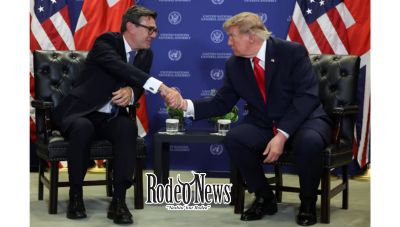
Burnham met U.S. President Donald Trump in New York on Tuesday, September 22, during the annual gathering of world leaders. The meeting lasted longer than the scheduled 30 minutes and was accompanied by unusually warm public remarks from Trump, who described Burnham as a “natural business person” and said the relationship with Britain was better than it had been under former Prime Minister Keir Starmer.
For Burnham, however, the encounter was about more than friendly language. His government faces major questions over the war involving Iran, Ukraine, energy prices, artificial intelligence, the Falkland Islands and Britain’s changing relationship with Europe.
The meeting therefore offered an early glimpse of how Burnham intends to balance Britain’s close alliance with the United States with a foreign policy that seeks stronger European cooperation and an independent British voice.
1. Andy Burnham Trump Meeting Comes With High Stakes
The significance of the Andy Burnham Trump meeting was amplified by the fact that it was the first face-to-face encounter between the two leaders.
Burnham became prime minister in July after replacing Starmer. Before entering Downing Street, he had been mayor of Greater Manchester and had previously been sharply critical of Trump.
That history made the meeting particularly closely watched.
Burnham had once said Trump would not be welcome in Manchester and had indicated in earlier years that he would not meet the U.S. president. Since becoming prime minister, however, his approach has shifted toward finding areas of cooperation while accepting that Britain and the United States will not agree on every issue.
That pragmatic approach was visible in New York.
Trump publicly praised Burnham and said the relationship between the two countries was in good shape. The U.S. president also said relations were “more up” than they had been with Starmer.
The comments provided an encouraging public start for Burnham, although several substantive disagreements remain unresolved.
2. Trump Offers Warm Words to Britain’s New Prime Minister
Trump’s personal assessment of Burnham became one of the most notable moments of the meeting.
The U.S. president described the British leader as a “natural business person” and said he believed Burnham had “lots of assets on his side.” Trump also suggested Burnham would be a great prime minister.
The tone was significant because Trump’s relationships with foreign leaders have frequently involved a mixture of personal diplomacy and transactional discussions.
Burnham appeared determined to use the opportunity to establish a working relationship rather than focus on previous disagreements.
British officials were reported to have been relieved by the outcome, particularly because the meeting came at a sensitive moment in transatlantic relations.
The two governments still face disagreements over several subjects, including Britain’s policy toward the Middle East, technology regulation, energy policy and the future of the Chagos Islands.
A cordial meeting does not remove those differences. It does, however, create space for both governments to continue negotiations.
3. Falkland Islands Become a Major Test
One of the most sensitive issues surrounding the Andy Burnham Trump meeting was Britain’s position on the Falkland Islands.
Trump had previously raised questions about the United States’ traditional position on the disputed South Atlantic territory. Argentina claims sovereignty over the islands, while Britain maintains that the Falkland Islanders have the right to determine their own future. Reuters reported that Burnham used his meeting with Trump to make clear that Britain would stand firm against threats to the islands.
The issue is particularly important because the Falklands are not simply a foreign-policy dispute for Britain. The islands remain closely connected to questions of sovereignty, national security and Britain’s responsibilities toward its overseas territories.
In his UN speech, Burnham said Britain would stand firm when British territories faced threats and specifically referred to the Falkland Islands.
That position placed a clear boundary around the new government’s relationship with Washington.
At the same time, Burnham has emphasized that Britain can maintain strong relations with the United States while cooperating with European allies and other international partners.
4. Iran War Puts Pressure on the Relationship
The meeting also took place against the backdrop of a major Middle East crisis.
Burnham has sought to encourage diplomacy and reduce the economic and security consequences of the Iran conflict. The war has contributed to pressure on global energy markets, creating an additional challenge for Britain as the government attempts to improve economic growth and address living costs.
Trump, meanwhile, used his UN appearance to defend his approach to Iran.
That creates a difficult diplomatic environment for Burnham.
Britain remains one of America’s closest allies, but London does not automatically share every decision made by Washington.
Burnham’s UN speech reflected that distinction. He argued that Britain would maintain its defence commitments and work closely with allies while avoiding what he described as Russia’s approach of escalating rhetoric.
He also argued that Britain should use its diplomatic relationships to bring countries together.
The challenge is to translate that language into practical diplomacy while avoiding a major rupture with Washington.
5. AI Becomes a New Area of UK-US Cooperation
Artificial intelligence was another major theme during Burnham’s first appearance at the United Nations as prime minister.
The British government announced that it was developing a new AI defence partnership with the United States focused on protecting critical national infrastructure. The announcement came as Burnham called for international cooperation over both the benefits and risks of advanced AI.
The AI initiative gives Britain and the United States an area where their strategic interests can overlap.
AI is increasingly being treated as a national-security issue rather than simply a technology-sector issue. Governments are examining its implications for defence, infrastructure, economic competitiveness and information security.
Burnham also announced that Britain plans to place AI at the centre of its G20 presidency in 2027.
His UN speech argued for global principles and standards designed to improve transparency, preparedness and safety while allowing countries to benefit from technological development.
For Britain, the policy also offers an opportunity to position itself between the United States, European countries and emerging technology powers.
Britain’s Relationship With Europe Remains Central
The Andy Burnham Trump meeting should not be viewed in isolation from Britain’s broader foreign-policy strategy.
Burnham told the UN that Britain has relationships with the United States, European Union countries, China, India and Brazil. He also highlighted Britain’s position on the UN Security Council, the Commonwealth and the CPTPP.
His message was that Britain can operate as a bridge between different groups of countries.
That represents an important change in emphasis after years of political debate over Britain’s post-Brexit position.
In his UN address, Burnham said Britain was restoring stability and seeking stronger cooperation with the world. He also described Britain as an “honest broker” capable of helping countries work together.
The strategy will face practical challenges.
Washington expects close cooperation from Britain on security and defence. European partners want Britain to remain engaged in continental security. Meanwhile, Britain’s economic interests require relationships with a wide range of global markets.
Burnham therefore faces the task of maintaining multiple relationships without allowing one partnership to undermine another.
Ukraine Remains a Key British Priority
Ukraine was another major issue surrounding Burnham’s international agenda.
Britain has continued to support Ukraine as Russia’s invasion enters another winter. In his UN speech, Burnham argued that Russia should accept a ceasefire and return to negotiations, while saying Britain would continue supporting Ukraine.
His government has also sought greater cooperation with international partners over Ukraine’s air defence and energy infrastructure.
The issue provides another test of the UK-US relationship.
Although Washington and London remain major supporters of Ukraine, their approaches to the conflict and wider European security can differ.
Burnham’s strategy is to emphasize Britain’s defence commitments while also strengthening European capabilities.
That approach allows London to remain closely aligned with Washington while increasing cooperation with European allies.
Burnham’s UN Speech Sets Out a Broader Vision
The significance of the Andy Burnham Trump meeting extends beyond the private discussion between the two leaders.
Burnham’s wider UN speech presented a vision for Britain’s role in an increasingly divided international system.
He argued that national security depends not only on military strength but also on social cohesion, economic stability and resistance to disinformation.
He specifically warned about foreign interference and the use of fake websites, manipulated content and other techniques to influence public opinion.
Burnham also addressed climate change, global health, Gaza, Ukraine and the future of the United Nations.
His message was that Britain should combine hard power with diplomacy and international cooperation.
That approach will now be tested in real-world negotiations with Washington and other capitals.
What Comes Next for UK-US Relations?
The warm tone of the first meeting gives Burnham political space to continue discussions with Trump.
But several difficult questions remain.
The two governments will need to work through disagreements over the Middle East, energy policy, technology regulation and the Chagos Islands. The Falkland Islands also remain a sensitive issue following Trump’s previous comments.
At the same time, Britain wants deeper cooperation with European countries while preserving its close security relationship with the United States.
That balancing act will likely define much of Burnham’s foreign policy during the early months of his premiership.
For now, the first meeting produced positive public signals.
Trump praised Burnham. Burnham emphasized the importance of the transatlantic relationship. Both sides identified areas where cooperation remains possible.
But diplomacy is ultimately measured by what happens after the cameras leave.
The next stages of negotiations over Ukraine, Iran, defence, energy and technology will provide a clearer indication of how durable the new relationship can become.
A New Chapter for Britain’s Transatlantic Relationship
The Andy Burnham Trump meeting at the UN marked an important first step for Britain’s new prime minister.
The encounter showed that previous political disagreements between Burnham and Trump do not necessarily prevent the two leaders from establishing a working relationship.
Trump’s positive comments created a notably friendly public atmosphere, while Burnham used the broader UN gathering to outline Britain’s priorities on security, artificial intelligence, Ukraine, climate change and international cooperation.
The relationship will nevertheless face serious tests.
Britain must protect its interests while remaining a close American ally. It must also strengthen ties with European partners and maintain relationships with countries beyond the traditional Western alliance.
For Burnham, the UN meeting was therefore less a conclusion than an opening chapter.
The immediate diplomatic success was the establishment of a constructive first encounter.
The larger question is whether that relationship can survive the disagreements that inevitably follow.
With wars, energy pressures, AI competition and geopolitical tensions reshaping international politics, Britain’s relationship with the United States will remain one of the most important tests of Burnham’s early leadership.