Gulf Leaders Trump Meeting: 5 Key War Fears
The Gulf leaders Trump meeting in New York comes at a critical moment for the Middle East, with Arab governments facing two competing concerns: the possibility of a wider war with Iran and uncertainty over how much protection they can continue to expect from the United States.
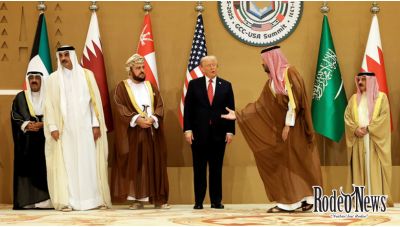
President Donald Trump is scheduled to meet leaders from Gulf Cooperation Council countries as the war involving the United States, Israel and Iran continues to create security and economic risks across the region. The talks are taking place alongside the United Nations General Assembly, where the Iran conflict is expected to be one of the central diplomatic issues.
According to CNN reporting, Gulf governments want to prevent further attacks on their territory while also avoiding a major escalation that could make them direct targets in a broader confrontation.
The meeting therefore carries significance beyond the immediate question of whether the United States will intensify military action against Iran.
For Gulf leaders, the discussions are also about the future of the regional security system that has relied heavily on American military power for decades.
Gulf Leaders Trump Meeting Comes as Iran War Widens
The Gulf leaders Trump meeting comes after months of conflict and increasing pressure on countries surrounding Iran.
Trump has publicly indicated that he is considering major decisions about the future of the US campaign against Tehran. CNN reported that Gulf leaders had previously urged him not to launch a major escalation, believing at the time that diplomacy could still produce an agreement with Iran.
That expected breakthrough has not materialized.
Instead, the conflict has continued, while attacks linked to Iran have created additional risks for Gulf states. Saudi Arabia has faced threats involving its energy infrastructure, while other Gulf countries have experienced disruptions connected to the closure of the Strait of Hormuz.
The result is a difficult calculation for governments that maintain close relationships with Washington.
They want American support if their territory comes under attack. At the same time, they do not want US military action against Iran to produce an even larger regional conflict.
That tension is expected to shape the discussions in New York.
Gulf Leaders Fear More Attacks on Their Territory
One of the most immediate concerns for Gulf governments is retaliation.
If Washington expands military operations against Iran, Tehran could respond by targeting American military facilities, energy infrastructure or other strategic interests across the Gulf.
CNN reported that Saudi Arabia is already facing attacks from multiple directions, while Qatar, Bahrain and Kuwait have experienced major trade disruptions associated with the Strait of Hormuz crisis.
For Gulf governments, the geography of the conflict creates a difficult problem.
Many US military assets are located in or operate from Gulf countries. American forces are therefore part of the region’s security structure, but their presence can also make host countries potential targets during a confrontation with Iran.
That means a decision made in Washington can quickly create consequences in Riyadh, Doha, Manama, Kuwait City or Abu Dhabi.
The Gulf states are consequently seeking security without becoming more deeply embedded in the fighting.
Saudi Arabia Faces a Major Security Test
Saudi Arabia is at the center of many of the security concerns surrounding the Gulf leaders Trump meeting.
The kingdom has spent years strengthening its military capabilities and maintaining a close security relationship with Washington. However, the current conflict is testing assumptions about how that relationship works during a major regional war.
CNN reported that Saudi Arabia could be facing one of its most significant security challenges since the 1991 Gulf War. At the same time, Washington has been discussing the possibility of reducing its military footprint in parts of the Gulf.
That combination is particularly sensitive.
Gulf governments have historically hosted US forces and purchased American weapons while expecting Washington to help deter external threats. Any reduction in American military presence could therefore raise questions about how the regional security arrangement will operate in the future.
The issue is not simply about troop numbers.
It concerns intelligence, air defense, deterrence, military logistics and the credibility of security commitments.
US Military Drawdown Raises Gulf Concerns
A second major issue expected to influence the Gulf leaders Trump meeting is the possibility of a reduced US military presence.
CNN previously reported that senior Pentagon officials had discussed shifting more of the regional defense burden toward Gulf partners. For Gulf governments, the timing is particularly sensitive because attacks are already spreading across the region.
Officials familiar with Saudi thinking have argued that discussions about reducing the American presence could create the wrong signal during an active conflict.
The Gulf states have spent decades building security relationships with Washington. A sudden change could therefore force them to reconsider how they protect their borders, infrastructure and economic interests.
Iran, meanwhile, has long opposed the presence of US military bases in the Gulf.
Iranian officials have argued that American bases make regional countries targets rather than providing the security promised by Washington. That argument has become more prominent during the current conflict.
The Gulf governments therefore face a complicated strategic environment.
Maintaining US forces can provide deterrence, but their presence can also increase the potential consequences of a US-Iran confrontation.
Gulf States Want a Diplomatic Off-Ramp
The third major issue is diplomacy.
Gulf governments have repeatedly expressed interest in stability rather than an open-ended regional war. Their challenge is finding a diplomatic path that can reduce attacks without requiring them to abandon their security relationships with the United States.
Analysts cited by CNN have suggested that Gulf governments need to arrive in Washington with specific requests rather than broad appeals for peace. One proposal discussed by analyst Bader Al-Saif involves protecting freedom of navigation through the Strait of Hormuz while exploring limited measures that could encourage negotiations with Iran.
The Strait is particularly important because it connects the Persian Gulf with global energy markets.
Any prolonged disruption can affect shipping, energy prices and international trade far beyond the Middle East.
That makes freedom of navigation one of the issues where Gulf interests overlap with those of Washington and other major economies.
However, reaching an agreement remains difficult.
Qatar, which has played a role in regional mediation, has expressed doubts about whether the United States and Iran currently see a diplomatic outcome that both sides could accept.
Strait of Hormuz Becomes a Central Concern
The Gulf leaders Trump meeting also takes place against the backdrop of continuing concerns surrounding the Strait of Hormuz.
The waterway is one of the world’s most important energy routes. Disruptions can have consequences for oil markets, shipping companies and consumers around the globe.
For Gulf countries, however, the problem is more immediate.
Their economies depend heavily on stable international trade. Any prolonged interruption can affect exports, imports, transportation and investor confidence.
That is why Gulf governments have an interest in preventing the conflict from developing into a prolonged regional confrontation.
A military escalation involving Iran could potentially increase pressure on shipping routes and energy infrastructure.
The economic consequences could then reinforce the security crisis.
UAE Pursues Engagement With Iran
The United Arab Emirates has also been pursuing a different aspect of the regional strategy: continued engagement with Tehran.
According to CNN, UAE diplomatic adviser Anwar Gargash said the two sides had agreed on the need to “turn the page,” although he also warned that rebuilding trust could take many years.
The UAE’s approach illustrates the broader challenge facing Gulf governments.
They maintain strategic relationships with Washington while simultaneously needing working relationships with neighboring Iran.
Those relationships are not necessarily mutually exclusive.
For Gulf governments, communication with Tehran can provide a channel for reducing misunderstandings and limiting escalation. At the same time, security cooperation with Washington provides military capabilities and deterrence.
The current conflict is putting both parts of that strategy under pressure.
Trump Faces a Difficult Decision on Iran
For Trump, the meeting with Gulf leaders comes as he considers what direction the Iran war should take next.
CNN reported that Trump has described himself as facing a major decision regarding Iran. Meanwhile, analysts have questioned whether another major military escalation would produce a clear strategic outcome.
The conflict has already lasted far longer than some initial expectations.
CNN reporting noted that the war is approaching its seventh month, while the basic strategic disagreement between Washington and Tehran remains unresolved.
That creates pressure for a possible diplomatic off-ramp.
But diplomacy also requires both sides to identify terms that they consider acceptable.
Iran has continued to reject the idea that military pressure alone will force it to surrender its core positions. At the same time, the Trump administration continues to emphasize that Iran must not obtain a nuclear weapon.
Those positions leave limited room for compromise unless the two sides alter their demands.
Gulf Leaders Seek Specific Security Guarantees
The most important question for Gulf governments may therefore be what Washington is prepared to offer.
They want protection from attacks but have limited interest in becoming participants in an expanding US-Iran war.
That could lead discussions toward practical issues such as missile defense, intelligence cooperation, protection of shipping lanes and the future deployment of US forces.
The Gulf states may also seek clarity about what American commitments actually mean if another major attack occurs.
The issue is particularly important because Gulf governments have invested heavily in their partnerships with Washington.
Weapons purchases, military training and American basing arrangements form part of a broader relationship that has developed over decades.
The current crisis is testing the limits of that arrangement.
What the Gulf Leaders Trump Meeting Could Mean
The Gulf leaders Trump meeting is unlikely to be limited to one question about Iran.
Instead, it brings together several interconnected issues: military escalation, regional security, energy infrastructure, shipping routes, US troop deployments and diplomacy.
Gulf governments want to avoid becoming the battlefield for a conflict between larger powers.
Washington, meanwhile, must weigh its objectives in Iran against the security concerns of its regional partners.
The meeting also comes during a broader diplomatic week at the United Nations. Trump is expected to address the General Assembly, while Iranian President Masoud Pezeshkian is also expected to participate in the gathering.
That creates opportunities for diplomatic contacts, although CNN reporting indicates that expectations for a dramatic breakthrough remain limited.
For Gulf leaders, the immediate priority is clearer: reduce the risk of additional attacks while preserving access to American security support.
For Washington, the challenge is determining whether military pressure or diplomacy can produce a sustainable path forward.
And for the wider global economy, the stakes extend beyond the region.
Any further disruption involving Gulf energy infrastructure or the Strait of Hormuz could have consequences for oil markets and international trade.
The New York meeting therefore represents more than another diplomatic encounter during the United Nations General Assembly.
It is a test of how the United States and its Gulf partners intend to manage an increasingly complicated Middle Eastern security environment — and whether they can prevent the current conflict from becoming even wider.