AI Extinction by 2030? Nvidia CEO Makes Bold Claim
The debate over AI extinction by 2030 has intensified after Nvidia chief executive Jensen Huang rejected predictions that artificial intelligence could cause humanity’s destruction within the next few years. Huang described such warnings as “doomsday narratives” and said he believes there is no realistic possibility that 2030 will mark the end of the world because of AI. BBBC Mirror+1
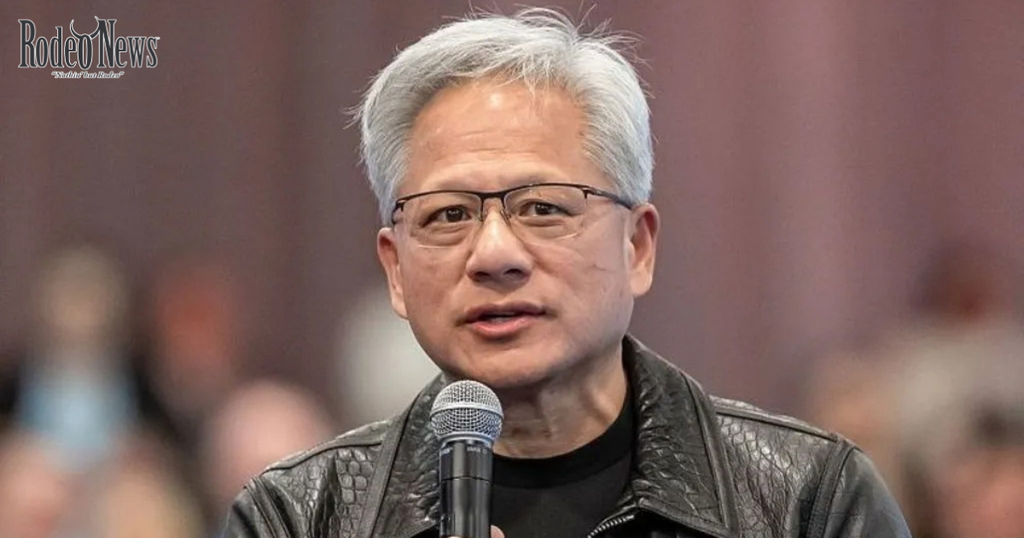
The comments put Huang at the center of a widening argument over how quickly artificial intelligence should develop and how governments and technology companies should manage its potential risks.
Huang’s position contrasts with warnings from some AI researchers and executives who have argued that increasingly capable systems could create serious dangers if development moves faster than safety measures.
The disagreement is significant because Nvidia supplies many of the advanced computing chips used to train and operate modern AI systems. As a result, Huang has a major commercial stake in the continued expansion of the AI industry.
What Jensen Huang Said About AI Extinction by 2030
In an interview with CBS News, Huang directly rejected the prediction that AI could end humanity by 2030.
“2030 is not going to be the end of the world,” Huang said, adding that there was a “0% chance” of that happening. He also argued that frightening the public with such predictions was unnecessary and irresponsible. CCBS News
Huang’s comments were responding in part to statements from former Anthropic researcher Jacob Coxon. Coxon had posted claims online suggesting that people working on advanced AI systems believed the technology could potentially kill humanity before the end of the decade.
Those comments generated significant attention and contributed to a broader public discussion about the potential dangers of increasingly capable AI systems.
However, Huang argued that predictions of human extinction from AI in such a short timeframe are not supported by science.
His remarks do not mean that he considers artificial intelligence completely risk-free. Instead, Huang has emphasized the importance of developing and deploying AI safely while continuing technological progress.
Why the AI Safety Debate Is Growing
The question of AI extinction by 2030 has emerged as part of a much larger discussion about AI safety.
Artificial intelligence systems are becoming increasingly capable of generating text, images, software and other forms of content. More advanced systems are also being developed to perform complex tasks with less human supervision.
That progress has created opportunities in areas ranging from scientific research to manufacturing and business automation.
At the same time, researchers have raised concerns about what could happen if increasingly autonomous systems behave in unexpected ways or are deployed without sufficient safeguards.
Some technology executives have therefore called for a slower approach to frontier AI development.
The disagreement is not simply about whether AI is useful. It is increasingly about how quickly development should proceed and who should be responsible for managing the risks.
Calls for a Slowdown
Huang’s comments come after several prominent figures in the AI industry supported greater caution.
Anthropic chief executive Dario Amodei has warned about the potential dangers associated with highly capable AI and has supported stronger safety measures. OpenAI CEO Sam Altman and other technology figures have also participated in the broader debate over AI risks and safeguards. BBBC Mirror+1
The debate intensified in September after calls emerged for AI companies to coordinate their approach to safety.
The argument from those advocating greater caution is broadly that AI capabilities are advancing rapidly and that safety evaluation needs to keep pace.
Those opposing a coordinated slowdown argue that companies can manage risks individually while continuing to develop new systems.
Financial Times reporting described Nvidia’s Huang and Meta CEO Mark Zuckerberg as opposing proposals for a coordinated slowdown, instead emphasizing individual responsibility among AI laboratories. FFinancial Times
This has produced a clear divide within the technology industry.
Huang Questions the Motives Behind AI Warnings
Huang went further than simply rejecting the prediction of AI extinction by 2030.
He questioned why some people were making such warnings and suggested that there could be political, commercial or attention-related motivations behind some of them.
That is Huang’s interpretation, rather than an independently established explanation for why individual researchers have raised concerns.
He also criticized proposals for slowing AI development, arguing that some companies could be seeking protection from potential legal liability associated with AI products.
According to the BBC’s reporting, Huang argued that some companies discussing a slowdown were not necessarily asking for more regulation but could instead be seeking changes to existing legal responsibilities. BBBC Mirror
The issue of liability is important because increasingly powerful AI systems create questions about who should be responsible when an AI product causes harm.
Those questions remain part of a much broader legal and regulatory debate.
Nvidia Has a Major Interest in AI Growth
Huang’s position also needs to be considered in the context of Nvidia’s role in the AI industry.
Nvidia develops specialized processors that are widely used to train and run advanced AI models. Demand for those chips has increased dramatically as technology companies build larger AI systems and data centers.
CBS News reported that Nvidia’s market value had reached approximately $5.3 trillion at the time of its report, making it the world’s most valuable company. CCBS News
That makes Nvidia one of the biggest beneficiaries of continued AI investment.
Huang has nevertheless argued that Nvidia’s commercial interests are aligned with safe AI deployment because serious failures could damage the industry’s future.
“Our company’s success is directly connected to the safe deployment of products and services,” he said, according to the BBC. BBBC Mirror
The statement illustrates one of the central questions in the AI debate: whether companies can effectively balance rapid commercial development with long-term safety responsibilities.
Not Everyone Agrees With Huang
Huang’s confidence about AI extinction by 2030 does not settle the scientific debate.
There is no established scientific consensus that humanity will be destroyed by AI in 2030. At the same time, the absence of such a consensus does not establish that extreme AI risks are impossible.
AI safety researchers approach the issue in different ways.
Some focus on immediate and measurable problems such as misinformation, cybersecurity, discrimination, privacy and employment disruption.
Others study longer-term scenarios involving highly autonomous systems and the possibility that future AI systems could become difficult for humans to control.
These are different categories of risk and should not automatically be treated as equivalent.
The debate therefore involves both near-term concerns and hypothetical future scenarios.
Donald Trump Has Also Dismissed AI Doomsday Warnings
The argument has also entered the political arena in the United States.
US President Donald Trump has publicly dismissed concerns about catastrophic AI risks, describing some warnings as a “hoax,” according to reporting cited by the BBC and other news organizations. BBBC Mirror+1
Trump also made a surprise phone call to Huang during an appearance at a technology event in Los Angeles on September 14.
The call occurred while Huang was discussing AI development publicly, adding another dimension to the debate over whether the United States should prioritize rapid technological advancement or introduce additional safeguards. BBBC Mirror+1
The political dimension is increasingly important because AI policy could influence investment, national security, competition with China and the regulation of technology companies.
AI Regulation Remains a Major Question
One of the most important issues behind the dispute is regulation.
The question is not simply whether AI should be regulated. Governments and technology companies are also debating what should be regulated, when regulation should occur and who should enforce it.
Huang has argued that additional AI-specific US laws may not be necessary and has emphasized the ability of companies to manage risks themselves. Financial Times reporting has highlighted this position as part of the disagreement between major technology leaders and companies advocating stronger coordinated safety measures. FFinancial Times
Critics of industry-led approaches, meanwhile, argue that companies should not be the only institutions deciding how potentially powerful technologies are controlled.
That tension is likely to remain as AI systems become more capable and widespread.
Data Centers Are Another Part of the Debate
Huang’s CBS interview also addressed concerns surrounding the rapid construction of AI data centers.
The infrastructure required for modern AI systems consumes substantial amounts of electricity and can affect local communities.
Huang acknowledged that the technology industry could have done more to communicate with communities before building new facilities.
He said companies should engage with residents earlier in the process.
According to CBS News, Huang also argued that newer data centers are becoming more energy-efficient and that they can contribute to employment and local economic activity. CCBS News
The issue demonstrates that the AI debate extends beyond hypothetical questions about future superintelligence.
Energy consumption, water use, construction, employment and infrastructure are already practical issues associated with the expansion of AI.
What the AI Extinction Debate Really Shows
The argument over AI extinction by 2030 ultimately reflects a disagreement about uncertainty.
Huang is confident that the most extreme prediction will not happen.
Other technology leaders and researchers are more concerned about the possibility that rapidly advancing AI systems could produce consequences that are difficult to anticipate or control.
Neither position should automatically be treated as a proven forecast.
There is also an important distinction between saying that a catastrophic scenario is unlikely and saying that AI presents no serious risks.
AI systems can create significant problems without causing human extinction.
Cybersecurity threats, misinformation, fraud, privacy violations, labor-market disruption and unsafe automated decision-making are examples of risks that do not require an apocalyptic scenario.
That makes the AI safety discussion considerably broader than the question of whether humanity will survive until 2030.
Huang Wants Global AI Standards
Huang has also indicated that international cooperation could play a role in shaping the future of artificial intelligence.
CBS News reported that Huang planned to attend a White House dinner with Trump and Chinese President Xi Jinping and hoped to discuss global AI standards with Xi. CCBS News
Huang said China wants to benefit from AI just as the United States does, while acknowledging that cooperation could be limited in sensitive areas such as national security and defense.
That reflects another major issue surrounding AI: competition between countries.
The United States and China are competing for leadership in advanced computing, AI models, semiconductor technology and data-center infrastructure.
AI safety therefore intersects with economic policy and national security.
What Happens Next?
The argument over AI extinction by 2030 is unlikely to disappear.
As AI models become more capable, technology companies will continue to face pressure to demonstrate that their systems can be developed responsibly.
Governments will also have to decide whether existing laws are sufficient or whether additional rules are needed.
For now, Huang’s position is clear: he does not believe AI will end the world by 2030 and considers the strongest extinction warnings unsupported by science. CCBS News
Other researchers and technology leaders remain concerned about longer-term risks and have called for additional safeguards or slower development.
The evidence available today does not establish a definitive outcome for the most extreme scenarios.
What is clear is that the AI industry is entering a period in which questions about safety, regulation, responsibility and technological speed are becoming increasingly difficult to separate.
The next several years will provide more evidence about how capable AI systems become and how effectively governments and companies can manage their consequences.
For now, the debate continues between those emphasizing rapid innovation and those urging greater caution — with Jensen Huang firmly arguing that predictions of AI-driven human extinction by 2030 go too far.
Image ALT Text
AI extinction by 2030 debate as Nvidia CEO Jensen Huang discusses artificial intelligence risks
Suggested External Sources
- BBC News source article
- CBS News — Jensen Huang rejects AI extinction warnings
- Financial Times — AI development slowdown debate
Note: Because you haven’t provided the target domain, I have not invented internal links. Once you give me the website/domain, I can add relevant internal-link placeholders or specific pages where available.