
Oil Prices Rise as Riyadh Attack Raises Fresh Supply Concerns
Oil prices rise again as markets react to a new escalation in the Middle East, after Yemen’s Iran-backed Houthi movement launched missile and drone strikes toward Saudi Arabia’s capital, Riyadh.
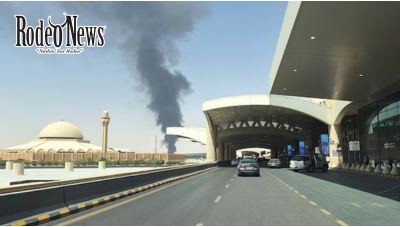
Brent crude futures gained 81 cents, or 0.78%, to $104.68 a barrel by 2202 GMT on Monday, according to Reuters. U.S. West Texas Intermediate crude also advanced, rising 76 cents, or 0.76%, to $101.06 a barrel.
The latest move comes as traders remain focused on the potential impact of regional conflict on oil production, transportation and export infrastructure. The attack has added another layer of uncertainty to an already fragile energy market.
Why Oil Prices Rise After the Riyadh Attack
The immediate reason oil prices rise is the renewed concern that military escalation could eventually affect physical crude supplies.
Saudi Arabia is one of the world’s most important oil producers and exporters. Any prolonged disruption involving its pipelines, terminals or other energy infrastructure could have consequences well beyond the region.
The latest Houthi attack targeted Saudi Arabia’s capital, increasing concerns that the conflict could spread into areas closer to major economic and energy facilities.
Reuters reported that the Houthis launched missile and drone strikes at Riyadh on Saturday. The attacks came as tensions between the United States and Iran remained unresolved, adding to uncertainty across the Middle East.
Markets typically respond to such developments by adding a geopolitical risk premium to crude prices. Traders do not necessarily need to see an immediate loss of production before prices react.
Instead, the possibility of future disruption can be enough to push prices higher.
Oil Prices Rise With Brent Above $104
The latest trading session kept both major oil benchmarks above the $100-per-barrel level.
Brent crude, the international benchmark, reached $104.68 a barrel after its latest increase. Meanwhile, WTI, the U.S. benchmark, traded at $101.06.
The relatively modest percentage gains mask a larger concern for energy markets. Oil prices have already experienced significant volatility in September as investors have reacted to attacks, pipeline disruptions and uncertainty surrounding regional shipping routes.
Earlier in the month, Brent climbed to $108.75 a barrel before later retreating as traders assessed possible efforts to restore Saudi supply routes. WTI also experienced sharp movements during the same period.
That history means traders are watching each new military development closely.
A further escalation could cause another rapid repricing of crude, particularly if energy facilities or important transportation routes are directly affected.
Saudi Oil Infrastructure Remains a Key Market Concern
Saudi Arabia’s importance to the global oil market makes attacks involving the kingdom particularly significant.
Earlier in September, attacks damaged parts of the country’s East-West oil pipeline system. The pipeline is important because it allows Saudi crude to move from production areas in the east toward the Red Sea.
Reuters reported that damage to the pipeline and related disruptions had already raised concerns about the country’s ability to maintain normal export flows. Traders estimated that a prolonged shutdown could potentially affect as much as 4% of global oil supply.
The situation also increased the importance of Yanbu, a major Saudi Red Sea export hub.
Shipping industry sources previously reported that crude loadings at Yanbu had been suspended and that Saudi Arabia had canceled some late-September crude deliveries to European customers.
Those developments demonstrate why another attack on Saudi territory can quickly become an issue for international oil markets.
Even when production itself remains intact, damage to pipelines, storage facilities, ports or transportation infrastructure can restrict the movement of crude.
Houthi Attacks Increase Middle East Energy Risks
The latest attack represents another expansion of the conflict involving the Houthis and Saudi Arabia.
Saudi authorities said the Riyadh attack was intercepted, with no immediate reports of casualties or significant damage from the missile attempt. The Houthis, however, claimed that they had targeted sensitive locations in the Saudi capital.
The group has also claimed attacks against other locations and energy-related infrastructure in Saudi Arabia. Some of those claims have not been independently verified.
The growing number of attacks has nevertheless increased the risk premium in energy markets.
Reuters previously reported that Houthi attacks on Saudi energy facilities had contributed to a sharp increase in oil prices earlier in September. Brent settled at $97.92 on September 8, while WTI finished at $93.03 after attacks on several Saudi cities and oil installations.
The latest move above $100 therefore comes against a backdrop of sustained market stress rather than a single isolated incident.
Strait of Hormuz Adds Another Layer of Risk
Oil traders are also monitoring conditions around the Strait of Hormuz, one of the world’s most important energy chokepoints.
The waterway is critical for global energy shipments, and disruptions there can have an immediate effect on expectations for future supply.
Reuters reported that tanker traffic through the Strait of Hormuz had declined during the broader Middle East conflict. At the same time, concerns remained over the vulnerability of regional energy infrastructure and shipping routes.
The combination of risks is important.
A disruption affecting one pipeline or export terminal may be manageable if alternative routes are available. However, multiple disruptions occurring at the same time can make it significantly harder for producers and traders to redirect supplies.
That is one reason geopolitical developments can have an outsized influence on crude prices.
Saudi Arabia Looks for Ways to Maintain Oil Flows
Saudi Arabia has also been working to maintain international oil supplies despite infrastructure disruptions.
Earlier reports indicated that the kingdom was exploring alternative methods of getting crude to overseas customers, including additional offshore loading arrangements.
Reuters reported that Saudi Arabia was seeking to restore about half of the capacity of its East-West pipeline within days after the system was halted following drone attacks. Additional crude cargoes through alternative routes were also expected to help offset some of the disruption.
Those efforts could help prevent a much larger supply shock.
However, the market remains sensitive to any evidence that repairs are delayed or that additional infrastructure comes under attack.
For traders, the question is not simply how much oil Saudi Arabia produces. It is also whether that oil can reach international buyers efficiently.
What Higher Oil Prices Could Mean for Consumers
If oil prices rise for an extended period, the impact can spread well beyond energy markets.
Crude oil is a major input for gasoline, diesel, jet fuel, plastics, chemicals and numerous industrial products. Higher crude prices can therefore increase transportation and production costs across the global economy.
Fuel prices are particularly sensitive because refiners and distributors eventually pass some of their increased costs to consumers.
Airlines can also face additional pressure when jet fuel prices increase. Shipping companies, trucking firms and other transportation businesses may experience higher operating costs as well.
The economic impact depends heavily on how long elevated oil prices remain in place.
A short-lived spike may have a limited effect. A sustained period of crude prices above $100, however, could create broader inflationary pressure.
Markets Watch for Further Escalation
The next stage of the conflict will be closely monitored by oil traders.
The key issue is whether the latest attack remains a contained security event or develops into a broader campaign against Saudi energy infrastructure.
Previous market reactions demonstrate how quickly prices can move when traders believe physical supply is at risk.
On September 15, Brent gained more than $3 after reports that Saudi crude loadings at Yanbu had been suspended and that some deliveries to European customers had been canceled. WTI gained even more in percentage terms during that session.
By contrast, crude prices later declined when investors received indications that additional Saudi barrels could reach international markets and that pipeline capacity might be restored.
This illustrates the two forces currently competing in the market: geopolitical supply risk and efforts to maintain physical oil flows.
Oil Prices Rise, But Supply Response Will Matter
The latest increase does not necessarily mean that oil prices will continue climbing at the same pace.
Crude markets are influenced by a wide range of factors, including production, inventories, refinery demand, shipping costs, currency movements and expectations for economic growth.
Geopolitical risk is only one part of the equation.
If Saudi Arabia can restore damaged infrastructure quickly and maintain exports through alternative routes, the immediate supply premium could begin to fade.
If attacks continue or spread to additional energy facilities, however, traders could become more concerned about a prolonged shortage.
That distinction will be critical for the direction of crude prices in the coming sessions.
Global Energy Market Faces Another Test
The latest Houthi attack on Riyadh has placed the Middle East’s energy infrastructure back at the center of global market attention.
With Brent crude at $104.68 and WTI at $101.06, both major benchmarks remain above the psychologically important $100 level.
For consumers and businesses, the immediate focus will be on whether the latest increase remains temporary or becomes part of a longer period of elevated energy costs.
For oil traders, the critical indicators will include Saudi production and export flows, the condition of the East-West pipeline, activity around Yanbu and developments involving regional shipping routes.
Meanwhile, any additional military escalation could quickly change market expectations.
The central issue is therefore not simply that oil prices rise after the Riyadh attack. The larger concern is whether the latest escalation produces lasting damage to the infrastructure that connects Middle Eastern oil producers with global consumers.
Until that uncertainty clears, crude markets are likely to remain highly sensitive to every new development across the region.