
Scientists Create Mice With Human Brain Tissue
Scientists have developed a new type of laboratory mouse containing an unusually large amount of functioning human brain tissue, creating a model that could provide researchers with a closer look at how human neurons develop, connect and behave inside a living brain.
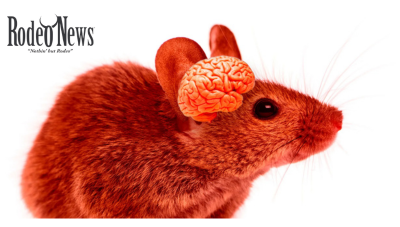
The experimental animals were created by researchers at Stanford University, who genetically modified mice so that a major portion of their cerebral cortex was missing. The researchers then introduced human brain organoids into the space, allowing the transplanted human cells to grow and connect with the surrounding mouse nervous system.
The results, published in the journal Nature, represent one of the most extensive examples of human brain tissue integrating into an animal brain.
The approach could eventually help scientists investigate neurological and psychiatric conditions that are difficult to reproduce in conventional laboratory models.
Human Neurons Expanded Inside the Mouse Brain
Brain organoids are small, three-dimensional clusters of human brain cells grown from reprogrammed cells in laboratory conditions. Scientists have increasingly used them to study brain development, but organoids grown in dishes have significant limitations.
They lack many of the connections and biological conditions found in a living brain.
The Stanford researchers attempted to address that problem by giving human brain tissue a living environment in which it could develop and establish connections.
The scientists began with human skin cells and reprogrammed them so they could develop into neurons associated with the cerebral cortex. These cells were then organized into brain organoids before being transplanted into specially engineered mice.
The transplanted tissue expanded dramatically.
According to the research, the human cells grew from a relatively small starting population into millions of neurons. The tissue also formed connections with the mouse nervous system, including pathways extending beyond the brain.
The resulting brains contained a remarkable amount of human tissue. However, descriptions that the mice have “half-human brains” require an important qualification: the human tissue accounted for a large portion of the available cortical volume, rather than meaning that half of all the neurons in the animals were human.
The Mice Continued to Behave Normally
One of the most striking observations was that the animals did not show obvious dramatic behavioral changes despite the extensive presence of human neurons.
Researchers observed that the mice were able to function and behave largely normally.
That finding matters because it suggests that the human neurons can integrate into an existing developing nervous system without necessarily producing an obvious transformation in the animal’s behavior.
Scientists also found human cell types that are difficult to study using conventional laboratory-grown organoids.
Among them were specialized neurons associated with higher-order brain functions. Researchers reported finding human pyramidal projection neurons that extended connections toward the animals’ spinal cords, along with unusually large neurons associated with social cognition that are normally found in larger-brained mammals.
The ability to observe these cells developing inside a living organism could give researchers information that is difficult to obtain from cells grown exclusively in laboratory dishes.
Potential Uses in Brain Disease Research
The researchers say the new model could eventually become useful for studying disorders involving human brain development and function.
Conditions affecting the brain are notoriously difficult to investigate because scientists cannot routinely observe living human brain tissue developing over time.
Traditional animal models can reproduce some biological processes, but mouse brains differ substantially from human brains.
Laboratory-grown human organoids provide another option, yet they cannot fully recreate the environment of a functioning brain.
The new model sits between those approaches.
By placing human brain tissue inside a living animal, researchers can observe how human neurons mature, establish connections and respond to biological conditions over time.
The technique could potentially be used to investigate neurodevelopmental disorders and other neurological conditions while also providing a platform for testing experimental treatments. Nature reported that the approach may offer researchers a new way to test drugs for developmental conditions.
Ethical Questions Surround the Research
The scientific potential also comes with ethical questions.
As human neurons become increasingly integrated into animal brains, researchers and bioethicists must consider whether future experiments could produce changes in cognition or behavior that raise concerns about animal welfare.
The current mice did not display evidence of dramatic behavioral transformation, but experts say the ethical questions could become more complicated as scientists improve these techniques.
The researchers themselves are not attempting to create animals with human-like consciousness. Instead, their goal is to make aspects of human brain development and function accessible for scientific investigation.
Still, the growing sophistication of brain organoid research means ethical oversight will remain an important part of future studies.
A New Direction for Neuroscience
The Stanford study represents a significant step in the effort to understand the human brain using living experimental models.
For decades, scientists have searched for ways to study human neural development without relying exclusively on human tissue or simplified laboratory systems. Human brain organoids have provided an important tool, but placing those cells into a living brain offers researchers access to biological interactions that cannot easily be reproduced in a dish.
The new mice do not provide a complete replica of the human brain, and researchers still face major limitations in interpreting how human neurons behave in an animal environment.
Nevertheless, the ability of transplanted human cells to expand extensively and connect with a living nervous system could open another avenue for neuroscience research.
As scientists continue refining the technique, the focus will likely remain on whether these models can produce better understanding of brain disorders and ultimately contribute to safer and more effective treatments.
For now, the research demonstrates how far scientists have progressed in combining human brain tissue with animal models — while also highlighting the scientific and ethical questions that come with that progress.