
Trump Says Planned Washington Arch Could Become Military Complex With Drones and Snipers
President Donald Trump has announced a new proposed role for his planned triumphal arch near Washington, D.C., saying the structure could also function as a military complex equipped to accommodate drones, snipers and ammunition.
Trump made the announcement Sunday in a post on Truth Social, saying he had agreed to modify the proposed 250-foot monument at the request of the U.S. military and for national security purposes. The development adds a significant new dimension to a project that was initially presented primarily as a monument marking the 250th anniversary of the United States.
According to Trump, the proposed facility would have the capacity to house and rapidly deploy large numbers of drones. He also said snipers could operate from the roof and plaza areas, with storage space for substantial quantities of sniper ammunition.
The White House had not immediately provided additional details about the military requirements behind the proposal. The Pentagon and Interior Department also had not offered further information when The Washington Post reported on Trump’s announcement.
Planned Arch Would Stand Near Arlington Memorial Bridge
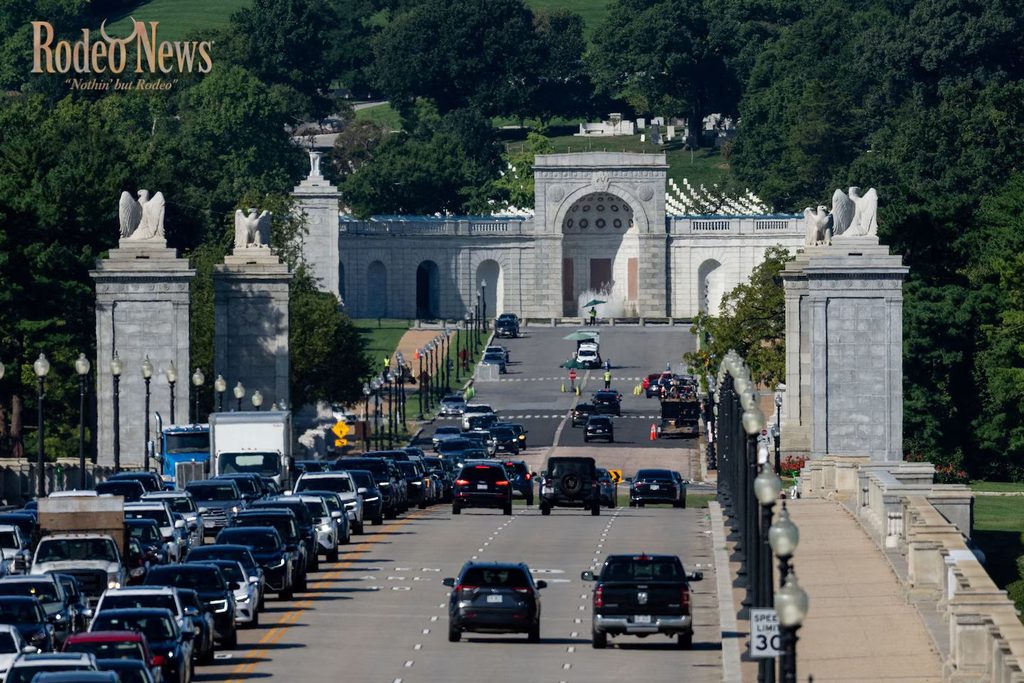
The proposed arch is planned for a traffic circle near Arlington Memorial Bridge, between the Lincoln Memorial and Arlington National Cemetery. The location gives the project a prominent position within the capital region and places it near some of the nation’s best-known monuments and memorial sites.
The structure was conceived as a large triumphal arch and has been compared with monumental arches found in other major cities. Trump has promoted the project as a major addition to Washington’s landscape and has argued that the capital should have such a landmark.
The proposed 250-foot structure has already generated debate among preservationists, veterans and others concerned about its location, appearance and effect on historic views.
The project is also facing legal challenges. A group that includes veterans and an architectural historian has argued in federal court that Congress must authorize construction of the monument. The legal dispute adds another obstacle as the administration continues the approval process.
The project has received preliminary support from the U.S. Commission of Fine Arts, but it has not yet completed all of the required federal reviews. The National Capital Planning Commission approved the site and preliminary plans in July, while additional consideration is expected later this year.
Military Purpose Introduced During Approval Process
Trump’s announcement of a military function comes relatively late in the project’s development.
The Washington Post reported that the idea of converting the arch into a military complex had not previously been raised during consultations involving historic preservation officials. Those consultations are part of the federal review process required for projects affecting historic properties and important cultural landscapes.
The Pentagon has indicated that it had no information beyond Trump’s public statement, according to reporting from the Associated Press. That leaves questions about which military organizations requested the change, what specific security requirements the facility would address and how the proposed drone and sniper operations would function at the site.
The proposed military use could also introduce additional considerations because of the arch’s location near Ronald Reagan Washington National Airport. The Federal Aviation Administration recently determined that the planned structure itself would not present a substantial hazard to aircraft operations, subject to required conditions. The newly announced drone capabilities, however, create a separate operational issue that was not previously part of the public description of the monument.
Project Faces Legal and Preservation Questions
The arch is one of several major projects Trump has pursued as part of his effort to alter Washington’s landmarks and public spaces.
Other initiatives include the construction of a large White House ballroom, changes involving the Kennedy Center, work connected to the Lincoln Memorial Reflecting Pool and redevelopment plans for a golf course in East Potomac Park.
Trump has also described the proposed White House ballroom as having a national security component. His decision to give the triumphal arch a military role similarly places national security at the center of the project’s justification.
Critics of the arch have raised separate concerns about congressional authorization, preservation requirements and its potential impact on the historic character of the area. Attorneys representing plaintiffs challenging the project have argued that a national security rationale does not by itself resolve questions about whether Congress has authorized construction.
The project’s supporters and the administration will therefore have to navigate both the political debate surrounding the monument and the formal federal review process.
Construction Timeline Remains Uncertain
Groundbreaking had been expected around September, but the project has not yet received every required approval. The National Capital Planning Commission is expected to revisit the project later this fall, while other federal processes remain underway.
The administration’s latest description could potentially require officials to consider how the proposed military functions fit into existing plans for the site.
For now, Trump’s announcement represents a major change in the public description of the planned arch. What began as a monumental structure intended to commemorate America’s 250th anniversary is now being presented by the president as a dual-purpose monument with military capabilities.
Further details about the proposed facility, including its design, cost, military requirements and operational responsibilities, are expected to become clearer as federal agencies continue reviewing the project and as the legal challenges move forward.
The debate over the arch is therefore no longer limited to architecture and historic preservation. It now also involves questions about how a major new structure in the heart of the Washington region could be used for national security and how that proposed role would fit within the federal government’s existing military infrastructure.