
NATO Readiness: 5 Key Gaps Ukraine War Exposes
NATO readiness is facing renewed scrutiny as the war in Ukraine demonstrates how quickly modern warfare can change. More than four years after Russia launched its full-scale invasion, the conflict has become a testing ground for drones, electronic warfare, air defenses and long-range weapons.
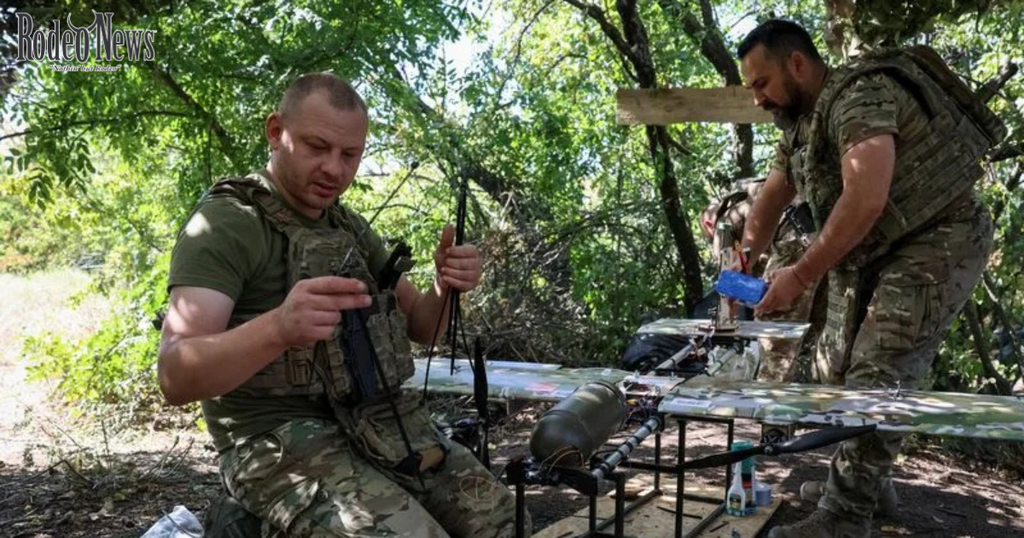
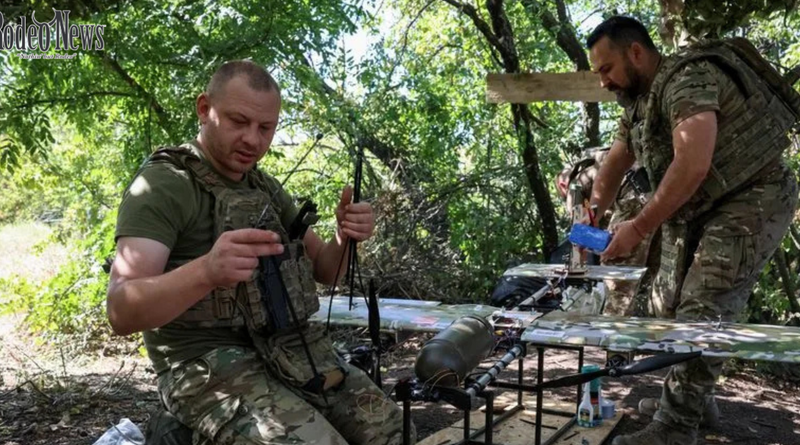
A Reuters report published September 17 said five Ukrainian and Western defense officials raised concerns that some NATO weapons and tactics could become outdated as battlefield technology evolves. The central problem is a mismatch in speed: Ukraine can adapt battlefield systems within weeks, while NATO countries can sometimes take years to develop, purchase and deploy new capabilities. YYahoo News Malaysia+1
The issue does not mean NATO lacks military power. Rather, the Ukraine war is forcing alliance members to reconsider how that power should be organized and how quickly it can adapt to a conflict dominated by inexpensive drones, rapidly changing electronic systems and large-scale ammunition consumption.
NATO Readiness Is Being Tested by a New Kind of War
The war in Ukraine has challenged many assumptions about conventional warfare.
Before the invasion, advanced fighter aircraft, tanks, precision missiles and sophisticated air-defense systems were central components of Western military planning. Those capabilities remain important. However, the battlefield has also demonstrated the growing influence of relatively inexpensive unmanned systems.
Drones can perform reconnaissance, locate artillery positions and attack military equipment. They can also be produced and modified much faster than many traditional weapons systems.
Reuters reported that Ukrainian forces have been adapting to these changes much faster than the procurement systems used by many NATO members. RReuters
That difference in speed is one of the most important issues surrounding NATO readiness.
Military alliances need advanced equipment, but they also need systems that can be changed quickly when an adversary develops a new tactic.
1. Drone Warfare Is Changing the Battlefield
One of the clearest lessons from Ukraine is the importance of unmanned systems.
Drones have become an integral part of reconnaissance and combat operations. Small systems can provide forces with information that would previously have required more expensive aircraft or specialized surveillance equipment.
At the same time, inexpensive attack drones can threaten high-value military equipment.
This creates a difficult economic equation for militaries. A relatively cheap drone may force an opponent to use an expensive missile or other defensive system to destroy it.
The challenge is not simply producing more drones. NATO forces must also develop better ways to detect, disrupt and destroy hostile unmanned systems.
Electronic warfare has therefore become increasingly important.
Ukraine’s experience has shown that drone technology changes quickly. A system that works effectively today can become less useful after an opponent develops new electronic countermeasures.
For NATO, that means military readiness increasingly depends on the ability to upgrade systems rapidly rather than relying only on long-term procurement programs.
2. Air Defense Has Become a Critical Concern
Air defense is another major issue exposed by the Ukraine war.
Ukraine has relied heavily on Western systems to protect cities, infrastructure and military positions from missiles and drones. NATO Secretary General Mark Rutte said in September that air defense remained among Ukraine’s priority requirements and urged continued support. NNATO
The scale of the challenge is significant.
Modern air-defense networks must deal with different types of threats, including cruise missiles, ballistic missiles and increasingly sophisticated drones. A military force therefore needs multiple layers of protection rather than a single defensive system.
Recent comments from European officials have also highlighted concerns about the availability of air-defense systems.
Latvian President Edgars Rinkēvičs told The Guardian that European countries do not yet possess sufficient air, drone and anti-ballistic defenses to comfortably meet the challenges demonstrated by the Ukraine conflict. He also pointed to difficulties surrounding the production and replenishment of Patriot missile systems. TThe Guardian
These concerns are important for NATO readiness because the alliance’s traditional military planning has often assumed significant air superiority.
Ukraine demonstrates that air superiority cannot simply be taken for granted.
3. NATO Weapons Procurement Can Take Years
Another challenge is the time required to develop and purchase military equipment.
Ukraine has been fighting an active war in which battlefield requirements can change within months or even weeks. NATO procurement systems, by contrast, are generally designed around long-term planning.
That creates a structural problem.
A military may identify a weakness today but still need years to design, test, purchase and deploy a replacement system.
The Reuters report highlighted this contrast between Ukraine’s rapid adaptation and NATO’s much longer procurement cycles. RReuters
Long procurement timelines are not necessarily a sign of poor planning. Advanced military systems require testing, training, maintenance infrastructure and supply chains.
However, the Ukraine war suggests that NATO members may need to combine traditional procurement with faster development programs.
That could include rapidly deployable drones, electronic warfare equipment and counter-drone systems that can be modified more easily than traditional weapons.
4. Ammunition Production Is Another Test
The war has also demonstrated the enormous quantities of ammunition that a major conventional conflict can consume.
NATO countries have increased defense spending in response to the security environment, but spending alone does not automatically create additional military capacity.
Factories must be expanded. Raw materials must be secured. Skilled workers must be trained. Supply chains must become more resilient.
These issues have become particularly important in Europe.
NATO Secretary General Mark Rutte said in September that allies had pledged significant support for Ukraine and emphasized the continuing need for air defense, Ukrainian drones and extended-range ammunition. NATO also said that the alliance and its partners had allocated billions of dollars through mechanisms supporting the purchase of U.S. weapons for Ukraine. NNATO
The broader lesson is that military readiness depends not only on the number of weapons already held by an army.
It also depends on whether those weapons can be replaced quickly during a prolonged conflict.
5. Europe Is Being Asked to Do More
The question of NATO readiness is also connected to Europe’s changing defense role.
During a September visit to the United Kingdom, NATO Secretary General Mark Rutte said the alliance was becoming more European, with European members and Canada expected to spend more, produce more and do more for their own security. NATO described this approach as part of what Rutte called “NATO 3.0.” NNATO
The shift reflects broader pressure on European governments to strengthen their military capabilities.
The Ukraine war has highlighted areas where European countries remain dependent on capabilities or production capacity outside Europe.
At the same time, European governments are pursuing new projects intended to strengthen domestic defense production and air-defense capabilities.
The goal is not simply to increase the size of military budgets. Countries also need factories, trained personnel, logistics networks, ammunition stockpiles and technology that can be upgraded rapidly.
What the Ukraine War Means for NATO Readiness
The most important lesson from Ukraine may be that military readiness is no longer simply about possessing sophisticated weapons.
It is also about adaptability.
An army can have modern aircraft, tanks and missiles while still facing difficulties if it cannot respond quickly to a new technology or tactic.
Ukraine has provided NATO members with an unusually detailed picture of modern battlefield conditions.
Ukrainian forces have been forced to adapt continuously because they are operating in an active war. That experience provides lessons about drone operations, electronic warfare, air defense, battlefield communications and the protection of high-value equipment.
NATO members are now studying those lessons while attempting to adapt their own forces.
The process is already visible in alliance planning.
NATO has increased its emphasis on defense spending, industrial capacity and European contributions. Rutte has also repeatedly emphasized the need for allies to provide Ukraine with urgent military support while modernizing their own capabilities. NNATO+1
NATO Is Not Starting From Zero
Questions about NATO readiness should not be interpreted as meaning the alliance has no effective military capabilities.
NATO remains a 32-member military alliance with substantial conventional forces, intelligence capabilities, advanced aircraft and missile systems. Its members also possess extensive defense-industrial resources.
The current debate is more specific.
The Ukraine war has exposed areas where existing systems and procedures may need to evolve.
Reuters reported that military analysts and officials are concerned about outdated systems, slow procurement and tactics designed around assumptions that may no longer hold on a drone-saturated battlefield. RReuters
That distinction matters.
The question is not simply whether NATO has enough weapons.
It is whether NATO can continually adapt those weapons, tactics and supply chains quickly enough for the character of modern warfare.
Russia Is Also Adapting
The challenge is complicated because Russia is not using a fixed set of tactics.
NATO officials have noted that Russian forces are also adapting their technology and methods.
Rutte said recently that NATO was seeing Russia use new capabilities, including jet-powered drones and additional missile technology, while urging continued support for Ukraine. NNATO
That creates a cycle of adaptation.
Ukraine and its Western partners develop a new capability. Russia attempts to counter it. Ukraine then modifies its approach again.
The same cycle could shape future conflicts involving NATO forces.
Consequently, military readiness increasingly depends on the ability to learn faster than an opponent.
The European Defense Industry Faces a New Test
The debate over NATO readiness also places greater attention on defense manufacturers.
For decades, many European countries maintained military-industrial capabilities designed around smaller peacetime requirements. A prolonged high-intensity conflict creates very different demands.
Large quantities of ammunition and replacement equipment may be required.
Air-defense systems need replenishment.
Drone production must be scalable.
Electronic warfare equipment needs frequent upgrades.
These demands have encouraged European governments to discuss expanding domestic defense production.
The challenge is turning political commitments and increased budgets into actual production capacity.
That process cannot happen overnight.
Building a new factory or expanding an existing production line requires investment, workers, components and long-term contracts. NATO’s current challenge is therefore partly industrial rather than purely military.
What Comes Next for NATO
The Ukraine war is likely to influence NATO military planning for years.
Five areas will remain particularly important:
- Counter-drone technology: NATO forces will need affordable and scalable ways to detect and defeat drones.
- Air defense: Countries will need layered defenses capable of dealing with drones, cruise missiles and ballistic threats.
- Rapid procurement: Military organizations may need faster pathways for testing and deploying emerging technologies.
- Defense production: European governments face pressure to expand ammunition and weapons manufacturing capacity.
- Battlefield adaptation: Forces will need systems and training that allow them to respond quickly when an adversary changes tactics.
None of these issues has a single solution.
The Ukraine war has shown that military technology evolves continuously. A system developed to solve one battlefield problem can become less effective once the opponent finds a countermeasure.
That reality makes flexibility a central component of modern military readiness.
NATO Readiness Will Depend on Speed
The debate over NATO readiness is ultimately a debate about speed.
The alliance has considerable military resources. However, the war in Ukraine has shown that modern conflict can evolve faster than traditional defense procurement systems.
Drones, electronic warfare, artificial intelligence, precision weapons and missile defenses are changing the battlefield.
Ukraine has been forced to adapt rapidly because it has had no alternative. NATO countries are attempting to absorb those lessons before facing the same conditions themselves.
Recent NATO statements show that the alliance is already placing greater emphasis on European defense spending, industrial production and continued support for Ukraine. NNATO+1
Whether those changes are fast enough remains an open question.
For NATO planners, the Ukraine war provides a rare opportunity to study modern warfare in real time. The central challenge now is turning those battlefield lessons into faster procurement, stronger defenses and forces capable of adapting before the next conflict exposes the same weaknesses.
Suggested Internal Links
- Ukraine War Latest Developments —
/ukraine-war-latest/ - NATO and European Security —
/nato-europe-security/ - Russia-Ukraine War Analysis —
/russia-ukraine-war/
Suggested External Links
- NATO official website
- NATO: Secretary General Mark Rutte’s September 2026 remarks
- NATO: Rutte’s UK visit and NATO 3.0 remarks
- Reuters report on NATO readiness and the Ukraine war
Note: Because you provided the source link but not a target domain, I used clearly marked internal-link placeholders rather than inventing URLs for your website. The article also avoids reproducing the Reuters article verbatim and instead presents an original, SEO-structured report based on the source and corroborating material.