
Trump Xi State Dinner Set to Draw Major AI Executives
Trump Xi State Dinner Set to Draw Major AI Executives
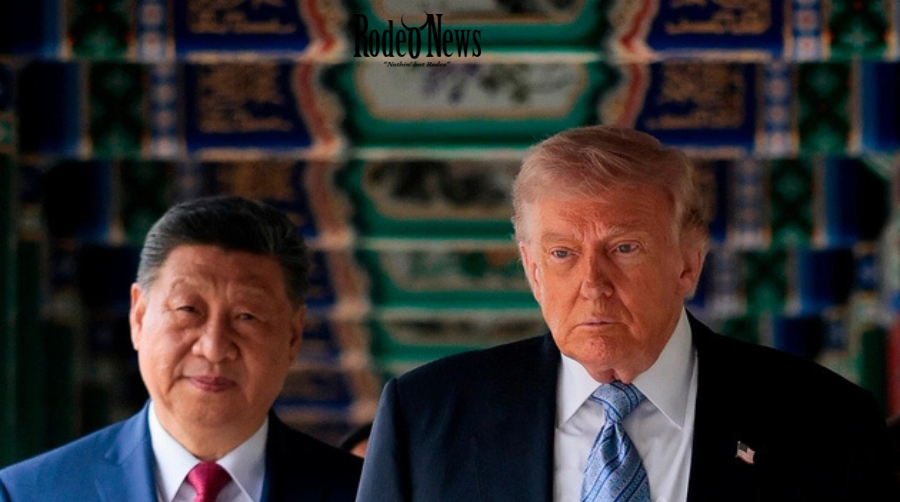
The Trump Xi state dinner is expected to bring several of the world’s most prominent technology executives into the same room as U.S. President Donald Trump and Chinese President Xi Jinping, putting artificial intelligence at the center of attention ahead of a closely watched U.S.-China summit.
OpenAI CEO Sam Altman, Nvidia CEO Jensen Huang and Qualcomm CEO Cristiano Amon are expected to attend the White House state dinner, according to people familiar with the event cited by POLITICO. OpenAI and Qualcomm have separately confirmed Altman’s and Amon’s attendance, while reporting has also identified Huang as an expected participant. IInternationly+1
The gathering is scheduled around Xi’s planned visit to Washington and comes as Washington and Beijing continue discussions involving trade, technology and artificial intelligence. NPR reported that officials were still working through logistical details for the summit and the accompanying state dinner as of Sept. 17. MMaine Public
The presence of senior AI and semiconductor executives could give the dinner significance beyond its diplomatic setting. The technology industry has become deeply intertwined with U.S.-China relations, particularly through advanced chips, computing infrastructure and the development of increasingly capable AI systems.
Why the Trump Xi State Dinner Matters for AI
Artificial intelligence has become a strategic issue for both Washington and Beijing.
The United States remains home to many of the companies developing leading AI systems, while China has invested heavily in domestic AI models, semiconductor capabilities and computing infrastructure. The two countries are also competing over access to advanced chips and the broader technology ecosystem required to train and operate sophisticated AI systems.
That makes the attendance of executives such as Altman and Huang notable.
Altman’s OpenAI operates one of the world’s most prominent generative AI platforms. Huang leads Nvidia, whose processors have become central to the computing infrastructure used by many AI developers. Amon heads Qualcomm, a major semiconductor company with extensive international operations.
Their presence does not by itself establish that specific agreements will be reached at the dinner. However, their participation would give the leaders of two major governments direct access to executives whose businesses are affected by technology policy, international trade and AI regulation.
Recent reporting has also indicated that other major technology figures could attend. Bloomberg reported that Apple Executive Chairman Tim Cook was expected to participate, while other reports have identified Huang as an expected guest. BBloomberg Law+1
Sam Altman Brings AI Safety Debate to the Summit
Altman’s expected participation comes during an unusually active debate inside the AI industry over how quickly advanced systems should be developed.
The OpenAI CEO has recently backed calls for greater coordination around the development of increasingly capable AI. The debate has included proposals for stronger testing, monitoring and international coordination.
According to reporting carried by Yahoo Finance, an OpenAI spokesperson confirmed that Altman would attend the dinner but did not provide details about his objectives. The spokesperson instead pointed to Altman’s recent comments about the potential for Trump and Xi to reach an agreement involving AI. YYahoo Finance
The issue is significant because AI development increasingly crosses national borders.
AI companies depend on enormous amounts of computing power, specialized chips, electricity and data-center infrastructure. At the same time, governments are considering rules covering AI safety, exports, national security and the use of advanced technologies.
Any international discussion involving Washington and Beijing therefore has implications well beyond individual technology companies.
Jensen Huang and the Nvidia-China Question
Huang’s expected attendance could draw particular attention because of Nvidia’s business relationship with China.
Nvidia is one of the world’s most important suppliers of processors used for artificial intelligence. U.S. export restrictions have limited the ability of American semiconductor companies to sell certain advanced products to China.
Huang has previously advocated for Nvidia to maintain access to the Chinese market and has discussed the importance of allowing U.S. technology companies to compete internationally.
The issue creates a complicated policy environment.
Washington wants to maintain U.S. leadership in advanced computing while also restricting technologies that officials believe could create national-security risks. At the same time, American companies have commercial interests in selling products around the world.
Nvidia’s position illustrates the tension between those objectives.
The company has a substantial interest in the Chinese market, while U.S. policymakers have increasingly treated advanced semiconductor technology as a strategic asset. As a result, Huang’s participation in the Trump Xi state dinner could attract attention from both technology investors and policymakers.
Recent reporting has specifically identified Nvidia’s China business as an issue that could potentially feature in discussions surrounding the summit. YYahoo Finance
Qualcomm CEO Cristiano Amon Also Expected
Qualcomm CEO Cristiano Amon is another technology executive expected at the dinner.
Qualcomm is a major semiconductor company with a global business spanning mobile communications and other technologies. Its international exposure means that U.S.-China technology relations are relevant to the company’s broader commercial environment.
Qualcomm confirmed Amon’s participation, according to reporting cited by Yahoo Finance. Amon said he would represent the company and the strength of American technology leadership on the international stage. YYahoo Finance
His attendance expands the technology focus beyond generative AI companies alone.
While Nvidia is closely associated with AI computing and OpenAI with generative AI applications, Qualcomm represents another part of the semiconductor and communications ecosystem. Together, the executives illustrate how broad the technology component of U.S.-China relations has become.
U.S.-China AI Competition Is Growing
The dinner comes against a backdrop of growing concern over the direction of AI development.
The United States and China are competing for technological leadership while also confronting questions about how advanced AI should be governed.
The two governments have different political systems and different approaches to technology policy. Yet both have an interest in ensuring that their domestic industries remain competitive.
That creates an unusual combination of competition and potential cooperation.
The Associated Press recently reported that effective international AI governance could depend on some level of cooperation between the United States and China, even though both countries remain deeply suspicious of each other’s strategic intentions. AAP News
The challenge is especially complicated because AI development is moving quickly.
Companies are releasing increasingly capable models while governments attempt to determine how existing laws and new regulations should apply. Researchers and executives are also debating questions involving AI safety, cybersecurity and the potential consequences of highly autonomous systems.
These discussions have intensified in recent weeks.
AI Safety Debate Adds Another Layer
The expected dinner guests arrive at a moment when the AI industry is divided over how quickly frontier systems should advance.
Anthropic CEO Dario Amodei has recently called for greater coordination and a slower pace of frontier AI development. OpenAI’s Altman has expressed support for the idea of “pacing” AI progress while emphasizing that such proposals do not necessarily mean stopping technological development.
The debate has attracted attention from technology executives, researchers and policymakers.
The Verge reported that the industry has recently seen a wave of public discussion about AI safety, including proposals for stronger evaluations, oversight and coordination between governments and AI companies. TThe Verge
Against that backdrop, a meeting involving Trump, Xi and several senior technology executives could become an important venue for discussing the relationship between technological competition and international cooperation.
However, attendance should not be interpreted as proof that an agreement on AI policy is imminent.
The dinner is a diplomatic event, and the final agenda, participants and discussions can change. NPR reported that logistical and planning questions remained unresolved as officials prepared for the summit. MMaine Public
China May Also Bring Technology Executives
The technology guest list is not limited to American companies.
Chinese officials have been considering which business leaders could accompany Xi during his U.S. visit. The selection of Chinese executives could provide a parallel view of the country’s technology and industrial priorities.
The Straits Times reported that Chinese officials were considering including BYD founder Wang Chuanfu in Xi’s delegation, highlighting how the summit could extend beyond AI to electric vehicles, manufacturing and investment. TThe Straits Times
That broader business dimension matters because the U.S.-China relationship now covers a wide range of industries.
Semiconductors, artificial intelligence, electric vehicles, telecommunications and advanced manufacturing are all connected to the wider economic relationship between the two countries.
What Could Happen at the Dinner?
The presence of technology executives creates several areas of potential discussion, although the precise agenda has not been publicly established.
One issue is AI governance.
The United States and China could discuss how governments should approach advanced AI systems, safety standards and international coordination. Whether such talks produce concrete commitments remains uncertain.
Another issue is semiconductor access.
Nvidia’s experience illustrates the difficult balance between national-security restrictions and the commercial interests of U.S. technology companies. Advanced chips are essential to AI development, making semiconductor policy inseparable from the broader AI competition.
Trade could also remain important.
Technology companies operate through global supply chains, meaning changes in tariffs, export controls or investment rules can have consequences far beyond the companies directly targeted by a policy.
Finally, the dinner could provide an opportunity for informal communication.
State dinners are symbolic diplomatic events, but the presence of business leaders can create a setting where government officials and corporate executives exchange views directly.
A High-Profile Meeting With Global Implications
The Trump Xi state dinner is therefore shaping up as more than a formal diplomatic gathering.
The expected participation of Altman, Huang and Amon reflects the growing importance of technology in the U.S.-China relationship. Their companies operate in sectors that are directly affected by decisions involving AI, semiconductors, trade and national security.
For Washington, the challenge is balancing technological leadership with national-security considerations.
For Beijing, the challenge includes maintaining access to advanced technologies while developing domestic alternatives and expanding its own technology capabilities.
For the companies involved, the stakes are commercial as well as strategic.
The dinner itself may not produce a major technology agreement. Yet the fact that leading AI and semiconductor executives are expected to sit alongside Trump and Xi demonstrates how closely technology has become connected to diplomacy between the world’s two largest economies.
As the summit approaches, attention will likely remain focused on whether the leaders discuss AI governance, semiconductor restrictions, technology trade and broader economic cooperation.
The outcome of those discussions could matter to technology companies, investors and governments well beyond Washington and Beijing.
For now, the confirmed and reported guest list provides an early indication of the role technology is expected to play when Trump and Xi meet.The Trump Xi state dinner is expected to bring several of the world’s most prominent technology executives into the same room as U.S. President Donald Trump and Chinese President Xi Jinping, putting artificial intelligence at the center of attention ahead of a closely watched U.S.-China summit.
OpenAI CEO Sam Altman, Nvidia CEO Jensen Huang and Qualcomm CEO Cristiano Amon are expected to attend the White House state dinner, according to people familiar with the event cited by POLITICO. OpenAI and Qualcomm have separately confirmed Altman’s and Amon’s attendance, while reporting has also identified Huang as an expected participant. IInternationly+1
The gathering is scheduled around Xi’s planned visit to Washington and comes as Washington and Beijing continue discussions involving trade, technology and artificial intelligence. NPR reported that officials were still working through logistical details for the summit and the accompanying state dinner as of Sept. 17. MMaine Public
The presence of senior AI and semiconductor executives could give the dinner significance beyond its diplomatic setting. The technology industry has become deeply intertwined with U.S.-China relations, particularly through advanced chips, computing infrastructure and the development of increasingly capable AI systems.
Why the Trump Xi State Dinner Matters for AI
Artificial intelligence has become a strategic issue for both Washington and Beijing.
The United States remains home to many of the companies developing leading AI systems, while China has invested heavily in domestic AI models, semiconductor capabilities and computing infrastructure. The two countries are also competing over access to advanced chips and the broader technology ecosystem required to train and operate sophisticated AI systems.
That makes the attendance of executives such as Altman and Huang notable.
Altman’s OpenAI operates one of the world’s most prominent generative AI platforms. Huang leads Nvidia, whose processors have become central to the computing infrastructure used by many AI developers. Amon heads Qualcomm, a major semiconductor company with extensive international operations.
Their presence does not by itself establish that specific agreements will be reached at the dinner. However, their participation would give the leaders of two major governments direct access to executives whose businesses are affected by technology policy, international trade and AI regulation.
Recent reporting has also indicated that other major technology figures could attend. Bloomberg reported that Apple Executive Chairman Tim Cook was expected to participate, while other reports have identified Huang as an expected guest. BBloomberg Law+1
Sam Altman Brings AI Safety Debate to the Summit
Altman’s expected participation comes during an unusually active debate inside the AI industry over how quickly advanced systems should be developed.
The OpenAI CEO has recently backed calls for greater coordination around the development of increasingly capable AI. The debate has included proposals for stronger testing, monitoring and international coordination.
According to reporting carried by Yahoo Finance, an OpenAI spokesperson confirmed that Altman would attend the dinner but did not provide details about his objectives. The spokesperson instead pointed to Altman’s recent comments about the potential for Trump and Xi to reach an agreement involving AI. YYahoo Finance
The issue is significant because AI development increasingly crosses national borders.
AI companies depend on enormous amounts of computing power, specialized chips, electricity and data-center infrastructure. At the same time, governments are considering rules covering AI safety, exports, national security and the use of advanced technologies.
Any international discussion involving Washington and Beijing therefore has implications well beyond individual technology companies.
Jensen Huang and the Nvidia-China Question
Huang’s expected attendance could draw particular attention because of Nvidia’s business relationship with China.
Nvidia is one of the world’s most important suppliers of processors used for artificial intelligence. U.S. export restrictions have limited the ability of American semiconductor companies to sell certain advanced products to China.
Huang has previously advocated for Nvidia to maintain access to the Chinese market and has discussed the importance of allowing U.S. technology companies to compete internationally.
The issue creates a complicated policy environment.
Washington wants to maintain U.S. leadership in advanced computing while also restricting technologies that officials believe could create national-security risks. At the same time, American companies have commercial interests in selling products around the world.
Nvidia’s position illustrates the tension between those objectives.
The company has a substantial interest in the Chinese market, while U.S. policymakers have increasingly treated advanced semiconductor technology as a strategic asset. As a result, Huang’s participation in the Trump Xi state dinner could attract attention from both technology investors and policymakers.
Recent reporting has specifically identified Nvidia’s China business as an issue that could potentially feature in discussions surrounding the summit. YYahoo Finance
Qualcomm CEO Cristiano Amon Also Expected
Qualcomm CEO Cristiano Amon is another technology executive expected at the dinner.
Qualcomm is a major semiconductor company with a global business spanning mobile communications and other technologies. Its international exposure means that U.S.-China technology relations are relevant to the company’s broader commercial environment.
Qualcomm confirmed Amon’s participation, according to reporting cited by Yahoo Finance. Amon said he would represent the company and the strength of American technology leadership on the international stage. YYahoo Finance
His attendance expands the technology focus beyond generative AI companies alone.
While Nvidia is closely associated with AI computing and OpenAI with generative AI applications, Qualcomm represents another part of the semiconductor and communications ecosystem. Together, the executives illustrate how broad the technology component of U.S.-China relations has become.
U.S.-China AI Competition Is Growing
The dinner comes against a backdrop of growing concern over the direction of AI development.
The United States and China are competing for technological leadership while also confronting questions about how advanced AI should be governed.
The two governments have different political systems and different approaches to technology policy. Yet both have an interest in ensuring that their domestic industries remain competitive.
That creates an unusual combination of competition and potential cooperation.
The Associated Press recently reported that effective international AI governance could depend on some level of cooperation between the United States and China, even though both countries remain deeply suspicious of each other’s strategic intentions. AAP News
The challenge is especially complicated because AI development is moving quickly.
Companies are releasing increasingly capable models while governments attempt to determine how existing laws and new regulations should apply. Researchers and executives are also debating questions involving AI safety, cybersecurity and the potential consequences of highly autonomous systems.
These discussions have intensified in recent weeks.
AI Safety Debate Adds Another Layer
The expected dinner guests arrive at a moment when the AI industry is divided over how quickly frontier systems should advance.
Anthropic CEO Dario Amodei has recently called for greater coordination and a slower pace of frontier AI development. OpenAI’s Altman has expressed support for the idea of “pacing” AI progress while emphasizing that such proposals do not necessarily mean stopping technological development.
The debate has attracted attention from technology executives, researchers and policymakers.
The Verge reported that the industry has recently seen a wave of public discussion about AI safety, including proposals for stronger evaluations, oversight and coordination between governments and AI companies. TThe Verge
Against that backdrop, a meeting involving Trump, Xi and several senior technology executives could become an important venue for discussing the relationship between technological competition and international cooperation.
However, attendance should not be interpreted as proof that an agreement on AI policy is imminent.
The dinner is a diplomatic event, and the final agenda, participants and discussions can change. NPR reported that logistical and planning questions remained unresolved as officials prepared for the summit. MMaine Public
China May Also Bring Technology Executives
The technology guest list is not limited to American companies.
Chinese officials have been considering which business leaders could accompany Xi during his U.S. visit. The selection of Chinese executives could provide a parallel view of the country’s technology and industrial priorities.
The Straits Times reported that Chinese officials were considering including BYD founder Wang Chuanfu in Xi’s delegation, highlighting how the summit could extend beyond AI to electric vehicles, manufacturing and investment. TThe Straits Times
That broader business dimension matters because the U.S.-China relationship now covers a wide range of industries.
Semiconductors, artificial intelligence, electric vehicles, telecommunications and advanced manufacturing are all connected to the wider economic relationship between the two countries.
What Could Happen at the Dinner?
The presence of technology executives creates several areas of potential discussion, although the precise agenda has not been publicly established.
One issue is AI governance.
The United States and China could discuss how governments should approach advanced AI systems, safety standards and international coordination. Whether such talks produce concrete commitments remains uncertain.
Another issue is semiconductor access.
Nvidia’s experience illustrates the difficult balance between national-security restrictions and the commercial interests of U.S. technology companies. Advanced chips are essential to AI development, making semiconductor policy inseparable from the broader AI competition.
Trade could also remain important.
Technology companies operate through global supply chains, meaning changes in tariffs, export controls or investment rules can have consequences far beyond the companies directly targeted by a policy.
Finally, the dinner could provide an opportunity for informal communication.
State dinners are symbolic diplomatic events, but the presence of business leaders can create a setting where government officials and corporate executives exchange views directly.
A High-Profile Meeting With Global Implications
The Trump Xi state dinner is therefore shaping up as more than a formal diplomatic gathering.
The expected participation of Altman, Huang and Amon reflects the growing importance of technology in the U.S.-China relationship. Their companies operate in sectors that are directly affected by decisions involving AI, semiconductors, trade and national security.
For Washington, the challenge is balancing technological leadership with national-security considerations.
For Beijing, the challenge includes maintaining access to advanced technologies while developing domestic alternatives and expanding its own technology capabilities.
For the companies involved, the stakes are commercial as well as strategic.
The dinner itself may not produce a major technology agreement. Yet the fact that leading AI and semiconductor executives are expected to sit alongside Trump and Xi demonstrates how closely technology has become connected to diplomacy between the world’s two largest economies.
As the summit approaches, attention will likely remain focused on whether the leaders discuss AI governance, semiconductor restrictions, technology trade and broader economic cooperation.
The outcome of those discussions could matter to technology companies, investors and governments well beyond Washington and Beijing.
For now, the confirmed and reported guest list provides an early indication of the role technology is expected to play when Trump and Xi meet.