Fed Raises Interest Rates as Gas Prices Surge in 2026
The Fed raises interest rates again as U.S. policymakers confront persistent inflation, rising fuel costs and growing pressure from international conflicts. The Federal Reserve increased its benchmark interest rate by a quarter percentage point, bringing the target range to 3.75% to 4%.
The decision marks the first U.S. rate increase in more than three years. It also comes at a difficult moment for American households, businesses and policymakers, as gasoline and diesel prices continue to climb while wages have struggled to keep pace with higher living costs.
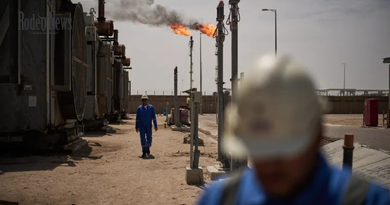
At the same time, developments overseas are adding another layer of uncertainty. Rising energy prices linked to the war involving Iran have created new inflationary pressure, while Saudi Arabia’s reduced oil production has added to concerns about global energy supplies.
Meanwhile, Canada is moving closer to the European Union in a proposal that could create a new form of relationship between Ottawa and the bloc.
Fed Raises Interest Rates to Fight Persistent Inflation
The Federal Reserve’s decision reflects renewed concern that inflation remains above its long-term target.
According to NPR reporting, policymakers unanimously approved a quarter-point increase, lifting the benchmark rate to a range of 3.75% to 4%. The central bank said the move was intended to support a return toward its 2% inflation objective.
Higher interest rates make borrowing more expensive. Consumers can feel the effects through credit cards, auto loans, mortgages and other forms of financing. Businesses also face higher costs when borrowing money to expand operations, purchase equipment or invest in new projects.
The policy creates a difficult balance for the central bank.
Officials want to slow inflation without unnecessarily weakening economic activity. If rates remain too low while prices rise rapidly, inflation could become more persistent. But if borrowing costs remain elevated for too long, consumer spending and business investment could weaken.
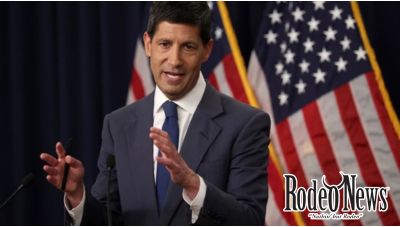
Federal Reserve Chair Kevin Warsh has emphasized the importance of bringing inflation under control. His approach comes as the central bank faces renewed attention over its independence and its response to political pressure for lower borrowing costs.
The Federal Reserve, however, has maintained that monetary policy decisions should be based on economic conditions rather than political demands.
Gas Prices Add New Pressure to American Households
One of the biggest challenges facing policymakers is the sharp increase in energy prices.
Inflation accelerated in August, with gasoline accounting for a significant portion of the monthly increase, according to NPR’s reporting. Diesel prices have also reached record territory, increasing costs for transportation and potentially pushing up prices for goods that depend on trucking and freight services.
Fuel prices affect much more than what drivers pay at the gas station.
When diesel becomes more expensive, transportation companies face higher operating costs. Those expenses can eventually filter through supply chains, affecting food, manufactured products and other consumer goods.
That creates a particularly difficult problem for the Federal Reserve because interest rates cannot directly increase oil production or reduce the price of gasoline.
Higher rates can reduce demand across the economy, but they cannot immediately resolve an energy supply disruption caused by geopolitical conflict.
Economists cited in NPR’s coverage have questioned whether a rate increase can effectively address inflation caused by gasoline prices, tariffs and other supply-side pressures.
For households, the problem is straightforward: everyday expenses can rise even when income does not increase at the same pace.
Since the spring, prices have been increasing faster than average wages, meaning many workers have seen their purchasing power weaken.
The War in Iran Complicates the Inflation Picture
The global energy market has become increasingly sensitive to developments in the Middle East.
NPR reported that the conflict involving Iran has contributed to higher oil and fuel prices. Saudi Arabia, one of the world’s largest oil producers, has also experienced a significant decline in output amid renewed fighting involving the Iran-backed Houthis.
The disruption has consequences far beyond the Middle East.
Oil is a globally traded commodity, meaning supply disruptions can quickly influence prices in countries thousands of miles away. Higher crude prices can raise gasoline and diesel costs, increasing pressure on both consumers and businesses.
The situation has also contributed to protests over rising fuel prices in several countries, including Syria, the Philippines and Indonesia, according to NPR’s report.
For central banks, energy-driven inflation presents a complicated policy challenge.
If higher fuel costs spread into transportation, food and other categories, inflation can become broader. Yet aggressively raising interest rates to counter those increases can weaken demand without addressing the original supply problem.
That tension is now central to the U.S. economic outlook.
What the Rate Increase Means for Borrowers
For American consumers, the latest increase could make borrowing more expensive.
Credit card balances are particularly sensitive to changes in interest rates because many cards have variable rates. Consumers carrying balances from month to month may therefore face higher financing costs.
Auto loans and other consumer credit can also become more expensive.
Mortgage rates are influenced by broader financial markets rather than simply tracking the Federal Reserve’s benchmark rate. Nevertheless, expectations about future monetary policy can influence borrowing conditions throughout the economy.
The bond market is already reflecting concerns about inflation.
The yield on the 10-year U.S. Treasury note recently moved above 5%, according to NPR reporting. That yield is important because it helps influence borrowing costs for mortgages and other long-term loans.
For businesses, higher financing costs can lead companies to postpone expansion, hiring or capital investments.
That is one reason the Federal Reserve must carefully balance inflation control with economic growth.
What the Fed Could Do Next
The latest economic projections indicate that Federal Reserve policymakers expect another quarter-point increase on average this year, followed by no additional increases in 2027, according to NPR’s report.
However, future decisions will depend on incoming economic data.
Inflation readings, employment figures, consumer spending and energy prices will all influence the central bank’s next steps.
The trajectory of oil prices could become particularly important.
If energy prices stabilize, some inflationary pressure could eventually ease. If geopolitical disruptions continue and fuel prices remain elevated, policymakers could face another difficult period in which inflation stays above the Fed’s target.
That uncertainty means households and businesses may need to prepare for borrowing costs to remain elevated rather than expecting a rapid return to much lower rates.
Canada and European Union Move Closer
While the U.S. focuses on inflation and interest rates, another major economic development is unfolding between Canada and Europe.
European Commission President Ursula von der Leyen proposed making Canada the European Union’s first “associate member” during her annual address to the European Parliament in Strasbourg.
The proposal would establish a new type of relationship between Canada and the EU rather than making Canada a conventional EU member.
Canadian Prime Minister Mark Carney also addressed the European Parliament and emphasized the close relationship between Canada and Europe.
The proposal comes as Canada and the European Union face increased uncertainty in their relationships with the United States.
Trade tensions, tariffs and disagreements over security policy have encouraged Ottawa and European governments to strengthen their own economic and political cooperation.
French Foreign Minister Jean-Noël Barrot welcomed closer cooperation with Canada but indicated that the details of the proposed arrangement would need to be examined.
For now, the associate-member concept remains largely a political and diplomatic proposal rather than a completed institutional arrangement.
Trump Reacts to the Canada-EU Proposal
The proposed relationship has also drawn criticism from President Donald Trump.
Trump described the idea as potentially hostile toward the United States after the proposal was announced. His comments reflect broader tensions surrounding Canada’s relationship with Washington and the future direction of North American trade.
Canada has faced pressure from the Trump administration over tariffs and other policy disputes.
At the same time, European governments have sought closer relationships with countries that share their economic and security interests.
The Canada-EU proposal therefore carries significance beyond its formal structure.
It could become another example of countries attempting to strengthen international partnerships as relations between major Western economies become more complicated.
Three Economic Stories Collide
The Fed’s rate decision, rising energy prices and Canada’s proposed closer relationship with Europe may appear to be separate stories. In reality, they are connected by the same global uncertainty.
Energy markets influence inflation.
Inflation influences central-bank decisions.
Central-bank decisions influence borrowing costs and economic growth.
And geopolitical relationships can affect trade, energy supplies and investor confidence.
That makes the current economic environment particularly difficult to predict.
For American consumers, the immediate issue is the cost of everyday life. Higher gasoline and diesel prices can affect household budgets directly and can also raise the cost of transporting products.
For businesses, higher interest rates and fuel costs can create pressure from two directions at once.
For policymakers, the challenge is even broader.
The Federal Reserve must attempt to control inflation while avoiding unnecessary damage to the economy. At the same time, governments must respond to geopolitical developments that are outside the direct control of monetary policy.
What Comes Next for the U.S. Economy?
The coming months will provide important clues about whether the Federal Reserve’s strategy is working.
If inflation begins to moderate, policymakers could eventually have more flexibility. But continued increases in fuel prices or other consumer costs could keep inflation elevated.
The central bank’s next decisions will therefore depend heavily on data rather than a predetermined path.
For households, the environment suggests that borrowing costs may remain an important consideration when making major financial decisions.
For businesses, higher financing expenses and transportation costs could remain significant factors in planning.
And for governments around the world, the continuing conflict in the Middle East demonstrates how quickly geopolitical developments can spread into energy markets and consumer prices.
The latest Federal Reserve decision is therefore more than a simple quarter-point rate increase.
It is a response to an economy dealing with persistent inflation at a time when global energy markets remain under pressure.
At the same time, Canada’s growing engagement with the European Union illustrates how international alliances and economic relationships are evolving alongside those pressures.
The combination of higher borrowing costs, expensive energy and changing geopolitical relationships will remain closely watched as policymakers and consumers navigate the rest of 2026.
Source: NPR reporting published September 17, 2026, with additional corroboration from NPR member-station coverage.