
Canada Applies to Join UK-Led Joint Expeditionary Force as Ottawa Expands European Defence Ties
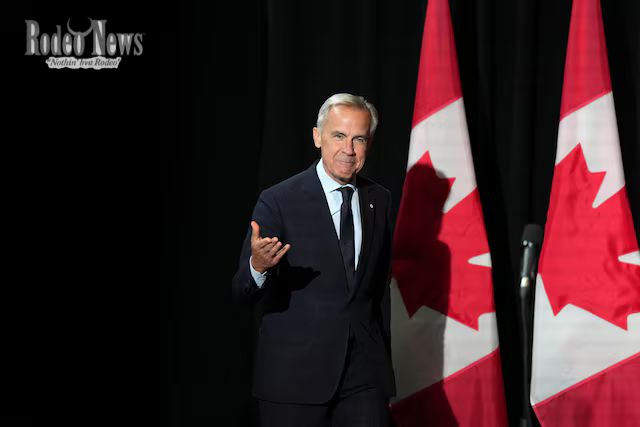
Canada has formally applied to join the United Kingdom-led Joint Expeditionary Force, a move that signals closer defence cooperation between Ottawa and European allies as Prime Minister Mark Carney’s government works to broaden Canada’s military partnerships.
Carney announced the application during a meeting with British Prime Minister Andy Burnham in Liverpool on September 16. The British government has backed Canada’s participation in the multinational military partnership, according to statements from both governments.
The Joint Expeditionary Force, commonly known as the JEF, is a rapid-response defence partnership made up of 10 European NATO members. Its current members are Britain, Denmark, Estonia, Finland, Iceland, Latvia, Lithuania, the Netherlands, Norway and Sweden.
Canada is already a member of NATO, but joining the JEF would give Ottawa another framework for working directly with European countries on military planning, operations and security cooperation.
Canada Looks Beyond Its Traditional Defence Relationships
The application comes at a time when Canada is reassessing elements of its long-standing defence relationship with the United States.
For decades, Canada’s military planning, procurement and continental defence have been closely connected to Washington through NATO and the North American Aerospace Defense Command. However, Carney’s government has increasingly emphasized the importance of developing stronger relationships with European partners.
Reuters reported that Canada is seeking to diversify its defence ties away from dependence on the United States. The JEF application is part of that broader effort.
Ottawa’s decision does not mean Canada is leaving NATO or abandoning cooperation with the United States. Instead, the application creates another channel through which Canadian forces could work alongside European militaries.
The JEF has developed as a flexible military partnership capable of responding to security challenges in northern Europe and beyond. Its members include several countries bordering or located near the Baltic and Arctic regions, areas that have become increasingly important to European security planning.
Carney and Burnham Discuss Defence Cooperation
Carney and Burnham discussed the JEF application during their meeting in Liverpool, where the two leaders also examined wider opportunities to strengthen Canadian-British defence cooperation.
The Canadian prime minister’s office said the two governments recognize a growing defence and security partnership between Canada and Britain. Their discussions also covered cooperation in military technology and defence industry.
The meeting took place as both governments consider ways to increase cooperation with other European partners.
Britain’s government said the leaders emphasized the importance of building closer relationships with European countries, particularly in trade and defence.
The discussions also included the Global Combat Air Programme, an advanced fighter aircraft initiative involving Britain, Italy and Japan. Canada joined the programme as an observer in July, opening the door to greater involvement in one of the major multinational defence-industrial projects currently under development.
JEF Membership Would Expand Military Cooperation
The Joint Expeditionary Force was established by Britain as a framework for rapid military cooperation among northern European countries.
Its members are all NATO states, but the JEF operates separately from the alliance’s formal command structure. The partnership allows participating countries to develop closer military relationships and coordinate responses to potential crises.
For Canada, membership would add another layer to its existing network of defence partnerships.
The country’s armed forces already operate alongside European militaries through NATO exercises and other international missions. Full participation in the JEF could provide additional opportunities for Canadian personnel to train with European counterparts and improve interoperability.
The partnership could also be relevant to Canada’s interests in the Arctic and North Atlantic.
Canada has been increasing attention on Arctic security as geopolitical competition in the region grows. Norway, Denmark, Iceland, Finland and Sweden, all JEF members, have significant strategic interests in northern Europe and the Arctic region.
That geographic overlap could make closer military coordination particularly relevant for Canada.
Defence Industry Also on the Agenda
Carney’s discussions with Burnham went beyond military deployments and operational cooperation.
The two leaders discussed opportunities for defence-industrial collaboration, including Canada’s participation as an observer in the Global Combat Air Programme.
The initiative is intended to develop a next-generation combat aircraft and associated technologies. Canada becoming an observer gives Ottawa an opportunity to assess the programme while considering its longer-term defence-industrial requirements.
The Canadian and British governments are also working on the future of British Army Training Unit Suffield in Alberta.
Known as BATUS, the facility provides a large training area where British forces conduct exercises and test military equipment. Ottawa and London are working toward a permanent arrangement intended to modernize the facility and support the development and testing of new military technologies.
These initiatives demonstrate that the Canada-UK defence relationship extends beyond traditional military alliances and into technology, training and industrial cooperation.
Broader European Strategy
Canada’s JEF application comes as Ottawa seeks stronger economic and strategic connections with Europe.
Carney has been visiting European capitals during a period of heightened uncertainty in Canada’s relationship with the United States. His government has emphasized the need for Canada to strengthen ties with other democratic partners while maintaining existing alliances.
The push includes cooperation on defence, critical technologies, artificial intelligence, trade and economic security.
Carney and Burnham also discussed artificial intelligence during their Liverpool meeting. The two governments agreed on the importance of cooperation between governments and technology companies to address shared concerns and promote online safety.
The combination of defence, technology and economic cooperation reflects a broader effort by Canada and Britain to strengthen their strategic relationship.
What Happens Next
Canada’s formal application does not immediately make it a full JEF member. The process will require discussions with the existing members of the coalition.
However, Britain’s support gives Ottawa an important starting point.
The application also provides a clear indication of the direction of Canada’s defence policy under Carney: maintaining its longstanding NATO commitments while expanding practical military cooperation with European partners.
For Britain, Canadian participation would add another NATO ally to a coalition already centered on northern European security.
For Canada, the JEF could provide additional opportunities for military exercises, planning and rapid-response cooperation while strengthening relationships with countries that share many of Ottawa’s security concerns.
The move comes alongside Canada’s growing involvement in European defence initiatives, including its observer status in the Global Combat Air Programme and continued cooperation with Britain on military training and technology.
As security challenges continue to evolve across Europe and the Arctic, Canada’s decision to seek membership in the Joint Expeditionary Force represents another step toward a more diversified network of defence partnerships.