
A brain-eating amoeba infection has been identified as the cause of death of a North Carolina teenager, with health officials now saying a water feature at a Durham community-based organization was the most likely source of exposure.
The teenager was hospitalized on Aug. 22 and died on Aug. 31 after developing a rare infection caused by Naegleria fowleri, an organism commonly found in warm freshwater. North Carolina health officials said an investigation could not conclusively establish where the infection occurred, but evidence pointed to a water feature in Durham as the most likely exposure site.
The finding has drawn attention to a rare but extremely serious infection that can occur when contaminated water enters the nose. Although Naegleria fowleri infections are exceptionally uncommon in the United States, the resulting brain infection can progress rapidly.
Brain-Eating Amoeba Linked to Durham Water Feature
According to the North Carolina Department of Health and Human Services, investigators interviewed the teenager’s family and identified several locations where exposure to warm freshwater could potentially have occurred.
One location was a water feature at a community-based organization in Durham County. Officials said the teenager had contact with the feature during the period when exposure was believed to have occurred, including splashing water onto the face.
The water feature was closed by the Durham County Department of Health on Aug. 28, several days before the teenager’s death. It was subsequently investigated and tested with assistance from the U.S. Centers for Disease Control and Prevention.
CDC testing detected Naegleria fowleri at the water feature, supporting the conclusion that it was the most likely source of infection.
However, officials have been careful not to describe the location as definitively confirmed.
“The public health investigation does not conclusively determine” where the exposure happened, NCDHHS said, while adding that the evidence suggested the Durham water feature was the most likely source.
The distinction is important because Naegleria fowleri infections are so rare that determining the exact exposure location can be difficult.
What Is a Brain-Eating Amoeba?
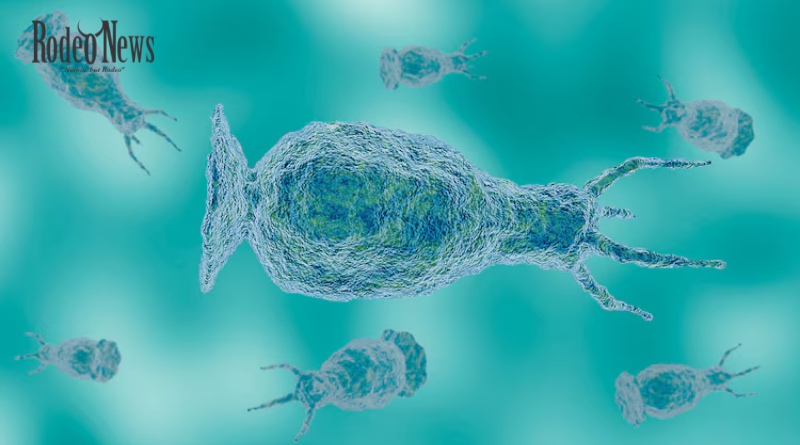
The term brain-eating amoeba refers to Naegleria fowleri, a microscopic, free-living organism that can live in warm freshwater environments.
The organism is naturally found in places such as warm lakes, rivers, ponds and hot springs. In rare circumstances, it can also be found in poorly maintained recreational water systems.
The infection associated with Naegleria fowleri is called primary amebic meningoencephalitis, or PAM.
PAM affects the brain and surrounding tissues. The infection is particularly dangerous because it can progress quickly after symptoms begin.
According to the CDC, fewer than 10 cases are typically reported in the United States each year. Between 1937 and 2025, CDC data recorded 180 U.S. cases, ranging from zero to eight cases annually.
Although the number of infections is extremely small, the disease has a very high fatality rate.
How the Brain-Eating Amoeba Infects People
Despite its frightening nickname, Naegleria fowleri does not normally infect people simply because contaminated water is swallowed.
The primary danger occurs when water containing the organism enters the nose.
From there, the amoeba can travel through nasal tissues toward the brain, where it can cause PAM.
This means ordinary drinking or swallowing of contaminated water is not considered the typical route of infection.
Instead, exposure can happen during activities that force water into the nose, including swimming, diving, jumping into freshwater or other recreational activities.
The North Carolina teenager’s reported contact with the Durham water feature included splashing water onto the face, according to state health officials.
That detail underscores why health authorities are focusing on the possibility that water entered the teenager’s nasal passages.
Symptoms Can Progress Quickly
One of the biggest challenges associated with a brain-eating amoeba infection is that the initial symptoms can resemble more common illnesses.
According to the CDC, early symptoms of PAM can include:
- Severe headache
- Fever
- Nausea
- Vomiting
These symptoms generally begin several days after exposure, although the timing can vary. The CDC says symptoms typically begin around five days after exposure but can appear anywhere from one to 12 days afterward.
As the infection progresses, neurological symptoms may develop.
These can include:
- Stiff neck
- Confusion
- Difficulty paying attention
- Loss of balance
- Hallucinations
- Seizures
- Coma
The disease can worsen rapidly after the first symptoms appear. The CDC says death from PAM typically occurs within about five days after symptoms begin, although the timing can range more widely.
Because of this rapid progression, anyone experiencing concerning symptoms after exposure to warm freshwater should seek medical attention immediately.
Why This Case Is Unusual
The North Carolina case stands out because the suspected exposure site was not a large natural lake or river.
Naegleria fowleri is most commonly associated with warm freshwater environments. CDC data show that many documented infections have occurred after exposure to warm freshwater such as lakes and ponds.
However, the organism has occasionally been detected in other water environments.
The CDC notes that rare infections have been associated with recreational water venues, including poorly maintained swimming pools and splash pads.
That makes the investigation into the Durham water feature particularly relevant to public-health officials.
Rather than simply looking at natural bodies of water, investigators examined several possible locations connected to the teenager’s activities.
Testing ultimately provided evidence pointing toward the Durham site.
Water Feature Remains Closed
The Durham water feature has remained closed to the public since Aug. 28, when the investigation and testing process began.
NCDHHS said the feature later tested positive for Naegleria fowleri through CDC testing.
Local reporting has provided additional details about the site, describing it as a man-made water feature associated with El Futuro, a community-based mental health organization.
ABC11 reported that the feature used a recirculating water system and that health officials determined it had not been effectively disinfected. The report also said samples collected by the CDC from parts of the feature tested positive for Naegleria fowleri.
The findings are part of the ongoing public-health response.
The organization said it was cooperating with authorities and expressed condolences to the teenager’s family.
How Rare Is a Brain-Eating Amoeba Infection?
The phrase “brain-eating amoeba” can make the infection sound widespread, but health officials stress that it is extraordinarily rare.
CDC data show that only 180 cases were diagnosed in the United States from 1937 through 2025. Annual totals ranged from zero to eight cases.
The CDC also reports that male children and teenagers have represented a particularly affected group in historical U.S. data.
Most infections occur during warmer months, when people are more likely to spend time in freshwater and when water temperatures can become favorable for Naegleria fowleri. CDC data show that July and August have historically accounted for many cases.
Therefore, while the infection is extremely uncommon, summer water exposure remains an important consideration.
How People Can Reduce the Risk
There is no way to completely eliminate exposure to naturally occurring organisms in freshwater. However, the CDC recommends several precautions that can reduce the risk of Naegleria fowleri infection.
When swimming or participating in freshwater activities, people can reduce the chance of water entering the nose by holding the nose shut or using a nose clip, particularly when jumping or diving.
The CDC also recommends keeping the head above water when visiting hot springs and avoiding activities that disturb sediment in shallow warm freshwater, where the organism may be more likely to be present.
People who rinse their sinuses or nasal passages should also use water that is safe for that purpose. The CDC recommends distilled or appropriately boiled tap water rather than untreated tap water for nasal rinsing.
These precautions are particularly relevant because infection occurs through the nose rather than through ordinary swallowing.
What People Should Know About Transmission
Another important point is that Naegleria fowleri infection is not considered something that spreads from person to person.
The CDC states that people cannot acquire a Naegleria fowleri infection from another infected person.
The organism’s presence in an environment therefore does not mean that people who were near an infected individual are themselves at risk of catching the disease from that person.
Instead, concern centers on direct exposure to contaminated water under conditions that allow the organism to enter through the nose.
Why Rapid Medical Attention Matters
The North Carolina case also highlights the importance of recognizing symptoms quickly.
PAM is so rare that it may not immediately be suspected when a patient develops headache, fever, nausea or vomiting. Those symptoms overlap with many more common illnesses.
However, the CDC recommends immediate medical attention when symptoms such as sudden fever, headache, vomiting or stiff neck occur, particularly following exposure to warm freshwater where Naegleria fowleri can thrive.
Doctors can use laboratory testing to investigate suspected cases, although diagnosis can be challenging because the infection is rare and can progress quickly.
The CDC maintains specialized laboratory expertise for identifying Naegleria fowleri.
A Rare Infection With a Serious Outcome
The death of the North Carolina teenager is a reminder of the severe consequences that can result from an extraordinarily uncommon environmental infection.
State officials have not said the Durham water feature was conclusively proven to be the point of exposure. Instead, their investigation found that the evidence made it the most likely source.
That evidence included the teenager’s contact with the water feature during the suspected exposure period and the detection of Naegleria fowleri during environmental testing.
For the public, health experts emphasize that the overall risk remains very low.
Still, the case demonstrates why precautions around warm freshwater matter. Avoiding situations that force untreated freshwater into the nose, using appropriate water for nasal rinsing and seeking urgent medical care when concerning symptoms develop can help reduce the potential risk.
The investigation also illustrates the importance of properly maintaining recreational and decorative water systems.
As the Durham site remains closed, health officials will continue to use the available laboratory and epidemiological evidence to understand how the teenager became infected and what measures may help prevent similar exposures in the future.