
Ed Sheeran Addresses Macklemore Removal From Tour After Palestine Controversy
Ed Sheeran has publicly addressed the controversy surrounding Macklemore’s removal from his U.S. stadium tour, saying the decision was made by the tour promoter and venues rather than by him.
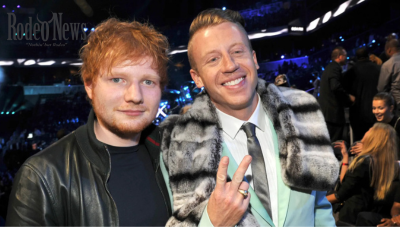
The statement comes after Macklemore was removed from the remaining dates of Sheeran’s Loop Tour following pro-Palestinian remarks he made during performances in New Jersey earlier this month. The rapper had used his opening set to express support for Palestinians and called for a “Free Palestine,” while also performing his protest song “Hind’s Hall.”
Macklemore later said that pressure from stadium owners, including New England Patriots owner Robert Kraft, played a role in his removal. Sheeran has now offered his account of what happened, saying he spent days attempting to find a solution before the promoter and venues ultimately made their decision.
Ed Sheeran Says Decision Was Not His
In a statement shared publicly, Sheeran said he had agreed to Macklemore joining the tour because he respected him as an artist. He also said performers on his tour were generally allowed to choose their own setlists.
According to Sheeran, the situation changed after Macklemore’s performances at MetLife Stadium in New Jersey on Sept. 4 and 5. Sheeran said venues scheduled for upcoming tour dates informed the production team that they would not host the concerts if Macklemore remained on the bill.
Sheeran said he spoke directly with venues and promoters in an attempt to find a compromise. He also said he was involved in discussions with activists on opposing sides of the dispute.
Ultimately, however, he said the decision belonged to the promoter and venues.
Macklemore’s contract, Sheeran explained, was with the promoter rather than with Sheeran personally. The promoter, Messina Touring Group, confirmed that multiple venues had said they would not allow concerts to proceed with Macklemore on the lineup.
Macklemore’s Pro-Palestinian Remarks Sparked Backlash
The dispute began after Macklemore used his performances to speak about the war in Gaza and express support for Palestinians.
During his New Jersey performances, the rapper told audiences that people in Gaza and the occupied West Bank had not been forgotten. He also performed “Hind’s Hall,” a politically charged song inspired by pro-Palestinian demonstrations and the death of Hind Rajab.
The performances drew criticism from some Jewish and pro-Israel organizations. The Israeli American Council launched a petition calling for Macklemore to be removed from the tour, arguing that a concert should not be used as a political platform.
Robert Kraft also defended his involvement in the decision. The billionaire said Macklemore’s recent performances, along with what he described as a broader history of antisemitic rhetoric and imagery, crossed a line for the Jewish community.
Kraft said his position was not intended to dismiss Palestinian suffering or prevent people from advocating for Palestinians.
Macklemore has rejected the suggestion that his support for Palestinians should be treated as antisemitic and has continued to defend his right to speak publicly about the conflict.
Sheeran Explains His Political Position
In his statement, Sheeran also addressed criticism over his decision to avoid making political declarations from the stage.
The singer said he has personal views about the Israel-Palestine conflict but chooses not to make political advocacy a central part of his professional platform.
Sheeran pointed to the diversity of his audience, including children and young fans, and said he wants his concerts to remain places centered on music, unity, enjoyment and inclusion.
He emphasized that remaining publicly neutral does not mean he lacks personal views or does not care about the suffering caused by the conflict.
Sheeran also said he respects Macklemore’s determination to speak about issues he believes in, while maintaining that artists can pursue peace and social change through different approaches.
Other Artists Leave Sheeran’s Tour
The controversy has also affected other performers associated with the Loop Tour.
Finneas, Lukas Graham, Aaron Rowe and Beoga have all withdrawn from their roles on the tour following Macklemore’s removal. Their departures were described as acts of solidarity with Macklemore and Palestinians.
The departures add another layer to an already complicated situation for Sheeran’s North American tour.
The Loop Tour is continuing, but the controversy has transformed what was initially a routine disagreement over an opening act into a wider debate about political expression, artistic freedom and the role of musicians at large commercial events.
A Larger Debate Over Music and Political Speech
The dispute between Macklemore and Sheeran reflects a broader question facing artists and concert promoters: how much political expression should be permitted on major commercial stages?
For Macklemore, public advocacy has become an established part of his work. His recent performances have continued a pattern of using music and live appearances to address the war in Gaza.
Sheeran, by contrast, has emphasized keeping his concerts politically neutral and providing an environment where audiences from different backgrounds can attend without expecting political messaging.
Neither approach has ended the controversy.
Macklemore’s supporters have framed his removal as a question of artistic expression and the ability of performers to speak about humanitarian issues. Critics have argued that concert platforms should not become vehicles for political campaigning, particularly when the statements concern a deeply divisive international conflict.
For now, Sheeran says he attempted to mediate the dispute but was unable to find a solution acceptable to the venues and promoter.
The controversy is likely to remain part of the conversation surrounding the remainder of the Loop Tour, particularly after several supporting performers withdrew.
Sheeran’s latest statement makes clear that he wants to separate himself from the decision to remove Macklemore while defending his own choice to keep political advocacy outside his performances. The dispute, however, continues to raise difficult questions about where artistic expression ends and commercial, contractual and venue considerations begin.