Hamas Military Leader in Gaza Rejects U.S. Ceasefire Proposal Amid Deep Divisions
GAZA CITY
October 3, 2025 — The head of Hamas’s military wing in Gaza has reportedly rejected the latest ceasefire proposal brokered by the United States, casting doubt on efforts to end the nearly two-year-long war between Israel and Hamas.
According to information obtained by the BBC, Izz al-Din al-Haddad, a key military commander within Hamas, has dismissed the U.S.-backed plan, believing it to be designed not for peace, but for the dismantling of Hamas — regardless of whether the group accepts the terms.
The proposal, spearheaded by U.S. President Donald Trump and structured as a 20-point roadmap, has already received conditional approval from the Israeli government. It calls for Hamas to disarm and renounce any future role in governing the Gaza Strip — a condition strongly opposed by hardliners within the group.
Internal Rift Within Hamas Leadership
While elements of Hamas’s political leadership based in Doha, Qatar, are said to be cautiously open to the deal — possibly with certain revisions — their influence appears limited. Unlike the Gaza-based leadership, they do not control the hostages held by Hamas fighters inside the territory, a critical factor in the ongoing conflict.
An estimated 48 hostages remain in Gaza, reportedly taken during the October 7, 2023, Hamas-led assault on southern Israel that resulted in the deaths of 1,200 people and the capture of 251 others. Only about 20 of the hostages are believed to still be alive.
The ceasefire plan demands that all hostages be released within the first 72 hours of the truce — a point that some within Hamas view as an ultimatum that would strip them of their primary bargaining leverage without firm guarantees.
Distrust Runs Deep
Despite assurances from the White House that Israel would honor the terms of the deal, Hamas leaders remain skeptical. Their distrust has only deepened following a reported Israeli airstrike last month targeting Hamas leadership in Doha — an operation allegedly carried out in defiance of U.S. advisories.
Further complicating the plan is the proposed deployment of a temporary “International Stabilisation Force” to Gaza. Backed by the U.S. and several Arab nations, the force is intended to maintain order during the transition period. However, many within Hamas view the idea as a masked form of occupation.
A map accompanying the proposal also outlines a “security buffer zone” along Gaza’s borders with both Israel and Egypt. While the details of this zone remain vague, speculation that Israeli forces could play a role in administering it is already raising red flags in Gaza.
Israeli Ambiguity on Commitments
Adding another layer of uncertainty, Israeli Prime Minister Benjamin Netanyahu has recently signaled reluctance to fully embrace parts of the ceasefire framework. In a video message posted to social media, Netanyahu asserted that Israeli forces would remain in parts of Gaza and reiterated opposition to the creation of a Palestinian state.
Those comments appear to contradict the U.S. plan’s language, which envisions a full Israeli withdrawal, save for a temporary “security perimeter,” and outlines a potential path to Palestinian statehood as part of the long-term solution.
Hamas, for its part, has consistently stated that it will not disarm until a sovereign Palestinian state is formally recognized and established — a stance that continues to clash with Israeli political positions.
A War with No Clear End
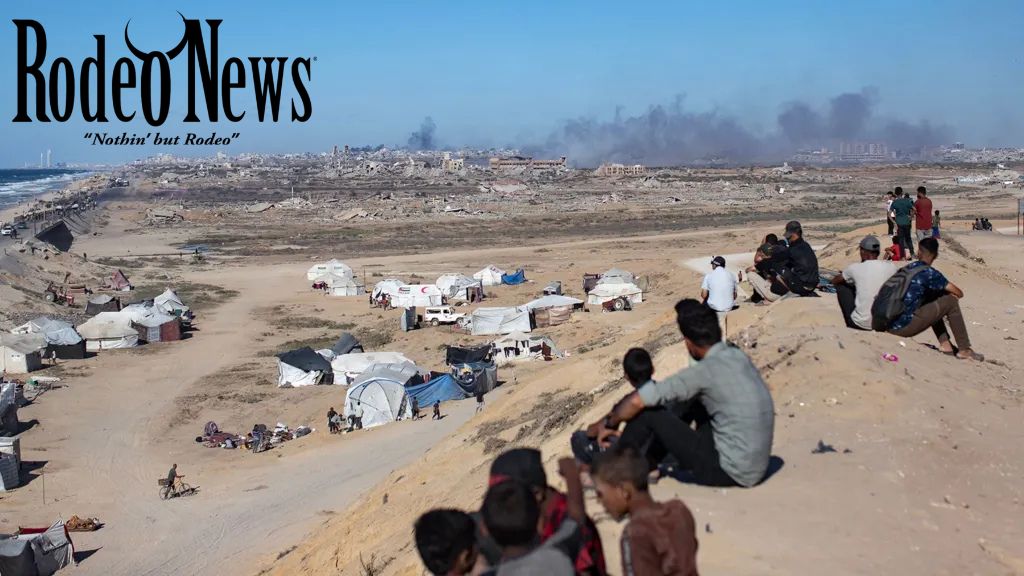
Since the start of Israel’s military campaign in Gaza following the October 2023 attacks, at least 66,225 people have been killed in the territory, according to Gaza’s health ministry, which is administered by Hamas. The humanitarian situation has deteriorated significantly, with international agencies warning of a full-blown crisis if hostilities persist.
With both sides now appearing to hedge their commitments — and with divisions even within Hamas’s own leadership — hopes for a comprehensive ceasefire appear increasingly dim.
The U.S. and international mediators continue their efforts, but as of now, the road to peace remains fraught with mistrust, political friction, and unyielding ideologies.