
Alejandro Betancourt Emerges at Center of Venezuela Oil Deal
Alejandro Betancourt, the Venezuelan billionaire who was previously investigated by authorities in the United States, Spain and Switzerland over alleged money laundering, has emerged as a central figure in a major new U.S.-Venezuela oil partnership.
The development represents a remarkable turnaround for Betancourt. Reuters reported on September 5 that U.S. federal prosecutors in Florida had paused an investigation involving allegations that more than $1 billion was embezzled from Venezuela’s state-owned oil company, PDVSA, and subsequently laundered through assets and accounts in several jurisdictions. Betancourt has never been formally indicted in connection with those investigations. RReuters
Now, his company, North American Blue Energy Partners (NABEP), is at the heart of Washington’s ambitious effort to expand Venezuelan oil production.
The agreement gives the Pentagon’s Office of Strategic Capital a 35% stake in NABEP, while the U.S. government receives preferential access to the company’s oil production. According to Reuters, the State Department has the right to purchase 20% of NABEP’s oil at cost and preferential access to the remainder. RReuters
The arrangement has attracted intense attention because of Betancourt’s past legal scrutiny and his growing influence in Washington-Caracas relations.
Alejandro Betancourt’s Dramatic Rise
The story of Alejandro Betancourt is closely connected to Venezuela’s energy sector and the country’s political elite.
Betancourt became known as part of the generation of Venezuelan businessmen sometimes referred to as the “Bolichicos.” His company, Derwick Associates, won billions of dollars in Venezuelan government contracts during the country’s electricity crisis in the 2010s.
Reuters reported that Derwick received roughly $2 billion in government contracts, including projects awarded without competitive bidding. Critics later questioned the performance of some of the power plants built under those contracts.
Betancourt and Derwick have repeatedly denied wrongdoing. They have argued that the facilities were completed and that subsequent problems were caused by mismanagement within Venezuela’s state authorities. RReuters
His business interests later expanded into the oil industry.
In 2012, Betancourt entered into a partnership with PDVSA to operate mature oil fields in western Venezuela. Those operations eventually became an important foundation for NABEP, the company he later co-founded with Florida businessman Harry Sargeant.
According to NABEP’s own account, the company has expanded production rapidly and now controls rights connected to more than 65 billion barrels of Venezuelan oil reserves. NABEP says it intends to increase production substantially in the coming years. NNABEP
The Pentagon’s 35% Stake Changes Everything
The most striking part of the new agreement is Washington’s direct financial interest in NABEP.
The Pentagon’s Office of Strategic Capital is set to hold a 35% stake in the company. That is an unusual arrangement because the U.S. government is effectively becoming an equity participant in a private Venezuelan oil venture.
Reuters reported separately that the U.S. structured the stake using “penny warrants.” The mechanism is designed to protect Washington’s ownership position if NABEP raises additional capital in the future. RReuters
The agreement also gives the United States preferential access to NABEP’s production.
The State Department has rights to purchase 20% of the company’s oil at cost, while receiving preferential access to the remaining output.
That gives Washington more than a conventional commercial relationship with the Venezuelan producer. It potentially provides the U.S. government with influence over both ownership and supply.
The arrangement is part of a much larger U.S. strategy to rebuild Venezuela’s damaged energy industry.
The U.S. Department of Energy said on September 2 that new agreements with major energy companies are intended to expand Venezuelan oil production, attract billions of dollars in investment and modernize the country’s energy infrastructure. TThe Department of Energy’s Energy.gov
Why Venezuela’s Oil Reserves Matter
Venezuela possesses some of the world’s largest oil resources, making the country strategically important to Washington.
Years of economic crisis, underinvestment, sanctions and declining infrastructure severely damaged Venezuela’s ability to produce and export crude at its potential.
The new U.S.-backed strategy seeks to reverse that decline.
According to the U.S. Department of Energy, agreements announced in September are intended to help double Venezuelan oil production in less than five years. Chevron alone has announced plans for more than $7 billion in investment and expects to significantly increase its Venezuelan production. TThe Department of Energy’s Energy.gov
The broader strategy also involves Eni and GE Vernova.
Eni has signed a 25-year agreement concerning the Junín 5 oil field, while GE Vernova is expected to participate in efforts to modernize Venezuela’s electricity grid. TThe Department of Energy’s Energy.gov
For Washington, the potential benefits extend beyond oil.
A stronger Venezuelan energy sector could provide a major source of crude to global markets while increasing U.S. influence in a region where China and Russia have previously maintained important commercial and political relationships.
Alejandro Betancourt’s Role in U.S.-Venezuela Relations
The most controversial element of the agreement may not be the oil itself.
It is Betancourt’s role.
Reuters reported that Betancourt provided information to U.S. authorities before the January operation that resulted in the capture of former Venezuelan President Nicolás Maduro.
Sources cited by Reuters said Betancourt also helped facilitate communications and negotiations with Venezuelan officials, including Delcy Rodríguez, who became interim president following Maduro’s removal. RReuters
His role reportedly continued afterward.
Reuters said Betancourt helped broker oil agreements and other partnerships while assisting communications between Washington and Caracas.
One oil-trading agreement he helped broker in January resulted in more than 135 million barrels of crude and fuel being exported to destinations including the United States, Europe, India and the Caribbean through the end of August, according to vessel-monitoring data and sources familiar with the negotiations. RReuters
Reuters cautioned that it could not independently determine Betancourt’s precise role in those discussions.
Nevertheless, his influence appears to have grown substantially.
Money-Laundering Investigations Remain a Major Issue
The new role has inevitably revived questions about Betancourt’s legal history.
According to Reuters, Betancourt was investigated in the United States, Spain and Switzerland but has never been indicted.
The U.S. investigation involved allegations surrounding more than $1 billion allegedly misappropriated from PDVSA. Prosecutors were examining claims that funds were moved through real estate in Miami and bank accounts in Malta and Switzerland. RReuters
Reuters reported that the Florida investigation was paused earlier this year.
The reasons for that decision remain unclear.
Several people familiar with the matter told Reuters that prosecutors were subsequently discouraged from pursuing Betancourt further. However, Reuters said it could not establish precisely when the investigation was paused or whether the decision was connected to Betancourt’s cooperation with the Trump administration.
That distinction is important.
There is no established finding that Betancourt’s cooperation caused U.S. prosecutors to halt the investigation.
His attorney, Sarah Chouraqui, said the allegations had been examined extensively in multiple jurisdictions and that no charges had been brought against him. RReuters
Switzerland Says Its Case Is Still Continuing
The legal situation is also more complicated than simply saying that the investigations have ended.
Swiss authorities withdrew an extradition request for Betancourt from the United Kingdom in May.
However, Switzerland’s Zurich Public Prosecutor’s Office told Reuters that the criminal proceedings themselves remain active.
The office said the extradition request was withdrawn because of issues involving British extradition law and that the decision did not affect the underlying criminal proceedings. RReuters
That creates a significant contrast.
Betancourt has moved into a powerful commercial role in the U.S.-Venezuela relationship while at least one foreign investigation remains open.
That discrepancy is likely to remain a focus of scrutiny as NABEP attempts to expand production.
Why Washington Is Betting on Betancourt
Supporters of the agreement argue that the answer is straightforward: experience.
NABEP already has operating experience in Venezuela’s difficult oil environment.
The U.S. government has emphasized the need to increase production quickly, and officials have argued that Betancourt’s familiarity with Venezuela’s oil industry makes him an effective intermediary.
A U.S. official cited by Reuters said Betancourt’s legal challenges are largely old and that he currently has no legal problems in the United States. The official also pointed to NABEP’s existing production record as a reason for selecting the company. RReuters
NABEP says Betancourt has more than 15 years of experience in Venezuela’s energy industry and that the company increased production from roughly 18,000 barrels per day to more than 200,000 barrels per day through company-funded investment. NNABEP
From Washington’s perspective, that operating experience may be more valuable than choosing a company with no established Venezuelan footprint.
The calculation is strategic.
The U.S. wants production.
Venezuela needs investment.
NABEP has an established operating presence.
Betancourt has relationships across Venezuela’s political and business landscape.
The resulting partnership is therefore designed around speed and access.
Critics Question the Arrangement
However, the same relationships that make Betancourt useful also create the biggest political risk.
Several former U.S. intelligence officials, prosecutors and diplomats privately expressed concerns about his influence, Reuters reported.
Their concerns center on the combination of his previous U.S. investigation, the continuing Swiss case and his historical proximity to powerful figures within the Venezuelan political system. RReuters
That raises a broader question for U.S. policymakers.
How much should Washington rely on individuals who have deep connections to the political and business networks it previously criticized?
The answer may depend on how successfully the new oil strategy works.
If Venezuelan production rises significantly, supporters will argue that Betancourt’s connections were an asset.
If the project encounters corruption allegations, legal challenges or financing problems, those same connections could become a major liability.
What the Deal Could Mean for Venezuela
For Venezuela, the potential economic impact is enormous.
The country’s oil industry requires investment in wells, pipelines, transportation systems, electricity generation and other infrastructure.
The U.S. Department of Energy says its broader Venezuela strategy could unlock billions of dollars in investment while expanding oil production and improving electricity infrastructure. TThe Department of Energy’s Energy.gov
NABEP has said the new arrangement could involve close to $100 billion in investment and that it aims to expand production substantially. NNABEP
But investment announcements are not the same as completed production.
Venezuela’s infrastructure has suffered years of deterioration. Restoring production at mature fields can require enormous amounts of capital, equipment and technical expertise.
There are also political and legal uncertainties.
The long-term structure of the agreements will likely determine whether investors are willing to commit the billions of dollars needed to revive the industry.
A New Chapter for U.S.-Venezuela Oil Relations
The rise of Alejandro Betancourt illustrates just how quickly geopolitical priorities can reshape business relationships.
A businessman once scrutinized by authorities in multiple countries is now positioned at the center of one of the most consequential oil partnerships involving the United States and Venezuela.
The Pentagon’s equity position makes the arrangement even more unusual.
Rather than simply encouraging private companies to invest, Washington is taking a direct financial interest in a Venezuelan oil producer while securing preferential access to its production.
The approach reflects a broader shift toward treating energy security as a strategic national-security issue.
For the United States, Venezuela offers an enormous potential source of crude.
For Venezuela, American capital and technology could help restore an industry that has suffered years of decline.
For Betancourt, meanwhile, the deal represents a dramatic transformation in his fortunes.
But the questions surrounding his past have not disappeared.
The Swiss criminal proceedings remain active, while U.S. officials continue to defend the decision to work with him based on his experience and current status.
The coming years will therefore determine whether the Betancourt partnership becomes a successful example of pragmatic energy diplomacy—or a controversial case study in how geopolitical interests can transform the fortunes of politically connected businessmen.
For now, one thing is clear: Alejandro Betancourt is no longer simply a Venezuelan businessman under international scrutiny. He has become an important figure in Washington’s attempt to reshape Venezuela’s oil industry.
External Sources
- Reuters — Original investigation on Alejandro Betancourt and the Pentagon oil deal
- U.S. Department of Energy — Venezuela energy investment fact sheet
- NABEP — Announcement of the U.S.-Venezuela oil agreement
- Reuters — Details of the U.S. 35% NABEP position
Internal Link Placement
Because your target website/domain was not supplied, I would insert your actual WordPress URLs here rather than fabricate them:
- Venezuela oil industry →
[YOUR INTERNAL URL] - U.S. energy policy →
[YOUR INTERNAL URL] - Global oil market →
[YOUR INTERNAL URL]
These should ideally be existing articles on your site, using descriptive anchor text rather than generic phrases such as “click here.”
Image
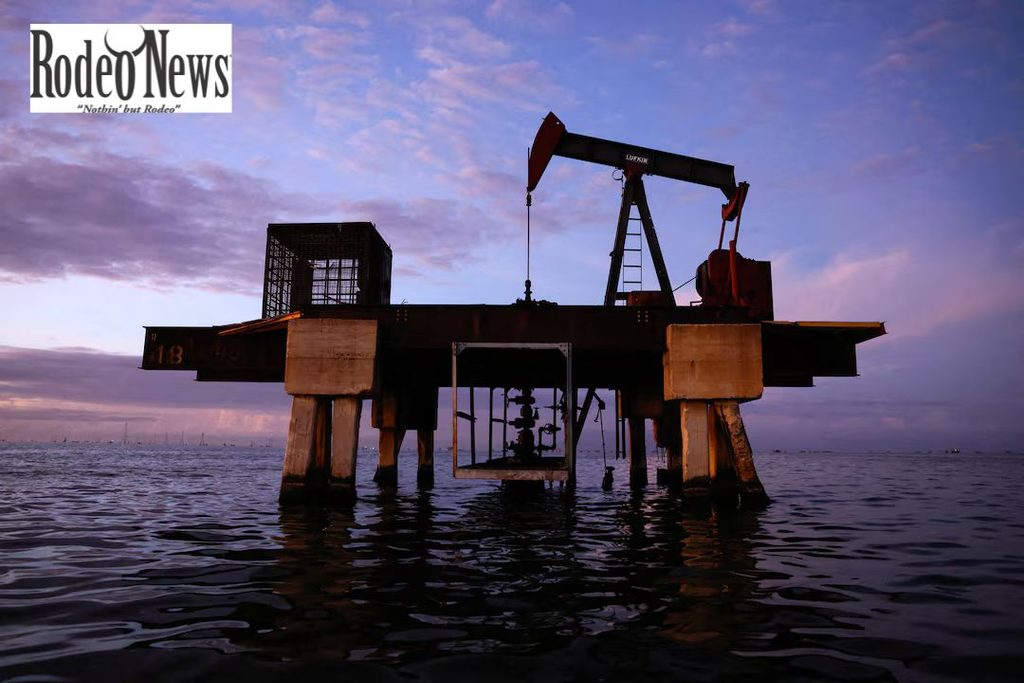
Recommended hero image: Venezuelan oil infrastructure/pumpjack or an editorial image representing Venezuela’s oil industry.
The Reuters article itself contains a photograph of an oil pumpjack at Lake Maracaibo in Cabimas, Venezuela, credited to Reuters photographer Leonardo Fernandez Viloria. RReuters
Image ALT Text:
Alejandro Betancourt Venezuela oil deal and Pentagon partnership
Suggested image caption:
Venezuela’s oil industry is at the center of a major new U.S.-backed investment strategy involving Alejandro Betancourt and North American Blue Energy Partners.
Copyright note: Use the Reuters photograph only if your publication has the appropriate licensing rights. For a WordPress site without Reuters licensing, use a properly licensed or public-domain image instead.
SEO checklist
- Focus keyword in title: ✅
- Focus keyword at beginning of title: ✅
- Focus keyword in meta description: ✅
- Focus keyword in slug: ✅
- Focus keyword in first paragraph: ✅
- Focus keyword in H2 heading: ✅
- Related keywords distributed naturally: ✅
- Short paragraphs: ✅
- Transition language: ✅
- External authoritative sources: ✅
- Image ALT includes focus keyword: ✅
- Title under 60 characters: ✅
- Slug under 75 characters: ✅
- Meta description under 160 characters: ✅
- Original news-style wording rather than copying Reuters: ✅
- Internal links: placeholders pending your domain.