Team USA World Cup: 7 Biggest Winners and Losers
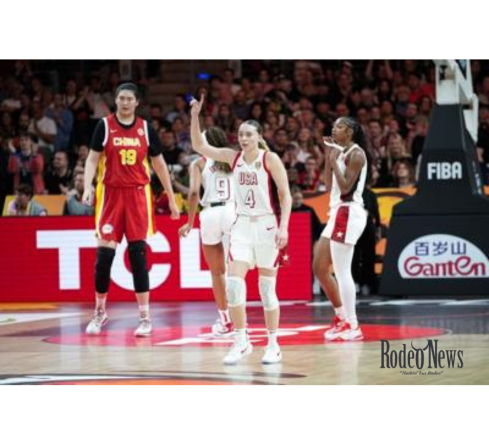
The Team USA FIBA Women’s World Cup campaign is officially underway, and the opening result could hardly have sent a stronger message. The United States defeated China 94-61 in Berlin on September 4, beginning its pursuit of another world title with an emphatic victory powered by a mixture of established stars and emerging talent.
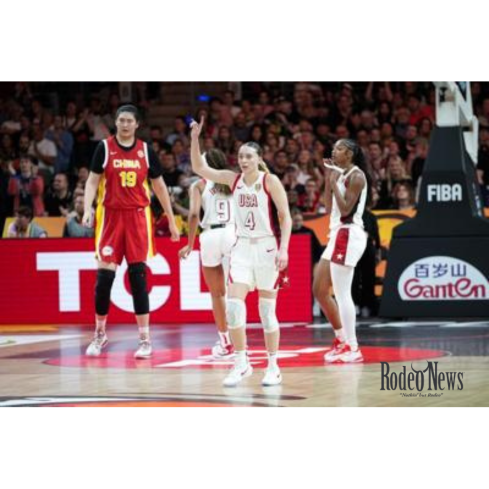
Caitlin Clark delivered one of the standout performances in her World Cup debut, recording 14 points and 11 assists without committing a turnover. Paige Bueckers also scored 14 points, while several other American players contributed to a balanced performance that demonstrated the depth of the U.S. roster.
The result was significant for more than the scoreboard. It offered an early look at the next generation of American women’s basketball and raised new questions about which players and organizations stand to benefit most from the tournament.
Here are seven of the biggest winners and losers following the opening chapter of the Team USA FIBA Women’s World Cup.
Winner No. 1: Caitlin Clark Takes the International Stage
Caitlin Clark entered the tournament as one of the most recognizable players in women’s basketball, and her first World Cup appearance provided another major moment in her rapidly expanding career.
Clark finished with 14 points, 11 assists and three rebounds in Team USA’s 94-61 victory over China. Perhaps most impressively, she recorded her double-double without committing a turnover.
Her passing ability was immediately evident. Team USA used speed, movement and unselfish offense to create opportunities, and Clark played a central role in setting the tempo.
The performance was particularly encouraging because this tournament represents another major stage in Clark’s development. She has already experienced enormous attention at the college and professional levels. International competition now gives her an opportunity to test her game against different defensive systems and styles.
Clark’s influence also extends beyond the court. Her popularity has helped attract new audiences to women’s basketball, and a successful run with Team USA could bring additional attention to the international game.
For the Team USA FIBA Women’s World Cup, Clark’s debut was a reminder that the Americans possess both elite talent and a player capable of attracting global interest.
Winner No. 2: Paige Bueckers Makes Her Mark
Paige Bueckers was another major winner from the opening game.
The young guard scored 14 points, matching Clark’s total and helping Team USA pull away from China. Her production came as the Americans leaned heavily on contributions from their younger players.
Bueckers has long been viewed as one of the most talented guards of her generation. The World Cup provides a different challenge from the WNBA because international basketball requires players to adapt to unfamiliar opponents, different rules and condensed tournament schedules.
Her strong performance in the opener demonstrated why she is considered an important part of the future of American basketball.
The presence of both Bueckers and Clark on the roster is particularly notable. For years, USA Basketball has relied on legendary veterans to carry the national team. The latest group, however, appears to be developing another generation of stars capable of leading the program for years.
Bueckers’ successful debut therefore represented more than one productive game. It offered a glimpse at what the next era of Team USA could look like.
Winner No. 3: Team USA’s Youth Movement
One of the clearest winners from the opening game was Team USA’s broader youth movement.
The Americans have traditionally been defined by extraordinary depth, and the 2026 roster once again showed that strength. However, the victory over China highlighted how younger players can contribute alongside experienced leaders.
Clark, Bueckers and other emerging stars played important roles as Team USA turned a competitive game into a decisive victory.
The team received contributions throughout the roster. That balance matters during a major international tournament because the schedule can be demanding and individual players may face different matchups from one game to the next.
Team USA coach Kara Lawson praised the overall effort after the game, emphasizing the importance of having multiple players ready to contribute.
That depth could become increasingly valuable as the tournament progresses.
The Team USA FIBA Women’s World Cup is not won in a single group-stage game. A championship run requires consistency, adaptability and contributions from players beyond the biggest names.
The opener suggested the Americans may have exactly that combination.
Winner No. 4: Team USA’s Championship Hopes
The United States entered the tournament as one of the favorites, and the 33-point victory over China did nothing to change that expectation.
Team USA has historically been one of the dominant forces in international women’s basketball. The Americans have won nine of the last 12 FIBA Women’s World Cups, including four consecutive titles entering the 2026 competition.
China presented a significant physical challenge, particularly because of its size in the frontcourt. Yet Team USA was able to use pace, ball movement and depth to overcome those concerns.
The result does not guarantee another championship. International tournaments are unpredictable, and several teams possess the talent necessary to challenge the United States.
Still, a convincing opening victory gives the Americans an important early advantage.
The remaining group-stage games against Italy and Czechia will provide additional tests before the knockout rounds begin. A strong finish in group play could help Team USA position itself for a more favorable path through the tournament.
For now, the Americans have accomplished exactly what they needed to accomplish: They opened the tournament with a statement.
Loser No. 1: China Faces an Immediate Challenge
China is not necessarily a long-term loser because of one defeat, but the opening result created a difficult start to its tournament.
The 94-61 loss exposed the challenge of competing with Team USA’s athleticism and depth. China possesses impressive size, but the Americans were able to disrupt the game with movement, defensive pressure and quick decision-making.
The margin of defeat may also affect confidence.
In a short international tournament, teams must quickly move past disappointing performances. China will need to identify what went wrong and make adjustments before its next group-stage games.
The loss also highlighted how difficult it is to defend the United States when several players can create offense.
Stopping one star is rarely enough. China had to contend with Clark’s playmaking, Bueckers’ scoring and production from multiple other players.
The challenge for China now is to reset.
A single loss does not end a World Cup campaign, but the team will need stronger performances moving forward to remain competitive in Group D.
Loser No. 2: The Idea That Team USA Has a Weakness
Before the tournament, questions naturally surrounded the American roster.
How quickly would the younger players adjust to international competition? Could the team manage the physicality and unusual matchups that often appear in FIBA basketball? Would a roster blending veterans and newcomers find chemistry quickly?
The opening game did not eliminate every question, but it answered several of them.
Team USA’s offense was balanced. Its defense created opportunities. The younger players appeared comfortable, while experienced veterans provided leadership.
That combination makes the Americans difficult to beat.
Of course, the tournament will become more challenging. Strong opponents can study the opening game and search for weaknesses.
However, the victory over China suggested that the Americans are not dependent on one player or one style of play.
Clark can control the tempo. Bueckers can score. Veterans can stabilize the roster. Other players can step into larger roles when necessary.
For opposing teams, that may be an intimidating reality.
Loser No. 3: WNBA Commissioner Cathy Engelbert’s Difficult Moment
The Team USA FIBA Women’s World Cup is providing a global platform for women’s basketball at a time when the WNBA is also undergoing a period of major change.
One of the biggest developments surrounding the league is the planned departure of commissioner Cathy Engelbert, who is expected to step down at the end of 2026 after seven years in the position.
Her tenure has included substantial growth for the WNBA, including expansion plans, increased media visibility and major commercial progress. However, her leadership has also faced criticism over communication with players and the handling of several contentious issues.
The timing creates an interesting contrast.
While Team USA’s young stars are showcasing the extraordinary future of women’s basketball on the international stage, the WNBA must also prepare for a leadership transition.
Clark and Bueckers represent part of a new generation attracting unprecedented attention. The league’s next commissioner will face the challenge of turning that popularity into sustainable long-term growth.
Engelbert’s departure does not erase the progress made during her tenure. Nevertheless, the transition arrives at a critical moment for the league.
Women’s basketball has more visibility than ever. Expectations are also higher than ever.
Why the World Cup Matters for the WNBA
The Team USA FIBA Women’s World Cup is also an important showcase for the WNBA.
Many of the tournament’s biggest stars play in the league, meaning international success can introduce them to new audiences around the world.
Clark’s debut against China is a clear example.
A player already known to millions of American sports fans is now competing on another major stage. Bueckers, meanwhile, has an opportunity to strengthen her international profile alongside her fellow American stars.
The tournament also allows fans to compare different basketball styles and discover players from other countries who could eventually become major figures in the WNBA.
For the league, this international visibility is valuable.
Women’s basketball continues to expand commercially, culturally and globally. A successful World Cup can strengthen that momentum and create more opportunities for players, teams and the organizations connected to the sport.
The Road Ahead for Team USA
Despite the dominant opening result, Team USA cannot afford to become complacent.
The Americans still have group-stage games against Italy and Czechia before the knockout rounds. The tournament then becomes increasingly difficult as the strongest teams advance.
Every game will bring different challenges.
Some opponents may attempt to slow the tempo. Others may use physical frontcourts or aggressive perimeter defenses. Team USA will need to adjust accordingly.
That is where the roster’s versatility could become decisive.
If Clark faces increased defensive pressure, other playmakers can take responsibility. If Bueckers encounters difficult matchups, other scorers can emerge.
The opening game demonstrated that Team USA possesses options.
Final Thoughts: A Powerful Opening Statement
The first game of the Team USA FIBA Women’s World Cup offered several clear conclusions.
Caitlin Clark looked comfortable on the international stage. Paige Bueckers demonstrated her ability to contribute immediately. The younger generation of American players showed it is ready for a larger role.
Meanwhile, Team USA’s championship ambitions received an early boost.
The 94-61 victory over China was only the beginning of the tournament, and much tougher challenges could still be ahead. However, the Americans delivered exactly the kind of performance a championship contender wants in an opener.
For Clark and Bueckers, the tournament could become another defining chapter in their careers.
For Team USA, it could become the beginning of another championship run.
And for women’s basketball as a whole, the World Cup is providing another reminder that the sport’s biggest stars and most important stories continue to command an increasingly global audience.
The road to the championship remains long, but after one dominant performance, Team USA has made its intentions unmistakably clear.
Suggested internal link: Link to your website’s latest coverage of Caitlin Clark, Paige Bueckers, the WNBA or international basketball.
Suggested external link: Link to an official FIBA Women’s World Cup page or USA Basketball coverage for tournament schedules and results.
Editor’s note: Statistics and tournament developments in this article reflect information available following Team USA’s September 4, 2026, World Cup opener against China.