Missouri Supreme Court: Major 2026 Map Ruling Revealed
The Missouri Supreme Court has blocked a Republican-backed congressional map supported by Donald Trump from being used in the November 2026 general election, delivering a major setback to Republican efforts to strengthen their position in the U.S. House. The court also ordered the state to place the controversial map before voters in a statewide referendum. TThe Guardian+1
The decision is significant because Missouri Republicans had designed the new congressional boundaries to improve their chances of gaining an additional House seat. The redistricting effort was part of a broader national campaign encouraged by Trump and his allies to reshape congressional districts before the 2026 midterm elections.
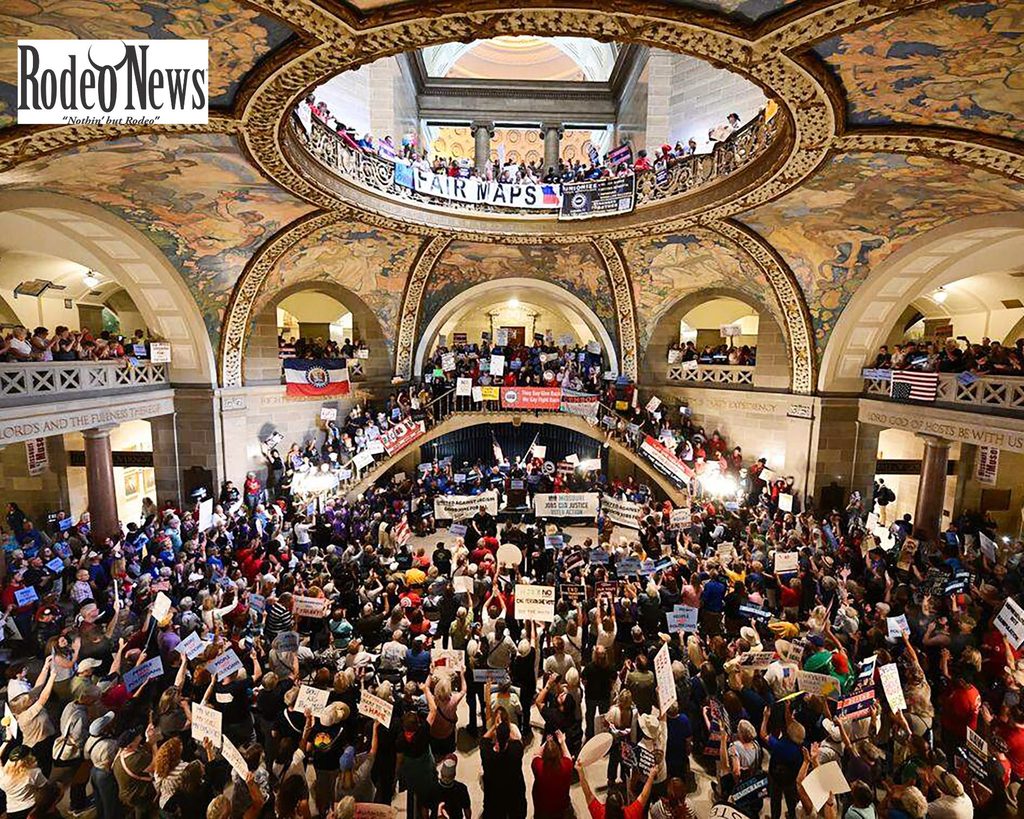
For now, however, the map approved by Missouri lawmakers will not govern the November general election. Instead, the congressional districts created after the 2020 census remain in effect unless voters approve the new plan. MMissouri Courts
Missouri Supreme Court Rejects New Congressional Map
The ruling came after a lengthy legal battle over whether Missouri voters had the constitutional right to challenge the new congressional boundaries through a referendum.
The Missouri Supreme Court ruled unanimously that the referendum petition filed by opponents of the map was legal, sufficient and submitted on time. As a result, the Republican-backed redistricting law never took effect under the court’s interpretation. MMissouri Courts
The court specifically ordered Missouri Secretary of State Denny Hoskins to place the referendum on the November 2026 general election ballot.
The court also prohibited state officials from implementing or using the new congressional districts for the November election.
That means Missouri will return to the previous congressional map for the general election unless the legal situation changes through further action, including a possible appeal to the U.S. Supreme Court. RReuters+1
Why the Missouri Congressional Map Matters
The controversy centers largely on Missouri’s 5th Congressional District, which has traditionally been a Democratic stronghold in the Kansas City area.
Republican lawmakers dramatically changed the district as part of the new map. The revised boundaries stretched the district eastward into more Republican-leaning rural areas, making the seat significantly more favorable to the GOP.
The strategy was aimed at weakening the position of Democratic Rep. Emanuel Cleaver, who has represented the Kansas City-area district for years.
Cleaver has won the district with at least 60% of the vote in each of the previous two elections. Under the new boundaries, however, his political position became much more difficult. TThe Guardian+1
The August 2026 primary elections were already conducted using the new map. Republican state Sen. Rick Brattin won the GOP primary in the reshaped 5th District.
The unusual situation means Missouri now faces the possibility of having conducted primaries under one set of boundaries while using a different map for the November general election.
That could create significant uncertainty for candidates, election administrators and voters.
More Than 300,000 Signatures Challenged the Map
The legal dispute intensified after opponents of the redistricting plan collected more than 300,000 signatures in an effort to force a statewide referendum.
The petition was submitted in December 2025. Opponents argued that Missouri’s constitutional referendum provisions allowed citizens to challenge the Legislature’s redistricting law. TThe Guardian+1
Secretary of State Denny Hoskins rejected the petition, arguing that the referendum process could not be applied to congressional redistricting.
A lower court initially sided with Hoskins.
The issue eventually reached the state’s highest court, which reached the opposite conclusion.
The Missouri Supreme Court found that the state constitution permits referendums involving “any act” of the General Assembly and that congressional redistricting was not specifically excluded from that language. TThe Guardian+1
The decision therefore focused not only on the political consequences of the map but also on the constitutional rights of Missouri voters.
Trump-Backed Redistricting Campaign Suffers Setback
The Missouri ruling represents a setback for Trump’s broader redistricting strategy.
Congressional districts are normally redrawn after the decennial census. Missouri’s 2025 effort was unusual because lawmakers sought to redraw congressional boundaries in the middle of the decade, ahead of the 2026 elections.
Trump had encouraged Republican leaders in Missouri and other states to pursue maps that could improve Republican prospects in Congress.
Missouri became one of several states involved in a wider mid-decade redistricting battle.
Republicans hoped the combined effect of these efforts could produce additional House seats and help preserve their narrow congressional majority. The Guardian reported that Republicans had hoped to gain as many as 10 seats nationally through the broader redistricting effort. TThe Guardian
Missouri’s new map was particularly important because Republicans already held six of the state’s eight House seats. The redrawn boundaries were intended to potentially increase that advantage to seven seats. NNew York Post
The Missouri Supreme Court ruling therefore has consequences beyond the state itself.
Emanuel Cleaver Gets a Political Lifeline
The decision could significantly improve Emanuel Cleaver’s chances of returning to Congress.
Cleaver was unopposed in the August Democratic primary. He had continued his campaign despite uncertainty surrounding the legal challenge to the congressional map. TThe Guardian
The old 5th Congressional District is heavily Democratic and has consistently supported Cleaver.
The new district was much more favorable to Republicans, however, because it incorporated large numbers of voters from rural areas outside Kansas City.
According to an Associated Press estimate cited by the Guardian, approximately 59% of voters in the reshaped district were new under the Republican-backed map. TThe Guardian
With the old map now restored for the November election, Cleaver’s political position becomes considerably stronger.
At the same time, Republican candidate Rick Brattin faces a dramatically different electoral landscape from the one he encountered during the primary.
Republicans Promise an Appeal
The Missouri ruling is unlikely to be the final chapter.
Missouri Republican Attorney General Catherine Hanaway has indicated that the state intends to seek intervention from the U.S. Supreme Court. Republican officials have criticized the ruling and argued that changing the congressional map after the primary election could create confusion for voters and candidates. RReuters+1
Republican officials had argued that reverting to the previous districts so close to the November election could create administrative problems.
The Missouri Supreme Court acknowledged the practical difficulties but concluded that those concerns could not override the state’s constitutional requirements.
The court’s official decision states that the previous congressional map remains in full force for the November 2026 election and that the new map cannot take effect unless voters approve it. MMissouri Courts
That creates a potentially unusual legal battle in the final weeks before the midterm elections.
Voters Will Have a Say on the Map
Although the new map has been blocked for the November general election, its future has not necessarily been permanently decided.
The court ordered the referendum to appear on the November ballot.
Missouri voters will therefore have an opportunity to determine whether the Republican-backed congressional map should ultimately be approved.
This gives the dispute an important second stage.
If voters reject the map, the Republican redistricting effort would face a major defeat. If voters approve it, the new boundaries could potentially take effect in a subsequent election cycle, subject to any additional legal challenges.
The referendum also gives Missouri voters a direct role in deciding a congressional redistricting plan, something that has not happened in the state for more than a century, according to the Missouri Independent. MMissouri Independent
What the Ruling Means for the 2026 Midterms
The immediate impact is straightforward: Missouri’s old congressional map will be used for the November 2026 general election unless a higher court intervenes.
That could make the 5th Congressional District much safer for Democrats.
More broadly, the ruling reduces the number of additional House seats Republicans could expect from their national redistricting campaign.
The House majority is expected to be closely contested in November. Even a single congressional seat can matter when the chamber is narrowly divided.
Missouri’s decision therefore adds another layer of uncertainty to an already competitive national election.
It also demonstrates how state constitutional provisions can influence national congressional politics.
A Bigger Battle Over Redistricting
The Missouri dispute is part of a much larger argument over congressional redistricting in the United States.
Both political parties have increasingly viewed district boundaries as a major tool for influencing the balance of power in Congress.
Republican-led states have pursued maps intended to strengthen GOP candidates, while Democrats have attempted countermeasures in states where they control the redistricting process.
That has produced lawsuits, ballot initiatives and constitutional disputes across the country.
Missouri’s case is particularly notable because the state Supreme Court did not simply rule on whether the new districts were politically favorable or unfavorable.
Instead, it determined whether citizens had properly exercised their constitutional referendum rights.
That distinction could make the decision important beyond the 2026 election.
Missouri Supreme Court Decision Creates New Election Uncertainty
The Missouri Supreme Court ruling has transformed what appeared to be a Republican advantage into a major legal and political uncertainty.
The new congressional map was designed to give Republicans a better chance of capturing an additional House seat. Instead, the court’s decision has restored the previous boundaries for November and placed the future of the new map in the hands of Missouri voters. RReuters+1
For Democrats, the decision could protect Emanuel Cleaver’s Kansas City-area seat and make it harder for Republicans to gain another Missouri seat.
For Republicans, the ruling represents an important setback in a broader national effort to reshape congressional districts before the midterms.
For voters, the case highlights how redistricting decisions can affect not only individual candidates but also the balance of power in Washington.
The next major development could come from the U.S. Supreme Court if Missouri Republicans pursue an appeal.
Until then, the 2020 census-era congressional map remains the map governing Missouri’s November 2026 general election.
And with the referendum now headed to the ballot, Missouri voters will ultimately have the opportunity to decide whether the controversial new districts should survive.
Sources and Further Reading
- The Guardian — Missouri Supreme Court congressional map report
- Missouri Supreme Court — Official ruling, Case SC101805
- Reuters — Missouri congressional map ruling
- Missouri Independent — Redistricting referendum coverage
Internal-link placeholders: Add 2–3 relevant links from your own site, such as 2026 US Midterm Elections, Donald Trump Latest News, and Missouri Politics. This is necessary because no target website/domain was supplied, so actual internal URLs cannot be generated without inventing links.T