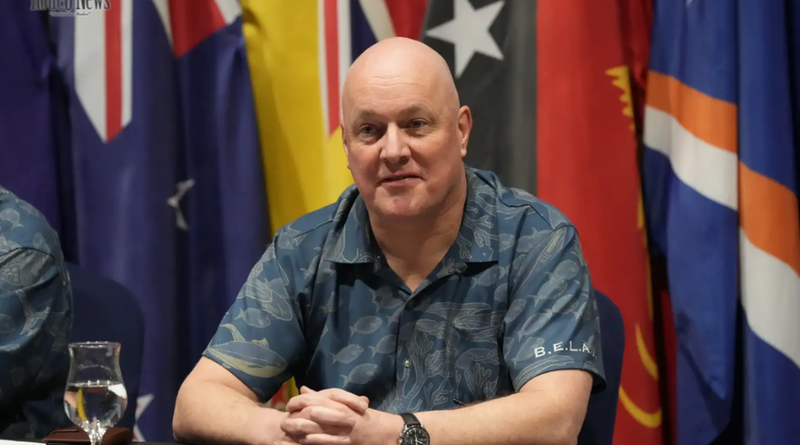
The China missile test has become a major point of tension at the Pacific Islands Forum in Palau, where regional leaders expressed concern over Beijing’s recent ballistic missile launch but stopped short of unanimously condemning China. The disagreement exposed growing divisions among Pacific nations as they navigate pressure from China, the United States, Australia and other outside powers.
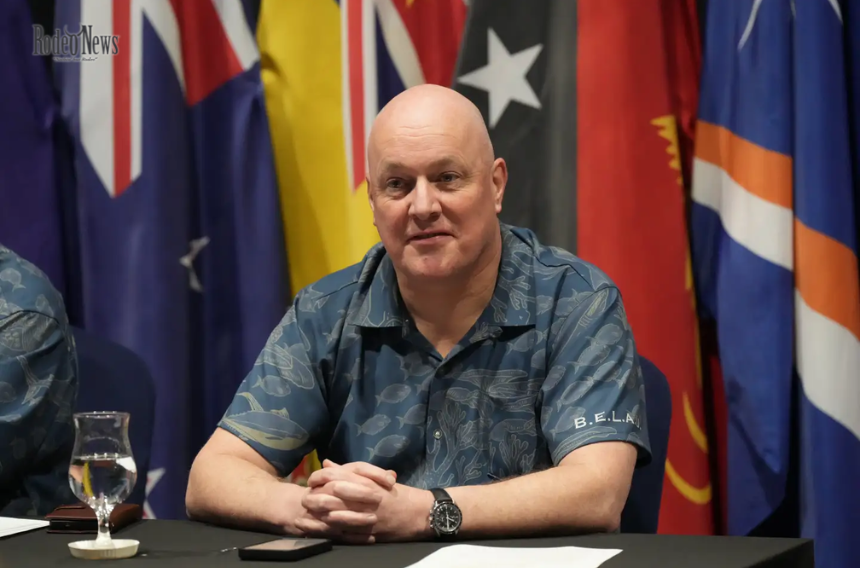
The leaders’ response came during a summit traditionally focused on issues such as climate change, economic development and the challenges facing small island nations. This year, however, security and geopolitical competition have increasingly moved to the center of the discussion.
According to The Associated Press, Pacific leaders agreed to register collective concern about the missile launch into regional waters. However, the statement was not unanimous, and some governments opposed a stronger rebuke of Beijing. AAP News+1
The result was a carefully worded diplomatic position that emphasized regional safety and transparency without directly naming China in the final statement.
China Missile Test Divides Pacific Leaders
The disagreement over the China missile test illustrates how difficult it has become for the Pacific Islands Forum to maintain a single position on strategic issues.
Palau, the host of this year’s summit, pushed for a stronger response. President Surangel Whipps Jr. argued that countries conducting missile tests in or near the Pacific should respect the sovereignty and security concerns of island nations.
Australia also supported a tougher position on the Chinese launch. Canberra has argued that missile tests affecting Pacific countries should be accompanied by adequate notification and transparency.
But not every Pacific government agreed that China should be singled out.
Nauru dissented from the final position. Kiribati, meanwhile, was absent from a key leaders’ retreat where the issue was discussed, further complicating the effort to establish a unanimous regional position. AAP News+1
The divisions are significant because the Pacific Islands Forum generally seeks to present a united regional voice. Disagreements over major-power competition can therefore expose the competing diplomatic and economic interests among its members.
Why the Missile Test Matters to Pacific Nations
For many Pacific island countries, the issue is not simply about the military capabilities of China.
It is also about whether major powers treat the Pacific as a region with its own interests and decision-making authority.
The missile reportedly traveled over parts of the Pacific during a Chinese military test in July. Regional governments raised concerns about notification and the potential risks associated with missile activity in areas where Pacific island nations have maritime and security interests. RReuters
The Pacific is geographically vast, but its island nations occupy strategically important positions between Asia, Australia and the United States.
That geography has attracted increasing attention from major powers.
China has expanded its economic, diplomatic and security relationships across the Pacific during the past decade. At the same time, Australia, New Zealand and the United States have increased their engagement with Pacific governments.
Consequently, a military test that might once have been treated as a distant strategic event can now become a major diplomatic issue for Pacific leaders.
Leaders Seek More Transparency on Missile Tests
One of the clearest outcomes from the summit was a push for greater transparency.
Reuters reported that Pacific leaders called for missile-testing countries to provide advance notification, with the discussion pointing to a 24-hour notice standard. The proposal was linked to the Pacific’s broader aspiration to preserve the region as an “ocean of peace.” RReuters
The emphasis on notification is important.
For smaller countries, advance warnings can provide governments with an opportunity to communicate with residents, manage maritime traffic and reduce the risk of confusion or accidental escalation.
The proposal also attempts to establish a principle that applies beyond China.
Pacific governments have emphasized that their concerns should not be interpreted solely through the lens of rivalry between Washington and Beijing. Instead, they want rules that apply to all countries conducting military activities in the region.
That approach allows Pacific leaders to raise security concerns while maintaining diplomatic relationships with multiple major powers.
China Rejects Stronger Criticism
Beijing has defended its military activities and rejected the idea that the missile test should become a broader confrontation with Pacific island governments.
Chinese officials have emphasized peaceful development and cooperation with Pacific nations while objecting to what they view as attempts to politicize the region.
Beijing also accused Palau of generating excessive attention around the missile test as the Pacific Islands Forum summit progressed. RReuters
The diplomatic disagreement reflects a larger problem.
China wants to strengthen its relationships with Pacific countries and portray itself as a development partner. Several Pacific governments have welcomed Chinese investment, infrastructure projects and diplomatic engagement.
At the same time, other Pacific governments remain concerned about strategic competition and the possibility that the region could become increasingly militarized.
For Pacific leaders, maintaining relationships with China while also working with Australia, New Zealand and the United States requires a delicate balancing act.
Taiwan Adds Another Layer of Tension
The China missile test was not the only major geopolitical issue at the Palau summit.
Taiwan’s participation created another confrontation between Beijing and the host country.
Taiwanese Foreign Minister Lin Chia-lung attended events connected with the Pacific Islands Forum. Palau maintains formal diplomatic relations with Taiwan and has continued to support Taiwan’s participation in international engagement.
China strongly opposes Taiwan’s involvement in international forums where it believes Taiwan could gain greater political recognition.
Beijing warned of consequences over Taiwan’s participation in the summit, adding another layer of diplomatic tension to an already complicated meeting. RReuters+1
The situation highlights the different diplomatic positions within the Pacific.
Only a small number of Pacific island states maintain formal diplomatic relations with Taiwan, while most recognize Beijing.
Palau, the Marshall Islands and Tuvalu remain among Taiwan’s formal diplomatic partners in the Pacific. Nauru, meanwhile, shifted diplomatic recognition from Taiwan to China in 2024. WWikipedia
These diplomatic alignments inevitably influence how individual governments approach regional disputes involving Beijing.
Palau Finds Itself at the Center of the Dispute
Palau’s position is particularly important because it hosted the 2026 Pacific Islands Forum.
President Surangel Whipps Jr. has repeatedly emphasized the importance of Pacific sovereignty and has taken a firm position on security issues involving China.
Palau also maintains close security ties with the United States under its Compact of Free Association. That relationship gives Washington a significant strategic connection to the country.
At the same time, Palau’s decision to host Taiwanese officials has made it a target of criticism from Beijing.
The result is that a small Pacific island nation has found itself at the center of a much larger geopolitical contest.
This reflects a broader transformation in the Pacific.
Island nations are increasingly aware that their geographic location gives them strategic importance. Rather than simply being observers of great-power competition, Pacific governments are seeking greater influence over how that competition develops in their region.
Pacific Unity Faces a Major Test
The disagreement over the China missile test raises questions about the future of Pacific regionalism.
The Pacific Islands Forum was established to give island nations a collective political voice. Its members often seek consensus on issues ranging from climate change to fisheries and economic development.
But strategic competition is making consensus more difficult.
Different countries have different relationships with China. Some depend heavily on Chinese trade, investment or infrastructure financing. Others have stronger security relationships with Australia, New Zealand or the United States.
The result is a complicated diplomatic landscape.
The missile-test dispute showed that Pacific governments can agree on broad principles such as transparency and safety while disagreeing over whether China should be directly condemned.
New Zealand Prime Minister Christopher Luxon described the regional position as important despite the lack of complete unanimity. The outcome demonstrated that a majority view can still emerge even when consensus proves difficult. AAP News
Australia and New Zealand Watch China Closely
Australia and New Zealand have a particularly strong interest in the changing security environment.
Australia has significantly expanded its diplomatic and security engagement with Pacific island nations in response to China’s growing influence.
Canberra supported calls for stronger criticism of China’s missile launch and argued that missile tests should comply with appropriate notification practices. AABC News+1
New Zealand has likewise increased its focus on Pacific security while maintaining economic and diplomatic relations with China.
However, both countries must be careful not to appear to dictate Pacific policy.
Pacific governments have repeatedly emphasized that their region should not become merely an arena for competition between larger countries.
That message was particularly relevant at the Palau summit.
The Bigger Issue Is Pacific Sovereignty
The controversy surrounding the China missile test ultimately points toward a much larger question: Who gets to shape the future of the Pacific?
For decades, outside powers have had significant influence in the region.
The United States has longstanding strategic relationships with several Pacific countries. Australia and New Zealand have deep historical, economic and security connections. France remains a regional power through its territories in the Pacific.
China has rapidly expanded its diplomatic and economic presence.
Meanwhile, Pacific island governments are increasingly asserting that they should have the strongest voice over issues affecting their region.
Climate change remains a particularly important example.
For many island countries, rising sea levels, extreme weather and economic vulnerability are more immediate threats than traditional military competition. Pacific leaders therefore want major powers to engage with their priorities rather than simply importing their own strategic agendas.
The missile dispute demonstrates why that balance is becoming increasingly difficult.
What Happens Next?
The Palau summit is unlikely to resolve the broader dispute between China and Pacific nations.
Instead, the meeting may mark another stage in the region’s growing effort to establish rules for military activity and geopolitical competition.
The push for advance notification of missile tests could become an important regional principle if Pacific governments continue developing common security standards.
The disagreement also shows that Pacific unity will remain difficult when major powers are involved.
China is likely to continue strengthening its relationships with Pacific governments, while Australia, New Zealand and the United States are expected to remain heavily engaged.
Taiwan will also remain a sensitive issue, particularly in countries such as Palau that maintain formal diplomatic relations with Taipei.
For Pacific island nations, the challenge will be maintaining regional cooperation without allowing great-power competition to overwhelm their own priorities.
The China missile test has therefore become more than a military story. It is a test of diplomacy, sovereignty and the Pacific Islands Forum’s ability to maintain a common regional voice.
As strategic competition intensifies, Pacific governments are likely to demand greater transparency from every major power operating in their neighborhood.
That could become one of the most important developments to emerge from the 2026 summit.
Conclusion
The China missile test has exposed deep geopolitical pressures within the Pacific Islands Forum.
Pacific leaders were able to express collective concern and push for greater transparency, but they could not agree on a stronger condemnation of Beijing. Nauru’s dissent and the absence of Kiribati from a crucial discussion highlighted the difficulty of maintaining complete regional unity. AAP News+1
At the same time, Taiwan’s participation in the summit added another source of tension between China and Pacific governments.
The central message from the summit is clear: Pacific nations want a greater say in decisions affecting their region.
Whether major powers can respect that demand while competing for strategic influence will shape the Pacific’s political landscape for years to come.
Suggested External Sources
- Associated Press — Pacific leaders and China’s missile launch
- Reuters — Pacific summit and China’s missile test
- ABC News Australia — Australia and Palau push for condemnation
Internal Link Suggestions
Because no target website/domain was supplied, internal links should be added after publishing using relevant existing articles from your website, such as:
- Pacific Islands Forum news
- China foreign policy
- Taiwan-China relations
- Australia-China relations
- Pacific regional security
- South Pacific geopolitics
Image Recommendation
Recommended image: A legitimate editorial photograph showing Pacific Islands Forum leaders meeting in Koror, Palau.