Fairphone Gen 6+: 12 Repairs, One Bold Idea
The Fairphone Gen 6+ is the result of an unusual idea in the smartphone industry: a phone should not become disposable simply because one component breaks.
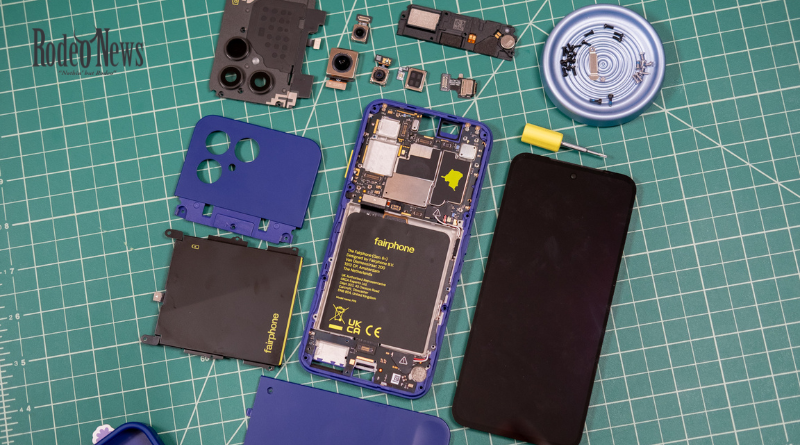
That sounds straightforward. In practice, it is extremely difficult.
Modern smartphones are increasingly thin, tightly integrated and sealed against dust and water. Those choices can make devices attractive and durable, but they can also make relatively simple repairs difficult. A damaged charging port, worn battery or broken display can turn into an expensive service job—or, in some cases, a reason to replace the entire phone.
Fairphone has spent years challenging that model. Its latest generation takes the same philosophy further, combining a repairable modular design with stronger hardware and long-term software support.
The result is the Fairphone Gen 6+, a smartphone that puts longevity and repairability at the center of its design rather than treating them as secondary features. Fairphone says the device has 12 replaceable spare parts, while its USB-C port, battery, display and back cover can be swapped in under five minutes.
That approach is precisely why Ars Technica describes the engineering challenge behind Fairphone’s design as something close to “nearly impossible.” The company’s CTO explains how the Dutch manufacturer has had to rethink conventional smartphone construction to make a product that can be opened, repaired and kept in service for years.
Fairphone Gen 6+ puts repairability first
The most important feature of the Fairphone Gen 6+ is not its processor or camera.
It is what happens when something goes wrong.
The phone is built around modular components that users can replace themselves. Fairphone says 12 spare parts are user-replaceable, with a T5 Torx screwdriver serving as the primary tool for opening the device and changing components.
That includes some of the parts most likely to cause problems during the life of a smartphone.
The battery is removable. The USB-C port can be replaced. The display can be changed. The back cover is also designed to come off rather than becoming a permanent part of a sealed enclosure.
This is fundamentally different from the approach used by many mainstream smartphones.
Instead of asking consumers to discard a phone when a battery loses capacity, Fairphone’s design encourages them to replace the battery. If a charging port develops a fault, the port itself can be replaced rather than requiring an entirely new device.
Fairphone’s own repair portal also provides guides for DIY repairs, including battery replacement procedures for the Gen 6.
Fairphone Gen 6+ makes a difficult engineering trade-off
Making a smartphone repairable is not simply a matter of adding screws.
Every component, connector and physical interface has to be designed around the possibility that someone will eventually open the phone. At the same time, the manufacturer still has to deliver a device that feels like a modern smartphone.
This creates competing priorities.
A tightly sealed phone can simplify structural design and help manufacturers achieve particular levels of water resistance. A modular phone, meanwhile, needs components that can be separated and reassembled without destroying the device.
Fairphone has attempted to solve that problem without abandoning modern durability.
The Gen 6+ has an IP55 rating and has undergone MIL-STD 810H drop testing at 1.5 meters, according to Fairphone. The company also says the device has undergone more than 70,000 bend tests.
That combination illustrates the larger challenge behind the product.
The phone has to be easy enough to repair while remaining durable enough for everyday use.
A repairable smartphone with modern hardware
Repairability would mean less if the phone itself were too slow for everyday tasks.
Fairphone has therefore upgraded the Gen 6+ compared with the standard Gen 6. The newer model uses Qualcomm’s Snapdragon 7s Gen 4 platform and includes 12GB of RAM with 256GB of internal storage. Storage can also be expanded by microSD, with support for capacities of up to 2TB.
The standard Gen 6 uses the Snapdragon 7s Gen 3 and 8GB of RAM.
That makes the “Plus” designation more meaningful than a cosmetic refresh. Fairphone says the upgraded hardware is intended to provide more performance and stability while preserving the modular architecture that defines the product.
The display remains a 6.3-inch OLED panel with a 120Hz refresh rate.
For photography, the phone features a 50MP main camera capable of recording 4K video, alongside an ultra-wide camera. There is also a 32MP front-facing camera.
These specifications do not attempt to compete directly with the most expensive flagship phones on raw performance.
Instead, Fairphone is targeting something different: a device that is capable enough today and designed to remain useful for a much longer period.
The Fairphone Gen 6+ battery can be replaced
Battery degradation is one of the most predictable problems in modern smartphones.
Lithium-ion batteries naturally lose capacity as they go through charging cycles. Eventually, a phone that once lasted all day may require significantly more frequent charging.
With many sealed smartphones, replacing the battery requires specialized equipment or professional service.
The Fairphone Gen 6+ takes a different route.
Its 4,415mAh battery can be removed and replaced by the owner. Fairphone says the phone can deliver up to two days of battery life under its stated usage conditions, while fast charging can take the battery to 50 percent in about 20 minutes.
The replacement battery is also considerably cheaper than replacing an entire smartphone.
Fairphone lists the battery at around $39.95 in the United States, while the display is listed at $89.95 and the USB-C port at $19.95.
That is where the company’s repair philosophy becomes more than an environmental argument.
It can potentially make economic sense for consumers who intend to keep a phone for several years.
Fairphone Gen 6+ is designed to last until 2033
Hardware is only one part of smartphone longevity.
A phone can remain physically functional while becoming increasingly difficult to use if its software stops receiving security updates.
Fairphone has addressed that issue with a long software-support commitment. The company says the Gen 6+ will receive software support through 2033. It also offers a five-year warranty under its current coverage structure, although battery coverage has different terms.
That long support window is crucial to the Fairphone concept.
If a user can replace a battery, screen or charging port but cannot safely use the phone because its software is obsolete, repairability loses much of its value.
The combination of replaceable hardware and extended software support therefore creates a more complete longevity strategy.
The ethical smartphone argument goes beyond repairs
Fairphone’s philosophy is also about how the device is manufactured.
The company says 51 percent of the Gen 6+ by weight consists of fair or recycled materials across 15 materials. Those include recycled metals and plastics, along with materials sourced through fair-mining programs and credits.
Fairphone also says its supply-chain program includes fair factories and living-wage bonuses for workers at key component suppliers.
The company has additionally emphasized electronic-waste neutrality. Its stated approach is to take back electronic waste corresponding to the devices it sells, supporting reuse, repair and recycling initiatives.
None of this makes a smartphone impact-free.
A smartphone still requires mining, manufacturing, transportation, energy and complex global supply chains.
The difference is that Fairphone is attempting to reduce some of the environmental and social costs by extending the useful life of its products and changing how materials and workers are treated within its supply chain.
Why Fairphone says repair can save money
The economics of repair become more interesting when a phone is kept for five years.
Fairphone’s own comparison estimates that an average industry smartphone can reach a five-year total cost of roughly €1,394 when the original purchase price and selected repair-related costs are included. The company estimates €798.85 for the Gen 6+ under its model.
Those figures are Fairphone’s calculations, rather than an independent industry-wide measurement, so they should be viewed in that context.
Still, the underlying idea is easy to understand.
If a $650-class smartphone can remain useful for five years and individual components can be replaced for relatively modest prices, consumers may not need to purchase another complete phone simply because one component has failed.
That could also reduce the number of functioning devices that enter recycling streams prematurely.
Fairphone Gen 6+ is not trying to win the flagship race
There is an important trade-off.
The Fairphone Gen 6+ is not designed to compete with premium smartphones on every specification. Its processor sits in the upper-midrange rather than flagship category.
Consumers who prioritize maximum gaming performance, advanced computational photography or the fastest possible mobile processor may find conventional flagship phones more attractive.
The Fairphone’s argument is different.
Instead of asking, “How powerful can this phone be today?” it asks, “How useful can this phone remain several years from now?”
That distinction is central to understanding the product.
Fairphone’s strategy is less about winning a benchmark competition and more about changing the expected lifespan of a smartphone.
The Gen 6+ arrives as Fairphone expands in the US
Fairphone’s philosophy has historically been more visible in Europe. In August 2026, however, the company expanded its direct US presence with the Gen 6+, giving American consumers a more straightforward way to buy the repairable smartphone. Ars Technica previously reported the US launch at $650.
The US launch matters because the American smartphone market is dominated by a relatively small number of major manufacturers.
Fairphone offers a different proposition.
It is not simply another Android phone competing on cameras, displays and processor benchmarks. It is an attempt to make repairability and ethical manufacturing part of the product’s core identity.
The US model is listed at $649.99 by Fairphone, although availability can vary.
Is the Fairphone Gen 6+ the future of smartphones?
That may be too ambitious a conclusion.
Fairphone remains a relatively small player compared with Apple, Samsung and Google. Its approach also involves engineering compromises that the largest smartphone manufacturers may not be eager to adopt.
But the company has demonstrated something important.
Repairability does not necessarily mean building a primitive smartphone.
The Gen 6+ combines a 120Hz OLED display, 5G connectivity, modern Android software, 12GB of RAM, expandable storage, a 50MP camera and contemporary durability features with a design that allows ordinary users to replace key components.
That combination challenges a long-standing assumption in consumer electronics: that sleek, modern devices must also be difficult to repair.
Fairphone’s answer is that they do not have to be.
Final verdict: a smartphone built around longevity
The Fairphone Gen 6+ is interesting not because it has the most powerful processor or the most advanced camera system.
It is interesting because it asks consumers to think differently about what a smartphone should be.
A broken USB-C port does not necessarily have to mean a new phone. A degraded battery does not have to define the end of a device’s useful life. A cracked display does not have to turn a repair into a major replacement decision.
With 12 replaceable components, long-term software support, a removable battery and an emphasis on fair and recycled materials, Fairphone is trying to make longevity a central part of smartphone design.
The company’s approach will not appeal to everyone.
Some buyers will always prefer the highest-performing flagship. Others may prioritize camera quality, ecosystem integration or the thinnest possible design.
But for consumers who want to keep their phones longer, repair them instead of replacing them and consider the environmental and human cost of electronics, the Gen 6+ presents a compelling alternative.
Perhaps that is the most important achievement of the Fairphone Gen 6+.
It does not simply make a repairable smartphone.
It makes the idea of keeping a smartphone for years feel normal again.