
Ireland vs Israel Ends 3-0 as Football and Politics Collide
The Ireland vs Israel UEFA Nations League match ended with a 3-0 victory for the Republic of Ireland, but the scoreline was only part of the story. The fixture in Debrecen, Hungary, was played under intense political scrutiny because of the ongoing war in Gaza and months of pressure on Irish football authorities to boycott the match.
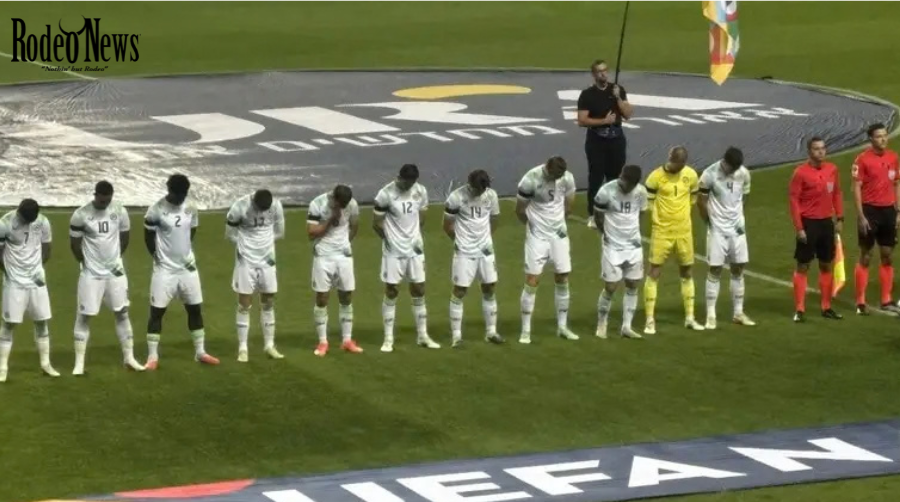
Ireland’s players entered the field wearing black armbands in recognition of lives lost in the conflict. They also bowed their heads while the Israeli national anthem was played, while the traditional pre-match handshakes and pennant exchanges did not take place.
On the field, however, Ireland produced a decisive performance. Troy Parrott, Adam Idah and Jack Moylan all scored during the first half, allowing Heimir Hallgrimsson’s team to secure its first Nations League win of the campaign. UEFA’s official results list the match as Israel 0-3 Republic of Ireland.
The result came only three days after Ireland opened its Nations League campaign with a 1-0 defeat to Kosovo. Israel had also lost its opening Group B3 match, falling 3-1 to Austria.
Ireland vs Israel Match Was Surrounded by Controversy
The Ireland vs Israel fixture had been under scrutiny long before kickoff.
The Football Association of Ireland had faced sustained pressure over whether the national team should participate. According to reports before the match, more than 160 Irish sportspeople signed an open letter calling for the fixtures to be reconsidered. The FAI had also asked UEFA to suspend Israel from international competition over the situation in Gaza, but UEFA rejected that request.
The political controversy created an unusual atmosphere around a UEFA Nations League fixture.
The match was officially listed as an Israel home game, but it was played at the Nagyerdei Stadium in Debrecen, Hungary. UEFA’s fixture list confirms Israel and the Republic of Ireland were scheduled to meet on September 27 in Group B3.
Attendance was limited, adding to the unusual setting.
Ireland’s football authorities and players ultimately decided to play. A lengthy team meeting took place after goalkeeper Gavin Bazunu indicated that he did not want to participate. The squad subsequently voted to fulfill the fixture, according to RTÉ.
Bazunu later withdrew from both matches against Israel.
Ireland Players Make Statement Before Kickoff
The strongest visual statement came before the football began.
Irish players wore black armbands and lowered their heads during Israel’s national anthem. The teams also did not take part in the usual handshake ceremony.
The Football Association of Ireland had previously said the black armbands would recognize lives lost in the conflict.
Ireland captain Dara O’Shea was among the players involved in the unusual pre-match ceremony. Rather than exchanging the customary handshake with Israel captain Manor Solomon, the players moved into position without the traditional gesture.
The decision reflected the complicated circumstances surrounding the game while allowing the fixture itself to proceed.
Ireland coach Heimir Hallgrimsson had acknowledged before the match that some players were uncomfortable about participating. After the game, he said the team’s actions had helped draw attention to the issue while emphasizing that the squad had made its decision collectively.
Ireland vs Israel: Three First-Half Goals Decide the Match
Once the match started, Ireland quickly shifted the focus toward football.
Troy Parrott opened the scoring in the 14th minute. The striker celebrated by making a heart gesture with his hands, giving Ireland an early advantage.
Adam Idah then doubled the lead.
Ireland continued to attack with confidence, and Jack Moylan scored the third goal before halftime. The three goals arrived during a dominant opening period and effectively settled the contest before the second half began.
Moylan’s celebration attracted additional attention because he kissed both his Ireland badge and black armband after scoring.
The Republic of Ireland therefore went into halftime 3-0 ahead.
Israel was unable to produce a response after the break, allowing Ireland to close out the match without conceding.
For Hallgrimsson, the victory was particularly important because Ireland had lost its opening Nations League game in Kosovo just three days earlier.
A Fast Recovery for the Republic of Ireland
The Ireland vs Israel victory gave the Republic of Ireland its first three points of the 2026/27 Nations League campaign.
UEFA’s Group B3 schedule shows Ireland began with a 1-0 loss away to Kosovo before facing Israel in Debrecen. The group also contains Austria, which defeated Israel 3-1 on the opening matchday.
That means Ireland’s three-goal victory was an important response to its disappointing opening result.
The Nations League league phase is structured around six matches for teams in League B. UEFA lists Ireland’s remaining Group B3 fixtures against Austria, Israel, Austria again and Kosovo later in the campaign.
The next meeting with Israel is scheduled for October 4.
That match has also been moved away from Ireland. UEFA’s fixture schedule lists the return fixture as Republic of Ireland vs Israel on October 4, while current reports indicate the game will be played in Bačka Topola, Serbia, behind closed doors.
Gavin Bazunu Chooses Not to Participate
One of the most significant individual decisions surrounding the fixture came from Gavin Bazunu.
The Ireland goalkeeper withdrew from both matches against Israel. He explained publicly that he believed it would be wrong for him to participate because of the killing of innocent people and the wider situation in the region.
His decision came shortly before the first match.
According to RTÉ, Bazunu’s position contributed to a lengthy team meeting in Debrecen. The squad ultimately voted by a significant majority to play the match.
Ireland therefore entered the game with a different goalkeeper arrangement, while defender Jimmy Dunne was registered as a third goalkeeper to satisfy UEFA matchday regulations.
The situation highlighted the different personal decisions within the Irish squad while the team attempted to maintain a collective position.
UEFA Match Takes Place Amid Gaza Debate
The controversy around Ireland vs Israel cannot be separated from the wider conflict that has shaped public debate around the fixture.
Ireland has historically maintained strong political support for Palestinian statehood. Dublin formally recognized a Palestinian state in 2024, alongside Spain and Norway, and Irish officials have repeatedly criticized Israel’s conduct during the Gaza conflict.
At the same time, Israel rejects allegations that its conduct in Gaza amounts to genocide. That disagreement remains an important part of the broader international debate surrounding the conflict.
The football fixture consequently became a focal point for competing views about whether sporting organizations should continue normal competition during major international conflicts.
UEFA’s decision was to allow the fixture to proceed.
The FAI, meanwhile, maintained its participation in the Nations League schedule despite the domestic pressure for a boycott. The resulting match became a compromise of sorts: Ireland played, but its players used the occasion to make a visible statement through their armbands and pre-match actions.
Reports of Fan Behavior Add Another Layer
The controversy did not end with the final whistle.
Reports following the match alleged that some Israeli supporters directed racist chants toward Ireland forward Adam Idah. Al Jazeera reported that videos circulated showing alleged monkey chants and said the Football Association of Ireland raised the issue with officials.
The same report said UEFA had indicated that an investigation could not be opened because the relevant protocols had not been followed during the match.
These allegations should be distinguished from confirmed disciplinary findings. UEFA’s disciplinary process and any subsequent decisions would determine whether sanctions are imposed.
The match also featured political slogans from sections of the Israeli support.
The unusual circumstances reinforced how far the game had moved beyond an ordinary Nations League fixture.
Israeli Officials Criticize Ireland’s Actions
Ireland’s pre-match gestures also drew a political response from Israel.
Israeli Foreign Minister Gideon Saar criticized the Irish players’ conduct and accused Ireland of being on the “wrong side of history,” according to AFP. His comments included references to Ireland’s historical conduct during the Second World War.
The remarks added another political dimension to an already tense sporting event.
Ireland’s actions, meanwhile, were presented by its football leadership and players as a recognition of lives lost in the conflict rather than as a refusal to compete.
The distinction mattered because the team ultimately did participate.
What Comes Next for Ireland and Israel?
The Ireland vs Israel rivalry will continue almost immediately.
The next meeting is scheduled for October 4, when the Republic of Ireland is listed as the home side. UEFA’s official fixture information confirms the date and Group B3 pairing.
That match is expected to attract further attention because of everything that happened around the first encounter.
For Ireland, the sporting objective is straightforward: continue building points in Group B3 after recovering from the opening loss to Kosovo.
For Israel, the priority will be to respond after two consecutive defeats, first against Austria and then Ireland.
The wider political debate, however, is unlikely to disappear simply because the football has resumed.
Ireland vs Israel Result Puts Football Back at the Center
The final score of Ireland vs Israel was clear: Republic of Ireland 3, Israel 0.
Parrott, Idah and Moylan gave Ireland all three goals before halftime, while the defense held firm during the second period. UEFA officially recorded the result as Ireland’s first victory of the 2026/27 Nations League campaign.
Yet the match will be remembered for more than its scoreline.
The black armbands, bowed heads, canceled handshakes, Bazunu’s withdrawal and the months of pressure surrounding the fixture all reflected the extraordinary circumstances in which the game was played.
Ireland chose to participate after an internal team vote, while several players and officials made clear that the political context could not simply be separated from the sporting event.
The result ultimately delivered Ireland three valuable points. But the events surrounding the match demonstrated why international football can become a stage for issues far beyond the pitch.
As the Nations League moves forward, the October 4 return fixture will provide another sporting chapter between the two teams — while the political and humanitarian questions surrounding their meetings are likely to remain part of the conversation.
Suggested External Links
- UEFA’s official 2026/27 Nations League fixture and results page
- UEFA’s Republic of Ireland team fixtures
- RTÉ’s match report and Ireland team coverage
Suggested Internal Links
/uefa-nations-league-2026-results/— UEFA Nations League 2026 Results/republic-of-ireland-football-news/— Republic of Ireland Football News/international-football-news/— International Football News/football-results-today/— Football Results Today