
Early-Onset Dementia: 5 Clues to a Future Cure
A family’s devastating experience with early-onset dementia is providing researchers with a rare window into how inherited brain disease develops — and why studying unusual forms of dementia could eventually lead to new treatments for much more common conditions.
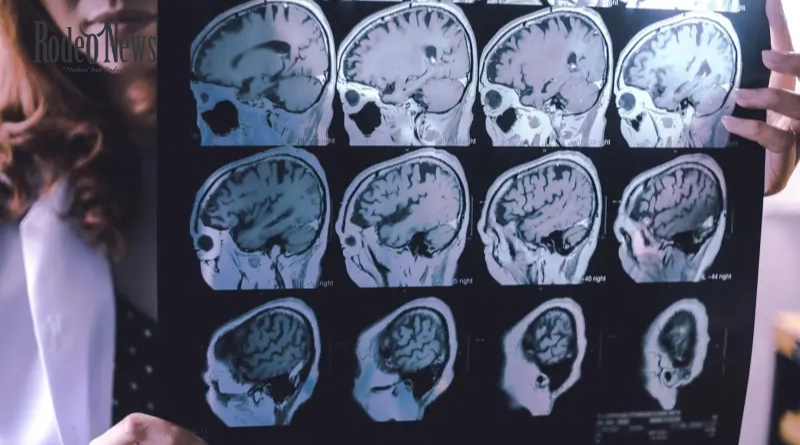
The story is detailed in Robert Kolker’s new book, The Vanishing Family: Love, Fate and the Quest to End Dementia, which follows generations of a Pennsylvania family affected by a rare inherited form of frontotemporal dementia, or FTD. The book is scheduled for publication on September 29, 2026.
The family’s experience is particularly important because researchers eventually identified a mutation in the MAPT gene, which provides instructions for the tau protein. The specific mutation, known as V337M, has been associated with inherited frontotemporal dementia and has been studied for decades.
Scientists are not saying this discovery has produced a cure. Instead, the family illustrates how studying a clearly identifiable genetic cause of dementia can reveal biological mechanisms that might otherwise remain difficult to understand.
1. Early-Onset Dementia Can Have a Genetic Cause
Dementia is often associated with aging, but not every case follows that pattern.
Frontotemporal dementia is one of the major forms of early-onset dementia, often affecting people during their working years rather than late in life. Unlike the memory problems commonly associated with Alzheimer’s disease, FTD can initially produce dramatic changes in personality, behavior, judgment or language.
In the family described by Kolker, relatives began noticing behavioral and personality changes in middle age. One woman, for example, reportedly began withdrawing from normal activities and struggling with everyday responsibilities before eventually receiving a diagnosis of Pick’s disease, an older term associated with a form of frontotemporal dementia.
The pattern became harder to dismiss when similar changes appeared in other members of the family.
Eventually, genetic investigation pointed toward the V337M mutation in the MAPT gene. Research has established that MAPT mutations can cause inherited FTD, and the condition follows an autosomal dominant inheritance pattern.
That means an individual carrying a disease-causing MAPT mutation can pass the mutation to a child.
For affected families, this creates an extraordinary dilemma. Genetic testing can potentially reveal whether someone inherited a mutation associated with future disease, but knowing the result can also carry enormous emotional and practical consequences.
2. The V337M Mutation Points Researchers Toward Tau
One of the most important clues from this type of early-onset dementia is the role of tau.
Tau is a protein found inside nerve cells. Under normal circumstances, it helps stabilize structures known as microtubules, which are important for maintaining the internal architecture of neurons.
In certain neurodegenerative diseases, however, tau becomes abnormal and can accumulate in the brain.
MAPT is the gene responsible for producing tau. Mutations in MAPT can alter the behavior of the protein and contribute to the development of frontotemporal dementia. The V337M mutation is one of the known MAPT mutations associated with familial FTD.
Research involving families carrying V337M has demonstrated that the disease can produce characteristic tau-related pathology.
A 2017 study of a family with the V337M mutation described substantial differences in when symptoms began and how long the disease lasted. One affected woman lived with symptoms for more than 40 years, while a mutation-carrying son remained asymptomatic well beyond the family’s average age of onset.
Those differences are scientifically important.
They suggest that carrying a mutation does not necessarily provide researchers with a perfectly predictable timetable for disease. Other biological, genetic or environmental factors may influence when symptoms appear and how rapidly the condition progresses.
Understanding those factors could eventually help scientists identify ways to delay or modify disease.
3. FTD Could Teach Scientists More About Other Dementias
The significance of the family extends beyond frontotemporal dementia.
For decades, much dementia research focused heavily on Alzheimer’s disease and the accumulation of beta-amyloid plaques. While amyloid remains an important area of Alzheimer’s research, scientists have increasingly recognized that tau and other biological processes also play critical roles in neurodegeneration.
FTD offers a different perspective because some forms have a relatively direct genetic connection.
In the case of MAPT-related FTD, researchers can study a mutation that directly affects tau biology. That provides an opportunity to examine what happens before and during disease progression.
Kolker’s reporting emphasizes this idea: rare and genetically straightforward forms of dementia may provide clues about mechanisms that could also be relevant to more widespread brain diseases.
Recent structural research adds another layer to that picture.
A 2025 study published in Nature Structural & Molecular Biology examined tau filaments from people carrying the V337M and R406W MAPT mutations. Researchers found that tau filaments associated with these mutations adopted an Alzheimer-type fold, providing detailed structural information about how abnormal tau can form inside the brain.
That does not mean FTD and Alzheimer’s disease are the same condition.
Instead, it demonstrates that apparently different neurodegenerative diseases can share important molecular features.
That overlap is one reason scientists continue to investigate tau as a potential therapeutic target.
4. The Search for a Treatment Is Already Underway
The phrase “future cure” can sound more immediate than the science actually is.
At present, there is no cure for MAPT-related frontotemporal dementia. GeneReviews, a medical reference hosted by the U.S. National Library of Medicine, states that treatment is currently focused on managing symptoms, maximizing function and reducing complications.
However, research is moving beyond simply managing symptoms.
Clinical research is investigating several possible strategies for FTD, including approaches aimed at tau, inflammation, genetic abnormalities and other disease mechanisms.
A recent review of disease-modifying FTD trials described studies investigating potential treatments including sodium selenate, which is being studied as a tau-modifying treatment. The review also noted that several experimental approaches remain in clinical development.
Research centers are also studying people who carry known genetic mutations before symptoms become severe.
That approach is particularly valuable for inherited disease.
If researchers can identify people who are genetically predisposed to FTD before major neurological damage occurs, they may eventually be able to test whether an intervention can slow or prevent progression.
This is still an area of research, not established medical practice.
5. Finding Patients Could Accelerate Dementia Research
One of the most important messages from the family story may have less to do with a particular drug and more to do with participation in research.
Rare diseases create a difficult scientific problem: researchers need patients to study the condition, but the number of affected patients can be small.
Frontotemporal dementia is also frequently difficult to recognize because early symptoms can look psychiatric or behavioral rather than neurological.
Someone experiencing personality changes, impulsive behavior, social withdrawal or unusual language difficulties may initially receive another diagnosis.
Research into MAPT-related FTD has shown that affected relatives can display different clinical presentations, and even family histories can be difficult to interpret. GeneReviews notes that relatives may previously have been diagnosed with conditions such as psychiatric disorders, Alzheimer’s disease or Parkinsonism before the underlying genetic disorder becomes clear.
That makes genetic counseling and specialist evaluation particularly important for families with a strong history of dementia occurring at unusually young ages.
For researchers, identifying mutation carriers can also help create long-term studies that track disease from its earliest stages.
The ultimate goal is to understand what happens before irreversible neurological decline becomes established.
Why This Family Matters to the Future of Dementia Research
The story behind The Vanishing Family illustrates a difficult paradox in medical research.
A genetic mutation can bring terrible consequences to one family while simultaneously giving scientists an unusually precise opportunity to study disease.
The V337M mutation has already been investigated in multiple scientific studies. Researchers have examined affected families, brain pathology, tau structures and the wide variation in symptom onset and disease duration.
Those studies do not provide a simple path to a cure.
But they provide something researchers need: a clearer biological target.
In ordinary late-life dementia, many biological processes can interact over decades. In inherited FTD caused by a known MAPT mutation, scientists can start with a specific genetic alteration and investigate how it changes tau and ultimately damages brain cells.
That clarity could prove valuable when developing future therapies.
A New Era of Early-Onset Dementia Research
The most important development may be the growing shift from treating dementia only after symptoms become obvious toward identifying biological changes much earlier.
That approach is already changing research into inherited neurodegenerative disease.
At institutions such as UCSF, researchers are conducting studies involving frontotemporal dementia, including investigations into biomarkers, imaging and potential therapeutic approaches. Current research listings include studies involving genetic forms of FTD and projects designed to identify biological changes associated with disease.
The possibility of treating dementia before extensive brain damage occurs is one of the major reasons genetic families are so important to scientists.
If researchers can identify the earliest molecular changes caused by a mutation, they may eventually be able to intervene before severe symptoms appear.
For families, however, the science comes with difficult questions.
Should someone learn whether they carry a mutation if there is currently no cure? How should parents discuss a genetic risk with their children? What psychological and financial consequences could follow from knowing the result?
These questions have no universal answer.
What the Research Does — and Does Not — Mean
The family story should not be interpreted as evidence that a dementia cure has been discovered.
There is currently no approved treatment that eliminates MAPT-related FTD, and researchers still have major questions about why people carrying the same mutation can experience different ages of onset and disease courses.
Instead, the significance lies in what the family can teach scientists.
A single genetic mutation can act as a natural experiment, allowing researchers to connect a change in DNA with changes in a protein, changes in brain cells and eventually changes in behavior and cognition.
That chain of evidence can help researchers identify potential points where treatment might intervene.
It is a long process, and most experimental therapies do not ultimately become successful treatments.
Nevertheless, researchers now have tools that previous generations did not: advanced genetic sequencing, molecular imaging, high-resolution structural biology and increasingly sophisticated clinical trials.
The Bigger Promise Behind the Family’s Story
The tragedy experienced by families with early-onset dementia cannot be separated from the scientific opportunity their experiences provide.
For relatives facing the possibility of inherited FTD, genetic information can be frightening. For researchers, however, identifying the biological cause can provide a roadmap for studying how the disease begins.
The V337M MAPT mutation is particularly valuable because it connects inherited disease to tau biology. Studies have already demonstrated tau pathology in affected families and provided increasingly detailed information about the molecular structure of the abnormal protein.
That does not guarantee a cure.
But it strengthens one of the central ideas emerging from modern dementia research: understanding rare diseases may help scientists understand more common ones.
For now, the family described in Kolker’s book remains a story about uncertainty, inheritance and loss. At the same time, it is also a story about how families can contribute to scientific knowledge that may eventually benefit people far beyond their own relatives.
The road from a genetic discovery to an effective treatment can take years or decades.
Yet every clearer understanding of how dementia begins gives researchers another place to look for a way to stop it.