
Godzilla Minus Zero Makes History With First R Rating as Takashi Yamazaki Unleashes a More Brutal Sequel
Godzilla Minus Zero has made a dramatic entrance at the 2026 New York Film Festival, where director Takashi Yamazaki introduced the sequel to Godzilla Minus One with a major franchise milestone: the film is the first Godzilla movie to receive an R rating in the United States.
The rating, issued for violent content and bloody images, immediately set the sequel apart from previous installments of the long-running monster franchise. Rather than treating the restriction as a setback, Yamazaki has defended the decision to preserve the film as he originally intended it. At the movie’s New York Film Festival premiere, the filmmaker explained that reducing the violence simply to secure a broader rating was not an option for the production.
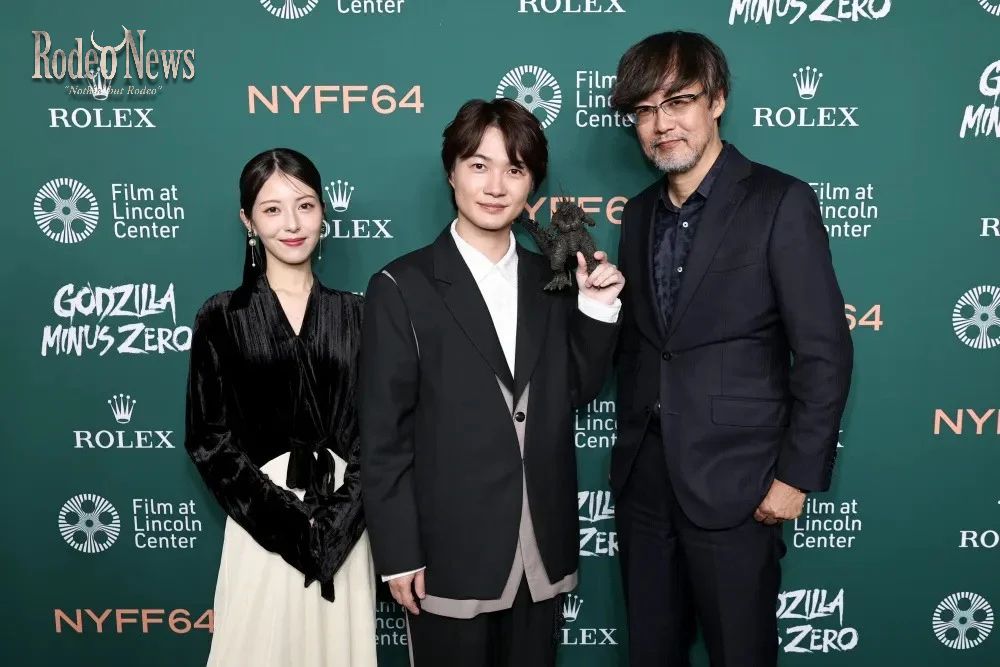
The world premiere took place at Alice Tully Hall as part of the New York Film Festival’s Spotlight program. The response was reportedly enthusiastic, with the screening generating strong reactions from the audience and renewed attention around one of the year’s most anticipated Japanese films. The festival describes the movie as a large-scale sequel that expands the visual ambition of its predecessor while maintaining its focus on postwar Japan and the people living through the aftermath of catastrophe.
Takashi Yamazaki Stands Behind the R Rating
The R rating represents a significant change for the franchise, particularly because Godzilla Minus One was able to reach a broad international audience while still delivering frightening and emotionally heavy monster sequences.
Yamazaki has suggested that the harsher rating reflects what happens on screen rather than an attempt to make the sequel more extreme simply for shock value. The director’s priority was to preserve the impact of the action, including imagery that could not easily be softened without changing the nature of the scenes.
For a filmmaker working within a franchise that has existed for more than seven decades, the decision carries obvious commercial implications. A more restrictive rating can limit the number of younger moviegoers who can attend without an accompanying adult. Yet Yamazaki has maintained that removing or censoring important moments would have compromised the film.
That approach is particularly notable because Godzilla Minus One became a major international success despite being a Japanese-language production. It also made history at the Academy Awards by becoming the first Godzilla film to win an Oscar, taking home the prize for visual effects.
A Bigger Story After Godzilla Minus One
Godzilla Minus Zero continues the story established by the 2023 film, moving the narrative forward to 1949, two years after the events of Godzilla Minus One.
Ryunosuke Kamiki returns as Koichi Shikishima, the former military pilot whose wartime experiences shaped much of the emotional story in the previous movie. Minami Hamabe also returns as Noriko, while the sequel expands the world around the surviving characters as Japan continues to rebuild after World War II.
According to the New York Film Festival, the sequel introduces another calamity while keeping its human story at the center of the spectacle. The film runs approximately 135 minutes and was selected as the festival’s Spotlight Gala world premiere.
That setting allows Yamazaki to continue exploring themes that have become central to his version of Godzilla. The monster is not simply an opponent to be defeated. Instead, Godzilla represents destruction, fear and the consequences of decisions made by governments and societies.
The sequel reportedly pushes those ideas into even darker territory while increasing the scale of the monster action.
More Brutal Monster Action
The R rating becomes especially significant when considering the way Yamazaki approaches the film’s visual effects.
Early reviews and festival reactions have highlighted the intensity of the sequel’s destruction sequences. Unlike some modern monster movies that rely on constant digital spectacle, Yamazaki has continued to favor carefully constructed sequences in which the monsters and their surroundings feel physically connected.
The sequel also introduces new kaiju elements and expands the threat facing the characters. The result is a movie that reportedly combines large-scale destruction with horror imagery, making the violence more immediate than in many previous Godzilla films.
RogerEbert.com noted that the sequel features more graphic imagery, including bodies affected by catastrophic destruction and moments in which Godzilla himself suffers visible damage. The review also described the movie’s monster sequences as inventive and harrowing while noting that Yamazaki continues to emphasize human reactions to the destruction.
The Guardian likewise praised the film’s large-scale effects, describing its extended climax as particularly impressive while emphasizing the contrast between spectacular monster combat and the story’s darker historical themes.
The Legacy of Godzilla Minus One
The pressure surrounding Godzilla Minus Zero comes largely from the extraordinary reception of Godzilla Minus One.
Released in 2023, the film surprised audiences around the world by combining relatively intimate human drama with blockbuster-scale destruction. Made on a comparatively modest budget, it became an international success and earned the Academy Award for visual effects.
Yamazaki is returning as writer, director and visual effects supervisor, giving the sequel a direct creative connection to its predecessor. The New York Film Festival presentation emphasized that the new film was designed as an experience for the big screen, with more elaborate effects choreography than the previous installment.
The sequel also represents another technical step forward. It was filmed for IMAX, making it the first Japanese Godzilla movie produced specifically with that large-format presentation in mind.
When Godzilla Minus Zero Arrives in Theaters
The film’s New York Film Festival premiere gives audiences an early look at the sequel before its wider theatrical rollout.
Godzilla Minus Zero is scheduled to open in Japan on Nov. 3, 2026, followed by its U.S. release on Nov. 6. The film is also scheduled for release in other international markets around the same period.
For fans of Godzilla Minus One, the sequel arrives with unusually high expectations. Yamazaki is once again attempting to balance intimate human drama with enormous monster spectacle, but this time the story is accompanied by a historic R rating.
The decision could make Godzilla Minus Zero a more challenging film for younger audiences, but it also signals that Yamazaki was unwilling to dilute the darker material in order to obtain a broader rating.
Following its New York premiere, the sequel has already generated substantial attention for its visual effects, scale and more intense approach to Godzilla’s destructive power. Whether it ultimately matches the cultural impact of Godzilla Minus One remains to be seen, but its first major festival screening has established one fact clearly: Yamazaki is taking the monster into considerably darker territory.