Godzilla Minus Zero Makes Franchise History With R Rating
Godzilla Minus Zero has officially made Godzilla franchise history. Takashi Yamazaki’s highly anticipated sequel has received an R rating in the United States, making it the first installment in the more than 70-year-old franchise to receive that classification. The rating cites violent content and bloody images.
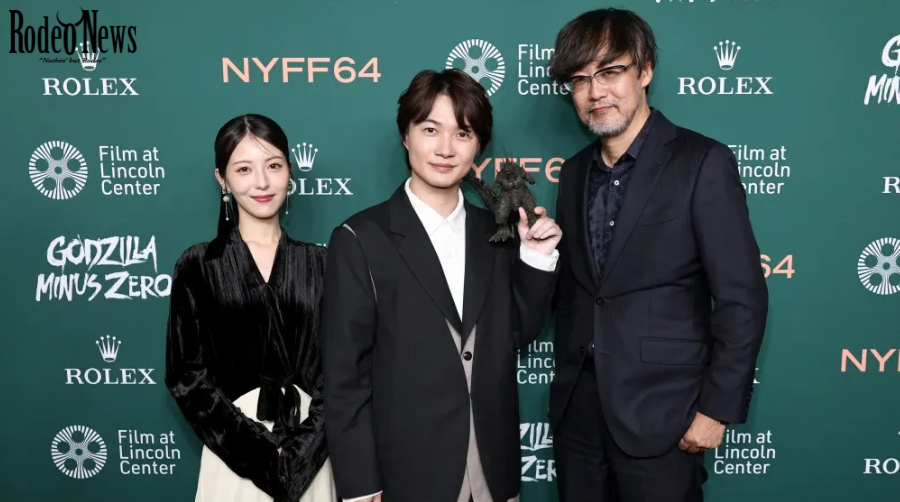
The announcement arrived as the sequel made its world premiere at the 2026 New York Film Festival, where audiences were given their first opportunity to see Yamazaki’s follow-up to the Oscar-winning Godzilla Minus One.
Rather than treating the R rating as a setback, Yamazaki has defended the decision. Speaking with Variety at the premiere, the filmmaker explained that certain scenes were essential to his vision and that cutting or censoring them was not an option.
The result is a significant change in the tone surrounding the Japanese monster franchise. While Godzilla has always been associated with destruction, fear and human tragedy, Godzilla Minus Zero appears prepared to make those elements considerably more explicit.
Godzilla Minus Zero Gets the Franchise’s First R Rating
The R rating is one of the biggest talking points surrounding Godzilla Minus Zero.
The Motion Picture Association classified the movie R for “bloody images” and “some violent content.” That makes the 2026 sequel the first Godzilla movie in the franchise’s history to receive an R rating.
That distinction matters because Godzilla has appeared in films aimed at a wide range of audiences since the original 1954 movie. The franchise has traditionally balanced enormous destruction with action, science fiction and accessible monster spectacle.
Yamazaki’s new movie takes a different approach.
The director told Variety that the rating was important because some of the film’s sequences could not simply be softened to achieve a lower classification. From his perspective, changing those scenes would have compromised the movie he wanted to make.
The decision also reflects how the modern Godzilla series has evolved. The franchise is no longer limited to straightforward monster battles. Recent Japanese entries have used Godzilla as a way to explore trauma, survival, war and the consequences of catastrophe.
Takashi Yamazaki Refuses to Censor the Sequel
Yamazaki returns as director and screenwriter after the enormous success of Godzilla Minus One.
The 2023 movie became an international phenomenon and eventually won the Academy Award for Best Visual Effects. That success gave Yamazaki and Toho an opportunity to continue the story while maintaining the same postwar Japanese setting and character-driven approach.
However, the director has said that he did not initially plan to make a sequel.
According to comments reported by Variety, Toho executives began asking about another movie after seeing an early version of Godzilla Minus One. Yamazaki initially became nervous about the prospect of continuing the story. It was only after the first movie reached audiences and received widespread international attention that he became more comfortable with the idea.
That history makes Godzilla Minus Zero particularly interesting. The sequel is not simply a studio-driven continuation of a successful title. Yamazaki has described the process as something that developed gradually after the response to the first film.
Now, he has returned with a movie that pushes the visual and emotional intensity even further.
Godzilla Minus Zero Returns to Postwar Japan
The story of Godzilla Minus Zero takes place in 1949, two years after the events of Godzilla Minus One.
The New York Film Festival describes the sequel as a continuation of the Shikishima family’s story as Japan attempts to recover from the devastation of World War II and the previous Godzilla attack.
That setting remains central to Yamazaki’s version of the franchise.
Instead of placing Godzilla in a contemporary city filled with modern technology, the filmmaker returns to a period when Japan was still dealing with the physical and psychological consequences of war.
The approach gives the monster story a different context.
Human characters remain at the center of the narrative. Their attempts to rebuild ordinary lives are threatened again when a new catastrophe emerges.
The New York Film Festival describes the movie as maintaining its post-World War II perspective while increasing the scale and intensity of its effects work.
That combination was also an important part of what made Godzilla Minus One distinctive.
The Sequel Brings Back Key Stars
Ryunosuke Kamiki and Minami Hamabe return for Godzilla Minus Zero, reprising their roles from Godzilla Minus One.
Their involvement helps connect the sequel directly to the previous film rather than turning it into an entirely separate Godzilla story.
The New York Film Festival’s official listing confirms Yamazaki as director and identifies Kamiki and Hamabe among the principal participants in the festival presentation.
The film runs for approximately 135 minutes and is presented in Japanese with English subtitles.
That runtime gives Yamazaki substantial space to combine monster action with the human drama that defined the previous installment.
The film’s official festival description emphasizes that the sequel is designed as a large-scale theatrical experience. It also promises more elaborate effects choreography than its predecessor.
Why the R Rating Is Significant
An R rating can create challenges for a major franchise because it limits access for younger moviegoers. In the United States, viewers under 17 generally require a parent or adult guardian to attend an R-rated theatrical film.
For a property as recognizable as Godzilla, that can potentially affect the size of its traditional audience.
However, Yamazaki views the modern meaning of the rating differently.
As reported by Variety, the director acknowledged that studios naturally want as many people as possible to see their films. At the same time, he argued that certain sequences were too important to alter simply to obtain a PG-13 classification.
The R rating therefore becomes part of the movie’s identity.
Instead of being promoted merely as a technical classification, it signals that Godzilla Minus Zero may be presenting destruction and violence more directly than previous installments.
Early reviews have already highlighted that difference. RogerEbert.com’s review notes that the film depicts bodies and destruction more graphically than its predecessor, including more explicit violent imagery involving both humans and Godzilla.
Godzilla Minus Zero Receives a Strong NYFF Response
The R rating was not the only major development at the New York Film Festival.
Godzilla Minus Zero received its world premiere at Alice Tully Hall as part of the festival’s Spotlight Gala. The screening was followed by strong audience reactions, including applause during the presentation.
The festival itself describes the movie as a sequel with “even more astounding effects choreography” than Godzilla Minus One and says it is an experience designed for the big screen.
The choice to premiere a giant monster movie at one of New York’s major film events is also notable.
Festival artistic director Dennis Lim acknowledged that Godzilla might not be the first property audiences associate with a prestigious film festival. Still, the festival decided the franchise deserved a place in its 2026 lineup.
That decision reflects the growing critical recognition of Yamazaki’s approach to the franchise.
Critics Highlight the Bigger Action
Early reviews suggest that Godzilla Minus Zero is not simply attempting to repeat the formula of its predecessor.
RogerEbert.com’s review describes the sequel as continuing Yamazaki’s postwar monster-movie approach while expanding its destruction and action. The review specifically points to larger-scale sequences and more graphic imagery as notable differences from Godzilla Minus One.
The New York Film Festival similarly emphasizes the sequel’s effects choreography, describing it as more ambitious than what audiences saw in the previous film.
At the same time, early critical responses indicate that Yamazaki has not abandoned the emotional side of the story.
The sequel continues to place ordinary people against extraordinary destruction. Family relationships, survival and the legacy of war remain important elements of the narrative.
That balance between human drama and monster spectacle has become a defining feature of Yamazaki’s Godzilla films.
Godzilla Minus Zero Continues the Oscar-Winning Formula
The success of Godzilla Minus One created an unusually high level of anticipation for the sequel.
The 2023 film combined a relatively grounded human story with large-scale visual effects. It also became the first Godzilla movie to win an Academy Award, taking home the Oscar for Best Visual Effects.
Yamazaki now faces the challenge of expanding that formula without losing its emotional foundation.
The early evidence suggests that Godzilla Minus Zero is approaching the problem through scale.
The monster action is bigger. The effects are more elaborate. The violence is more explicit. Yet the story remains rooted in postwar Japan and follows characters dealing with the consequences of another catastrophe.
That makes the sequel more than a conventional monster movie.
Release Date and Theatrical Plans
Godzilla Minus Zero is scheduled to open in North American theaters on November 6, 2026. Rotten Tomatoes lists the movie as a Japanese-language science-fiction, action and adventure film with a runtime of two hours and 15 minutes.
The film is being distributed by GKIDS in North America, according to the New York Film Festival listing.
The Japanese release is scheduled earlier, giving audiences in Japan the opportunity to see the sequel before its North American theatrical launch.
The film’s presentation at NYFF also reinforces the importance of seeing it on a large screen. The festival specifically describes the movie as an experience that demands the big screen.
For fans interested in the visual effects, the theatrical format is likely to be an important part of the experience.
What the R Rating Means for Godzilla’s Future
The significance of Godzilla Minus Zero extends beyond one movie.
The franchise has existed for more than seven decades, but its Japanese films have rarely been presented with the same kind of explicit violence associated with an R rating.
Yamazaki’s decision could therefore represent a new direction for the Japanese series.
It does not necessarily mean every future Godzilla movie will receive an R rating. However, it demonstrates that Toho and its filmmakers are willing to let a story dictate its classification rather than automatically targeting a broader audience.
For Yamazaki, the priority appears to be preserving the scenes he believes are essential to the story.
That approach could become one of the defining talking points surrounding the film when it reaches theaters.
Godzilla Minus Zero Is Setting Up a Major 2026 Release
With its historic R rating, world premiere at the New York Film Festival and early critical attention, Godzilla Minus Zero has already become one of the most closely watched Japanese films of 2026.
The sequel reunites Takashi Yamazaki with the world and characters of Godzilla Minus One, but it is also pushing the franchise into new territory.
The movie returns to postwar Japan in 1949, continues the Shikishima family’s story and increases the scale of its monster action. At the same time, the R rating confirms that Yamazaki was unwilling to remove violent imagery that he considered essential to the film.
For longtime Godzilla fans, the classification alone makes the sequel historically significant.
For audiences who responded to Godzilla Minus One, the combination of returning characters, larger effects and Yamazaki’s continued focus on human consequences gives the film another reason to attract attention.
Godzilla Minus Zero arrives in North American theaters on November 6, 2026. The first R-rated chapter in Godzilla history is now preparing to bring its larger, darker vision of the King of the Monsters to cinemas worldwide.