
North Kivu Ebola Outbreak Emerges as Major New Hotspot
The North Kivu Ebola outbreak has emerged as one of the most serious pressure points in the Democratic Republic of Congo’s expanding Ebola crisis, with treatment centers struggling to accommodate a surge of patients in the city of Butembo.
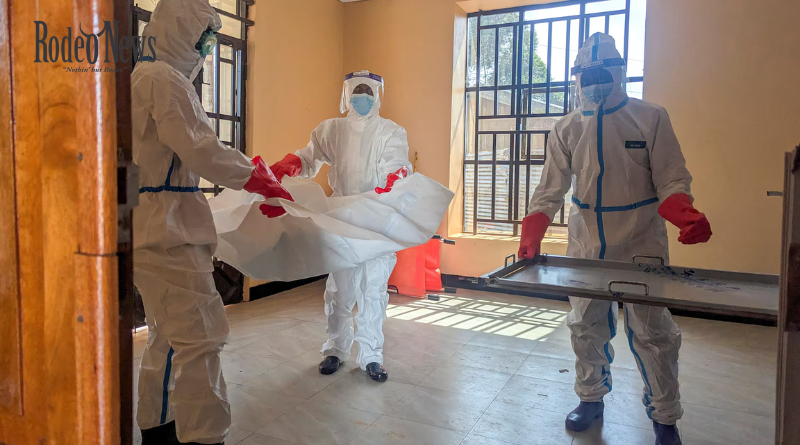
At the Kitatumba Ebola treatment center, all 29 beds were occupied during the week reported by Reuters. Medical teams have faced growing demand even as health officials report signs that transmission is slowing in some parts of Ituri, the province that remains the worst affected by the outbreak.
The shift highlights a major challenge for responders: Ebola transmission is not simply disappearing. Instead, it is changing location.
The current outbreak is caused by Bundibugyo virus, a type of Ebola virus that differs from the Zaire species responsible for several previous major outbreaks in Congo. The virus has now been detected across multiple provinces, putting additional pressure on an already stretched public-health response.
Reuters reported that Congo had recorded 7,820 confirmed cases and 3,779 deaths as of Sept. 22, according to government data. ECDC figures using data through Sept. 21 recorded 7,773 confirmed cases and 3,759 deaths, illustrating how quickly the totals have been changing.
North Kivu Ebola Outbreak Puts Butembo Under Pressure
Butembo, a major commercial city in North Kivu, has become a central focus of the response.
The city has a population of roughly 2 million people and sits within a region where health services have already faced enormous challenges. Reuters reported that authorities opened two additional treatment centers during the week, bringing the city’s total to four.
Yet expanded capacity has not eliminated the problem.
Medical workers say some patients arrive at health facilities only after becoming critically ill. Others reportedly struggle to find available beds.
Stephanie Hoffmann, a project coordinator for Médecins Sans Frontières in Butembo, told Reuters that the increase in cases over the preceding two weeks had been particularly sharp.
One 10-year-old boy reportedly died in triage before he could be admitted to a treatment center.
The situation demonstrates why the North Kivu Ebola outbreak is difficult to control. Finding patients is only one part of the response. Health workers must also isolate infected people, identify their contacts, monitor those contacts, conduct safe burials and maintain public cooperation.
When any part of that chain breaks down, transmission can continue.
Ebola Transmission Is Moving Across Congo
The changing geography of the outbreak is among the biggest concerns for health officials.
Ituri remains the hardest-hit province, but North Kivu has accounted for an increasing share of new infections and deaths. WHO said North Kivu was responsible for roughly one-third of newly confirmed cases and deaths in the period highlighted in the Reuters report.
The outbreak has also expanded beyond the provinces initially affected.
WHO’s regional situation report said that Dungu Health Zone in Haut-Uélé became the latest affected area, bringing the total number of affected health zones to 63 as of Sept. 20. The report described transmission as increasingly heterogeneous, with different provinces experiencing different trends at the same time.
South Ubangi had also become the seventh affected province, another indication that the virus was reaching new areas.
This geographical expansion makes the outbreak harder to manage. Health authorities cannot simply concentrate resources in one location and assume the problem will remain there.
Instead, treatment capacity, laboratories, surveillance teams and contact tracers must be able to move as the epidemic changes.
Why the North Kivu Ebola Outbreak Is So Difficult to Contain
Several factors are converging in North Kivu.
One is the limited availability of medical resources. Reuters reported that shortages of funding and skilled personnel have complicated the response, while health officials have struggled to maintain enough capacity for patients.
Another factor is armed conflict.
Eastern Congo has experienced prolonged insecurity, making it difficult for health workers and aid organizations to reach some communities. Security concerns can restrict movement, interrupt surveillance and make it harder to conduct household visits.
Then there is public mistrust.
In Butembo and surrounding communities, some residents have questioned Ebola diagnoses or resisted measures designed to contain transmission. Reuters reported that some people refuse temperature checks or handwashing requirements at checkpoints and public facilities.
Only two of nine health checkpoints in the Butembo health zone were operating because of staffing constraints, according to a local health official cited by Reuters.
These gaps matter because early detection is critical.
A person who reaches medical care quickly can potentially be isolated before exposing additional people. A person who remains in the community while infectious creates more opportunities for transmission.
Mistrust Becomes a Major Barrier
The human side of the North Kivu Ebola outbreak is particularly complicated.
Some residents remain skeptical of the response because of experiences during previous Ebola outbreaks.
North Kivu was previously at the center of the 2018-2020 Ebola outbreak, which was caused by the Zaire species. That crisis became Congo’s largest and deadliest Ebola outbreak until the current epidemic.
The memories of that period remain powerful.
Reuters reported that allegations of sexual abuse and exploitation involving Ebola responders during the earlier outbreak contributed to long-term distrust. WHO told Reuters that it recognizes that public trust must be continually earned and said safeguards against abuse have been strengthened since then.
The current outbreak also presents a scientific communication challenge.
Bundibugyo virus is less familiar to the public than the Zaire species. According to Reuters, responders have observed early symptoms that can be mistaken for more common illnesses such as malaria and typhoid fever.
That can make recognition more difficult.
It can also fuel confusion when communities remember that vaccines and treatments were available during earlier Ebola outbreaks but are not approved for the current Bundibugyo outbreak in the same way.
Public-health authorities therefore face two tasks at once: stopping transmission and explaining why the current outbreak is different.
Health Workers Face Attacks
Mistrust has also created direct security risks for Ebola responders.
Reuters reported that safe-burial workers and other response teams have faced attacks. One burial-team member described being attacked with a machete and suffering a fractured knee.
Earlier in September, a health post was reportedly set on fire after residents accused it of cooperating with Ebola responders. Medical equipment, medicines and hospital beds were destroyed.
Such incidents have consequences beyond the immediate damage.
When a health facility is attacked, patients may leave. Health workers may be unable to return. Equipment becomes unavailable. Surveillance can be interrupted.
Every disruption creates another opportunity for the virus to spread undetected.
This is why public trust is not a secondary issue in the North Kivu Ebola outbreak. It is part of the disease-control infrastructure itself.
Authorities Try a Community-Based Response
Congolese authorities and WHO have been attempting to rebuild cooperation through community engagement.
The response includes awareness campaigns, household visits and cooperation with traditional, religious and neighborhood leaders.
Those efforts are particularly important in places where residents may be more willing to listen to people they already know and trust than to outside organizations.
Congo’s Ebola incident manager Steve Ahuka told Reuters that authorities had gained greater access in recent weeks, although pockets of resistance remained.
The approach reflects a broader lesson from previous Ebola outbreaks: medical intervention alone cannot stop transmission if communities do not cooperate with health teams.
People must be willing to report symptoms, accept testing, follow isolation recommendations, cooperate with contact tracing and allow safe burial procedures when necessary.
Security Measures Raise Another Challenge
Authorities have also turned to security forces to protect response workers and encourage compliance.
Reuters reported that provincial authorities recruited pro-government fighters known as Wazalendo to help protect responders and operate handwashing stations on some roads.
However, the use of force creates a difficult balance.
Coercive measures may help protect health workers in the short term, but they can also deepen mistrust if communities believe Ebola controls are being imposed against their will.
Local health officials cited by Reuters argued that communities should understand and voluntarily adopt protective measures rather than relying on police or military pressure.
That tension is especially significant in an outbreak where cooperation is essential.
Bundibugyo Virus Adds Uncertainty
The virus itself presents another challenge.
The current outbreak involves Bundibugyo virus, which is less studied than the Zaire species that caused previous large Ebola outbreaks in Congo.
According to WHO and other public-health sources, the outbreak has continued to expand geographically while showing different patterns in different provinces.
WHO’s situation report said Ituri had experienced a gradual decline from its peak while North Kivu saw a marked increase before signs of a recent decline.
That distinction is important.
A reduction in cases in one province does not necessarily mean the national outbreak is under control.
The Centers for Disease Control and Prevention says the DRC outbreak is caused by Bundibugyo virus and has been spreading substantially faster than previous Ebola outbreaks, making it the second-largest Ebola outbreak on record. The CDC also says no cases linked to this outbreak have been confirmed in the United States and assesses the risk to the American public and travelers as low.
Treatment Capacity Remains Critical
The pressure on treatment centers illustrates another major issue.
Ebola patients require specialized infection-control procedures. Healthcare workers need protective equipment, dedicated treatment areas and systems for safely handling infectious materials.
A treatment center reaching capacity can therefore become more than a logistical inconvenience.
It can mean patients have to wait longer for specialized care or remain in other facilities that are not designed to handle Ebola safely.
The situation in Butembo shows why increasing bed capacity has become an immediate priority.
But additional beds alone will not solve the outbreak.
Authorities also need trained medical staff, laboratory testing, surveillance personnel, transportation, protective equipment and community-based response teams.
All of these resources must be available simultaneously.
What Happens Next in the North Kivu Ebola Outbreak?
The trajectory of the North Kivu Ebola outbreak will depend heavily on whether authorities can detect infections earlier and rebuild cooperation with communities.
Recent WHO reporting provides some reason for caution rather than complacency.
The organization has described signs of declining transmission in some areas, including parts of North Kivu after a period of sharp increases. At the same time, new infections continue to appear elsewhere and the outbreak has expanded into additional health zones.
MSF has similarly warned that falling patient numbers in individual treatment centers should not automatically be interpreted as evidence that the overall outbreak is shrinking.
This distinction is crucial.
An Ebola outbreak can appear quieter in one location while growing in another.
That is precisely what makes the current situation so challenging.
A Moving Target for Congo’s Health System
The North Kivu crisis demonstrates how quickly an infectious-disease emergency can change.
Health workers are dealing with a virus that has spread across multiple provinces, an overstretched medical system, insecurity, limited resources and widespread skepticism in some communities.
At the same time, responders must avoid repeating mistakes that damaged trust during earlier outbreaks.
The immediate priority is to identify infections quickly, provide treatment, protect healthcare workers and prevent further transmission.
But the longer-term challenge is equally important: maintaining public confidence.
If communities cooperate with health teams, suspected cases can be identified sooner. Contacts can be monitored. Safe burials can be carried out. Treatment centers can function more effectively.
If mistrust continues to drive people away from medical facilities, the virus has more opportunities to spread.
For Congo, the North Kivu Ebola outbreak is therefore not simply a story about rising case numbers. It is a test of whether a complex public-health operation can keep pace with a disease that continues to move geographically.
The latest evidence suggests that some parts of the outbreak may be showing improvement. But the appearance of a major hotspot in North Kivu, combined with continued transmission elsewhere, means the national emergency remains far from resolved.
As health authorities expand treatment capacity and community outreach, the coming weeks will show whether those efforts can turn localized progress into broader control.
For now, the central lesson from eastern Congo is clear: when Ebola moves, the response must move with it.