The Trump-Xi summit in Washington ended with warmer public rhetoric and an agreement to extend the existing US-China trade truce, but the meeting produced no publicly announced breakthrough on several of the most difficult issues between the world’s two largest economies. Artificial intelligence, Taiwan, Iran and technology competition remained areas of significant disagreement.
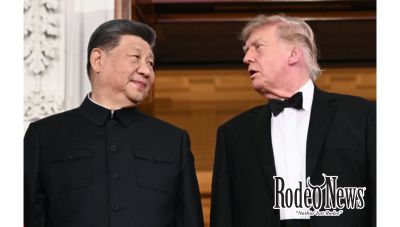
Chinese President Xi Jinping’s state visit to Washington was marked by elaborate ceremony, including a White House welcome and state dinner. President Donald Trump presented the relationship with Xi in notably positive terms, describing their personal relationship as a strong friendship.
Yet behind the ceremony, the central strategic questions facing Washington and Beijing remained largely unresolved.
Reuters reported that the two countries agreed to extend their trade agreement for two additional months, giving negotiators more time to work on broader economic issues. The extension provides temporary stability, but it does not settle the deeper disputes over tariffs, technology, trade and China’s industrial policies.
Trump-Xi Summit Delivers a Trade Truce Extension
The clearest practical result of the Trump-Xi summit was the decision to extend the existing trade truce.
The agreement had been scheduled to expire later in the year. According to Reuters, US Treasury Secretary Scott Bessent said the extension would give Washington and Beijing additional time to continue discussions on economic matters.
That outcome is significant because the US and China have spent years using tariffs and export controls as economic and strategic tools.
The temporary extension reduces the immediate possibility of another sharp escalation in trade tensions. However, it should not be confused with a comprehensive trade agreement.
Many underlying disputes remain.
Those include the balance of trade between the two countries, Chinese purchases of US goods, access to critical minerals and rare earth supplies, tariffs and American restrictions on advanced technologies.
For companies operating across both economies, the extension offers additional time and potentially greater predictability. But the longer-term rules governing US-China commerce remain unsettled.
The agreement therefore represents continuity rather than a final resolution.
AI Remains a Major Point of US-China Competition
Artificial intelligence was another central issue surrounding the Trump-Xi summit.
Washington and Beijing are competing for influence over one of the world’s most strategically important technologies. AI has increasingly become connected to national security, semiconductor production, military capabilities and economic competitiveness.
The United States has imposed restrictions affecting China’s access to certain advanced computing technologies, while China has sought to strengthen its domestic technology industry and reduce dependence on American suppliers.
The competition extends beyond individual companies.
It involves semiconductor manufacturing, advanced computing infrastructure, data, research, energy and the development of increasingly sophisticated AI systems.
The summit did not produce a major public agreement that would fundamentally change this competition.
That leaves technology policy as one of the most complicated parts of the broader US-China relationship.
The two governments can cooperate in some areas while competing aggressively in others. The AI relationship illustrates that tension particularly clearly.
Taiwan Remains a Sensitive Issue
Taiwan was another major issue surrounding the Trump-Xi summit.
China claims Taiwan as part of its territory, while Taiwan has maintained its own democratic government and military. The United States does not have formal diplomatic relations with Taiwan but maintains extensive economic and security ties with the island.
According to China’s official news agency, Xi urged Trump to handle the Taiwan issue carefully and oppose Taiwanese independence. The White House had not immediately released a comparable public account of the Taiwan discussion when the initial reports were published.
That difference in public messaging highlights the sensitivity of the issue.
For Beijing, Taiwan is a core sovereignty question. For Washington, Taiwan is also closely connected to regional security and America’s relationships with allies and partners in the Indo-Pacific.
The two sides therefore have strong incentives to keep communication open even while maintaining sharply different positions.
The summit did not produce a publicly announced settlement of those differences.
Taiwan consequently remains one of the most important areas to watch in the US-China relationship.
Iran Complicated the Wider Strategic Picture
The Trump-Xi summit also took place against the backdrop of the war involving Iran.
The conflict has created additional pressure on the international economy, particularly through energy markets and concerns about the Strait of Hormuz.
Washington has sought Chinese cooperation in dealing with Iran, while Beijing maintains important economic ties with Tehran.
According to reporting on the summit, the two leaders did not announce a major breakthrough on the Iran issue. Xi supported renewed efforts toward an interim arrangement between Washington and Tehran, while China has continued to maintain its own approach to relations with Iran.
That makes Iran another example of the limits of the apparent improvement in Trump and Xi’s personal relationship.
The United States and China can maintain dialogue while simultaneously disagreeing over major international conflicts.
The issue is particularly important because energy security connects Middle Eastern developments with the wider global economy.
Any prolonged disruption involving major energy routes can affect oil prices, transportation costs, inflation and financial markets far beyond the Middle East.
The Summit Highlighted the Personal Relationship Between Trump and Xi
One of the most visible elements of the Trump-Xi summit was the emphasis on the relationship between the two leaders.
Trump described his relationship with Xi in highly positive terms during the visit. Xi, meanwhile, emphasized the need for Washington and Beijing to develop a stable relationship despite their competition.
Xi also invoked the idea of avoiding the so-called “Thucydides Trap,” a term commonly used in international relations to describe the potential danger of conflict when an established power faces a rising one.
The message from Beijing was that competition should not automatically lead to confrontation.
Xi argued that the two countries could pursue their national interests while maintaining limits on their rivalry.
That approach does not eliminate the structural competition between Washington and Beijing. Instead, it reflects the growing importance of managing that competition.
The distinction matters.
A friendly meeting between presidents does not necessarily mean that their governments have resolved disagreements over trade, technology, military strategy or territorial claims.
Ceremony Played a Major Role in the Visit
The scale of the White House welcome was another defining feature of the Trump-Xi summit.
Xi received an elaborate state visit, with formal ceremonies and a high-profile state dinner.
The event provided both governments with an opportunity to demonstrate that direct communication between the two leaders remains possible despite years of strategic tension.
However, the highly ceremonial nature of the visit also generated criticism from some US lawmakers.
Reuters reported that the summit showcased Trump’s redesigned White House and featured extensive diplomatic pageantry. The symbolism of the visit therefore became almost as significant as the policy discussions themselves.
Some lawmakers questioned whether the elaborate reception placed too much emphasis on ceremony when major disputes remain unresolved.
Others argued that maintaining direct dialogue between Washington and Beijing is important precisely because the relationship remains difficult.
Those competing interpretations reflect a broader debate about how the United States should manage its relationship with China.
No Major Breakthrough on the Biggest Disputes
Perhaps the most important conclusion from the Trump-Xi summit is what was not announced.
There was no publicly confirmed comprehensive settlement covering the major economic and strategic disputes between the two countries.
The trade truce was extended, but the broader trade relationship remains under negotiation.
AI competition continues.
Taiwan remains unresolved.
The two governments continue to hold different positions on Iran and other geopolitical issues.
That does not mean the summit had no practical value.
Maintaining communication between Washington and Beijing can reduce the risk of misunderstandings and provide channels for future negotiations.
The temporary trade extension also gives both sides additional time to work toward a broader economic arrangement.
But the available evidence does not show that the meeting fundamentally changed the strategic relationship.
What Happens After the Trump-Xi Summit?
The next stage will likely depend on whether the temporary agreements reached around the summit can develop into longer-term arrangements.
Trade negotiations will be particularly important.
The two countries will need to determine whether they can move beyond temporary pauses and establish more durable rules for tariffs, technology, market access and strategic goods.
AI will remain another major test.
Both countries recognize the economic importance of artificial intelligence, but their approaches to technology security and advanced computing remain different.
Taiwan will also continue to require careful diplomacy.
Even relatively small policy changes can attract significant attention in Beijing, Washington and Taipei because of the island’s strategic importance.
Meanwhile, developments in Iran and the global energy market could add another layer of complexity to the relationship.
These issues mean the summit should be viewed as one stage in a much longer process rather than a definitive turning point.
A More Stable Relationship, But Not a Settled One
The Trump-Xi summit demonstrated that Washington and Beijing can still engage directly at the highest level despite deep strategic competition.
The two governments extended their trade truce and used the visit to emphasize continued dialogue.
At the same time, the summit did not resolve the most difficult disagreements separating the countries.
Trade remains unsettled. AI competition is intensifying. Taiwan remains a major security issue, while Iran presents another area where American and Chinese interests do not fully align.
The contrast between the ceremony and the limited number of publicly announced breakthroughs is therefore central to understanding the meeting.
The summit produced an opportunity for both sides to manage their rivalry, but the larger competition remains.
For businesses, technology companies, investors and governments around the world, the most important question now is whether the temporary stability created by the meeting can develop into a more durable framework for US-China relations.
For the moment, the answer remains unclear.
What is clear is that the Trump-Xi summit did not end the rivalry between Washington and Beijing. Instead, it provided another high-level channel through which the two powers can attempt to manage that rivalry while negotiating over some of the most consequential economic and geopolitical issues in the world.