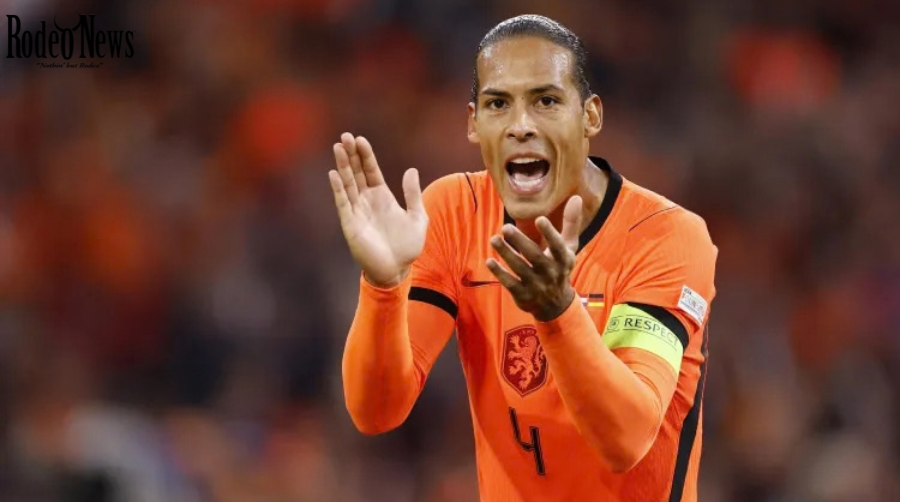
Virgil van Dijk Germany Goal Dispute Dominates Draw
The Virgil van Dijk Germany goal controversy has become one of the biggest talking points from the Netherlands’ 1-1 draw with Germany in the opening round of the 2026-27 UEFA Nations League.
Germany appeared to be on course for victory after Felix Nmecha put Jürgen Klopp’s side ahead in the first half. However, Cody Gakpo scored in second-half stoppage time to rescue a point for the Netherlands at the Johan Cruijff ArenA in Amsterdam.
While the late equalizer changed the result, the debate surrounding Germany’s opening goal continued after the final whistle.
Netherlands captain Virgil van Dijk was particularly unhappy with the decision to allow Germany’s goal to stand. According to Bavarian Football Works, Van Dijk described the decision as a “disgrace,” while Germany captain Joshua Kimmich rejected the criticism and defended the legality of the goal.
The disagreement centered on an injury to Dutch striker Brian Brobbey shortly before Germany attacked.
What Happened Before the Virgil van Dijk Germany Goal?
The incident began in the 32nd minute when Brobbey went down with an apparent injury.
Several Netherlands players expected Germany to put the ball out of play. Instead, Germany continued the attack. Karim Adeyemi remained involved in the move before his low delivery created an opportunity for Nmecha, who finished from close range.
That sequence immediately created tension between the two teams.
From the Dutch perspective, Germany had an opportunity to stop the match because Brobbey was on the ground. The expectation in such situations is often based on the traditional convention of kicking the ball out when an opponent appears to be seriously injured.
However, there is an important distinction between football convention and the laws of the game.
A referee does not automatically have to stop play whenever a player remains on the pitch with an injury. The referee can allow play to continue unless there is a reason under the laws of the game to stop it.
That distinction became central to the post-match argument.
Why Virgil van Dijk Was Angry
Van Dijk’s frustration was understandable from the Netherlands’ perspective because Brobbey’s injury happened during the buildup to Germany’s attack.
The Dutch players appeared to expect the ball to be returned to them. Germany instead continued playing and eventually scored.
The Netherlands captain subsequently questioned the sporting nature of the decision. Bavarian Football Works reported that Van Dijk believed Germany’s goal should not have been allowed to stand.
For the Dutch, the issue was not simply whether the referee had technically followed the rules.
It was also about the unwritten expectations between players.
Football has a long-standing tradition of players voluntarily stopping attacks when an opponent appears to be seriously hurt. That tradition is not an automatic requirement, however, and teams can choose to continue when they believe the situation does not require a stoppage.
That is exactly what Germany did.
Joshua Kimmich Defends Germany’s Decision
Germany captain Joshua Kimmich offered a very different interpretation of the incident.
Kimmich rejected Van Dijk’s criticism and argued that the Dutch captain’s assessment did not fully reflect what happened during the attack. Bavarian Football Works quoted Kimmich as saying Van Dijk’s response was “not a reflective answer from him.”
Kimmich’s argument was based partly on the position of Brobbey.
The Dutch striker was playing in an advanced attacking role rather than as a defender. By the time Germany moved the ball forward, the Dutch defensive structure remained largely intact.
The German captain therefore viewed the decision to continue play as legitimate rather than unsporting.
That interpretation was also supported by the fact that the referee and VAR did not overturn Nmecha’s goal.
Felix Nmecha Gives Germany the Lead
Once the controversy is separated from the emotional reaction, the goal itself came from a quick German attacking sequence.
Adeyemi continued the move and delivered the ball into the penalty area. The Netherlands defense failed to clear it effectively, allowing Nmecha to react and finish from close range.
UEFA’s official match report confirms that Nmecha scored after a blocked Adeyemi effort, giving Germany the lead in the first half.
The goal gave Klopp an opportunity to celebrate a victory in his first competitive match as Germany coach.
For much of the second half, Germany appeared capable of protecting the advantage.
That ultimately changed in dramatic fashion.
Cody Gakpo Rescues the Netherlands
The Netherlands continued searching for an equalizer and eventually found it in stoppage time.
Cody Gakpo produced a powerful volley in the 92nd minute to make it 1-1. The late goal denied Klopp a victory in his first match on the Germany bench and gave Xavi Hernández a point in his first match as Netherlands head coach.
The equalizer was especially significant because Germany had created opportunities to extend its advantage.
Adeyemi missed a major chance to make it 2-0, while the Netherlands also wasted a late opportunity before Gakpo’s finish.
UEFA’s official report described Gakpo’s strike as an added-time equalizer that secured an unbeaten opening night for both new coaches.
The final score therefore reflected a match in which Germany came close to securing three points but ultimately had to settle for one.
Brian Brobbey’s Injury Added Another Layer
Brobbey’s injury was important not only because it preceded Germany’s goal but also because the Dutch striker had entered the match in strong form.
UEFA had highlighted Brobbey before the match after he scored a hat trick for Sunderland against Manchester City shortly before the international break.
His injury therefore represented a major concern for the Netherlands.
According to ESPN’s match report, Brobbey eventually left the game with what appeared to be a hamstring injury.
That made the sequence even more contentious from the Dutch point of view.
Germany, however, was not responsible for deciding whether Brobbey was fit to continue. The referee was responsible for determining whether play needed to be stopped.
That distinction explains why the same incident produced such different reactions from the two sides.
The Referee and VAR Did Not Rule Out the Goal
One of the most important facts surrounding the Virgil van Dijk Germany goal dispute is that the goal was allowed to stand after the relevant review.
There was no VAR decision that canceled Nmecha’s finish because Brobbey was injured.
ESPN reported that Germany scored while Dutch players were appealing for play to stop because Brobbey had gone down. The report also noted that the referee and VAR ultimately allowed Germany’s goal to count.
That does not eliminate the disagreement.
Instead, it establishes the difference between a technical decision and a footballing judgment.
The officials determined that there was no sufficient reason to disallow the goal. Van Dijk and his teammates could still believe Germany should have voluntarily stopped the attack.
Both issues can exist simultaneously.
Van Dijk Had His Own Goal Disallowed
The controversy became even more interesting because Van Dijk himself had already been involved in a goal that did not count.
The Netherlands captain appeared to put the ball into the German net with a header from a Tijjani Reijnders corner. However, the goal was ruled out after a VAR review because Brobbey was judged to have impeded Germany goalkeeper Marc-André ter Stegen.
That meant Van Dijk experienced frustration from both sides of the match’s officiating drama.
First, his own goal was disallowed.
Then Germany scored during an incident involving Brobbey.
The combination contributed to an unusually heated atmosphere between the two teams.
A Tense Match for Joshua Kimmich
Kimmich was at the center of Germany’s response throughout the match.
As captain, he was involved in the discussions surrounding the controversial goal and later became involved in an exchange with Dutch players.
ESPN reported that Kimmich and Denzel Dumfries clashed during the match, adding to the tension between the sides.
Kimmich’s post-match assessment was also notably positive.
Speaking after the draw, the German captain said the match was intense and acknowledged that Germany did not perform perfectly. He nevertheless described the final result as a deserved draw.
That assessment reflected Germany’s inability to turn its lead into a victory.
Jürgen Klopp’s Germany Era Begins With a Draw
The Netherlands match represented Klopp’s first competitive game as Germany coach.
It was also a significant return to the dugout for the former Liverpool manager, who had been away from club management since leaving Liverpool in 2024.
Klopp’s debut therefore attracted considerable attention before kickoff.
The result gave Germany a point but also exposed areas that will need improvement.
Germany created enough opportunities to win the game, yet the team could not protect its advantage until the final whistle. The late Gakpo equalizer demonstrated how quickly the outcome can change against a high-level opponent.
At the same time, Germany showed enough attacking quality to create problems for the Netherlands.
Xavi Also Starts With a Point
The match was unusual because both teams were beginning new coaching eras.
Xavi Hernández was making his debut as Netherlands head coach on the same night Klopp began his Germany tenure.
UEFA confirmed that both coaches started their new international jobs with draws after Gakpo’s late equalizer canceled out Nmecha’s goal.
For Xavi, the comeback offered evidence of resilience.
For Klopp, the match showed both promise and unfinished work.
The two managers will now have the opportunity to build their respective teams as the Nations League campaign progresses.
What the Germany Goal Controversy Means
The argument surrounding the Virgil van Dijk Germany goal is unlikely to disappear immediately because it involves two different interpretations of sportsmanship.
The Netherlands believed Germany should have stopped because Brobbey was injured.
Germany believed it was legitimate to continue because the attack remained active and the Dutch defensive structure was still capable of responding.
The referee and VAR ultimately allowed the goal.
That decision means the official outcome is clear even if the debate over whether Germany should have stopped play remains unresolved.
Importantly, the controversy should not overshadow the entire match.
The Netherlands eventually equalized through Gakpo, meaning Germany did not gain the three points that the disputed goal temporarily appeared to provide. The final 1-1 score also reflected the Dutch side’s strong second-half pressure.
Germany and Netherlands Leave Amsterdam With One Point
The 1-1 result gives both teams a point from the opening round of the 2026-27 UEFA Nations League.
Germany will take encouragement from the fact that it led away from home against a strong Netherlands team. However, the late equalizer also highlighted the importance of finishing matches more effectively.
The Netherlands can point to its persistence after falling behind.
Gakpo’s late volley ensured that Xavi’s first match ended without defeat, while Klopp’s first competitive outing with Germany ended in a draw.
The controversy surrounding Van Dijk, Brobbey, Kimmich and Nmecha will likely remain one of the defining talking points from the match.
Ultimately, the goal was allowed to stand, the Netherlands found a late equalizer, and the two traditional rivals shared the points.
For Germany, the next challenge will be turning promising moments into complete performances.
For the Netherlands, the comeback provides an early indication that Xavi’s team can remain competitive even when the match appears to be slipping away.
The debate over the goal may continue long after the final whistle, but the official result is straightforward: Netherlands 1, Germany 1.